What Can We Learn from the Spanish about Eating and Selling More Fruit and Vegetables?

We Brits are wimpy consumers of fresh produce relative to our Iberian neighbours – rough and ready data suggests that Spanish families consume double the amount that we do! Why so? History, geography, climate and food culture are hugely influential:

  • Spain has been blessed with an amenable climate for growing fruit and vegetables, whereas it’s been a struggle in the UK, particularly “Up North” and for fruit. Look, sunshine helps and, no surprise, the Costa de Sol is in Andalucia not in Morecambe!;
  • supply availability moulded dietary patterns and consumption behavior – the Southern Spanish woofed down what we came to call “the Mediterranean Diet” – rich in fruit, vegetables and olive oil, whereas up in Scotland, you were more likely to see a Scottish male doing needle point than snacking on a piece of fruit!;
  • in the 19th Century, we moved into towns and cities which were, initially, serviced inadequately by fresh food distributors – packaged and tinned foods were cheaper and more convenient. The Spanish remained peasants and fresh food was just outside their front door. Our incomes improved and we were seduced by vendors of sugary and salty snacks; the poor Spaniards morosely munched on fresh-picked peaches;
  • the “made-by-mamá” main meal is at lunchtime and is only, now, coming under lifestyle pressure in Spain comprising to this day a mountain of fruit and vegetables, including a mandatory salad and, of course, all washed down by fermented grape juice. Seasonal eating isn’t trendy, it’s just what the Spaniards do!;
  • then, the supermarket era emerged at differential speed in the two countries giving us the present retail structure for fresh produce – the established supermarket chains dominate the fresh food scene in the UK (92% retail market share), whereas in Spain, regional players and “old-fashioned” green grocers (often configured in small chains) continue to have a significant share of fresh fruit and vegetable sales to consumers.
OLYMPUS DIGITAL CAMERA

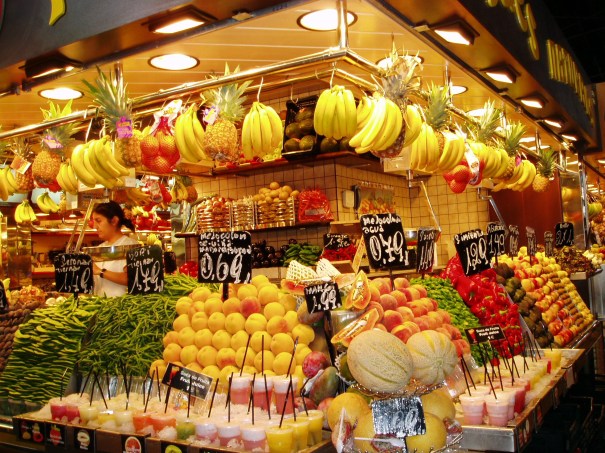
The famous Boquería Market in Barcelona, Spain (Fotograph http://www.aspic.es)

The more traditional retail environment in Spain encourages shoppers to purchase fresh produce. Spanish supermarkets account for 70% of fresh produce retail sales but on every street, small shops fight ferociously with them for market share and can purchase a wide range of produce via vibrant (by UK standards) wholesale markets and can be competitive not least by discounting their own labour costs. You see the same in many Asian countries where the “wet markets” hold on tenaciously to market share for fresh foods, particularly fruit and vegetables.

What can we learn from the Spanish grocers? In short, they’re better at retail theatre and customer service:

  • first, there’s less pre-packaged produce. Now, we pre-pack for good reason – some shoppers want to nip in and out of the shop without the inconvenience of individual produce selection. OK, but quality retailers the world over can orchestrate a symphony with loose fruits and vegetables that demand to be purchased!;
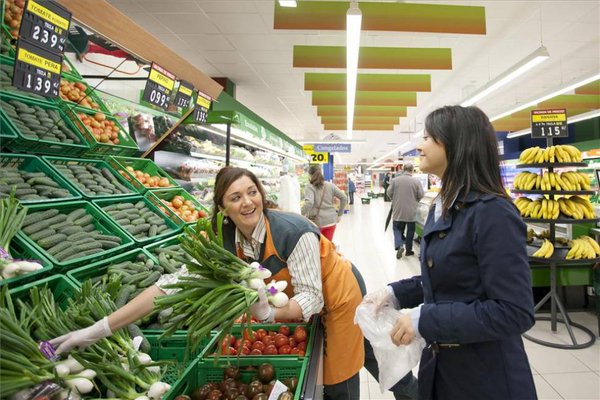
  • second, knowledge of the product is higher in Spain for both the customer and the vendor – this provides the small grocer with a competitive edge and forces supermarkets to respond with staff who can talk with customers about quality, seasonality, new products, etc. Ours do their best but, largely, they’re there to stack shelves and keep the place tidy. In Spain, there is often an assistant who weighs and bags produce and is there, in person, to tell the story of the food, and is looking for customers who might want help with selection. In some stores, the outdoor market ambience can be created by the greengrocer shouting out special offers;
  • we’ve improved enormously in the UK on celebrating the seasonality of produce but we’re still a long way behind the Spanish. Talking to UK college students about Spring cabbage, we noted that most thought the principal attribute of the product was that it was intrinsically bouncy! There’s a push to have the first of the season ahead of competitors – a dangerous game as the result can be the triumph of hope over experience as the long awaited peach is crunchy and tasteless. Mind you, it’s one of life’s commercial conundrums that when produce is at its very best and in peak season – juicy, aromatic, etc. – we tend to give it away!

Mercadona has been Spain’s most successful supermarket grocer in recent years and has upped the ante on fresh foods. Its President, Juan Roig said “we made the mistake of thinking we could sell produce as if they were ambient goods and squeeze costs in the store. Big mistake – focusing on customer service, provenance, seasonality and better displays of loose products has worked brilliantly for us”. In the Fresh Produce Department, there are few brands, tastes vary with the season, appearances may flatter the product (looks lovely, tastes like cardboard) and, in the UK, notwithstanding the tsunami of TV cookery programmes, shopper knowledge of  the product is substantially less than in Spain. Bite the bullet, invest more in staff training and bring the excitement  of the Iberian fruit and vegetable market to Glasgow and Gillingham.

CaOdMAPW0AAZxWj

Mercadona’s new fresh produce section (Source Mercadona)

This post first appeared in Produce Business UK as part of their Spain Sourcing Spotlight Series.

Tagged with:
Posted in Fresh Products, Uncategorized

Fictional Farms: Dangerous Brand Territory for High Profile Food Retailers?

It’s fashionable to be disparaging about Tesco as it struggles to regain market dominance in the UK and sheds overseas holdings like leaves in Autumn. But, it continues to be one of the most innovative grocers in the world. Notwithstanding the trade’s schadenfreude associated with its current problems, the sincerest form of flattery is imitation and Tesco initiatives have been and still are copied by retailers around the globe, not least in private label.

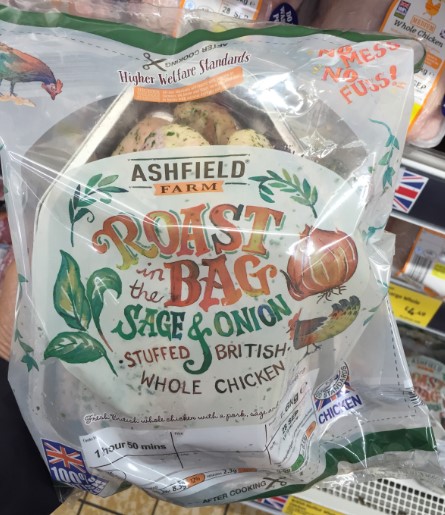
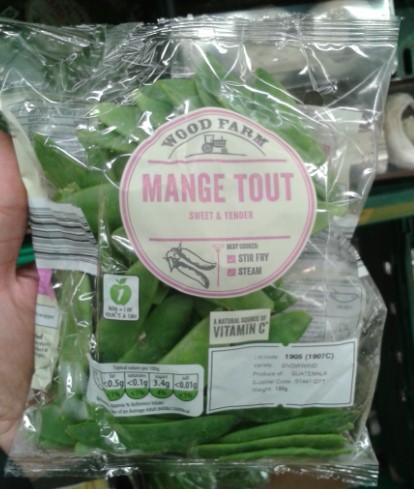
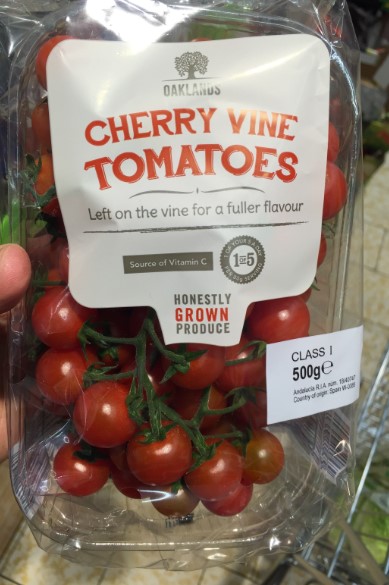
Tesco’s founder, “Slasher” Jack Cohen, built a grocery business piling it high and selling it cheap. But it was commercializing a three tier “Good, Better, Best” private label offer that helped propel the company to international stardom. Tesco finest* is a hugely successful premium brand in the UK. Other initiatives, like its venture brands, such as Chokablok confectionery (exclusive to Tesco and, often, competing with premium fmcg products), and tertiary brands as a defensive ploy against the hard discounters (launched in September 2008) have seen only mixed success – food doing rather better than non-food skus. Most recently, and controversially, Tesco has introduced a range of faux brands largely as substitutes for its entry level Everyday Value fresh produce and meats. Why the kerfuffle in the press? Well, the faux brand names have a distinctive and very British bucolic ring to them – Rosedene Farms, Nightingale Farms, Boswell Farms, Woodside Farms – get the picture! But the farms are fictional and the fresh products under their umbrella are from a wide range of countries, not just the UK. This sticks in the craw of British farmers, food evangelists, journalists and some consumers.


What is Tesco up to?: doing what comes natural to retailers worldwide – simply copying its competitors (it’s in their genes!) – in this case, the hard discounters Aldi and Lidl. These two have used fictional farm names for years for their fresh foods and received nary a hint of criticism: exclusive faux brand names such as Ashwood Farms, Birchwood Farms, Broad Oak Farms and Strathvale Farms litter their fresh produce and meat aisles around the English-speaking world (e.g. Aldi uses its Broad Oak Farms label in the USA and Australia, too).

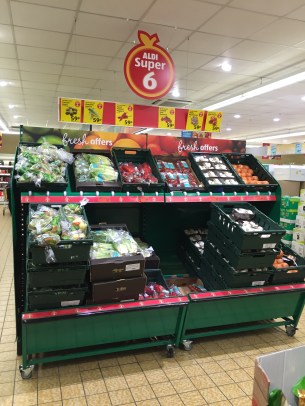
Originally making their names from selling ambient and frozen foods at hugely attractive discount prices, these scallywag retailers turned their attention to fresh foods with considerable success. Kantar UK data shows that both Aldi and Lidl over-index on fresh fruit and vegetable sales. Aldi’s Super 6 fruit and vegetable weekly offer has been spectacularly successful. Tesco is saying to its present and lapsed customers “you don’t have to go to Aldi and Lidl for jaw-droppingly low-priced quality fruit and veg., we’ve got it here”!


Aldi - Ashfield Farm ChickenAldi - WoodFarm Mange Tout

Lidl - Oaklands Tomato

Aldi’s Woodfarm and Ashfield, and Lidl’s Oakland fresh products brands.

First of all, why does Tesco take stick from the press and not Aldi and Lidl? If you’re Number 1 in any market, then, it comes with the territory. You’re the nut on the coconut shy – just ask the likes of McDonalds! Secondly, was it a smart move? No – tending towards dumb! If, as Tesco does, you make a song and dance about supporting British farmers, then, you sell pork products from Holland and produce from Morocco and Senegal under a brand name reeking of Britishness, then, you get what you deserve! Tesco quite clearly mark on the packs the country of origin of the produce. But that misses the point – what harassed shoppers see on the shelves are comforting British rural images and the clearly marked “Produce of Spain” is lost in the cacophony of background shopping noise and activity!

Only 3 years ago, Tesco’s CEO was apologizing for his company’s contribution to the “Horsegate” scandal. Now, faux brands are nowhere near in the same league, but in an era where transparency and traceability for food products are top of mind, retailers must tread very carefully. A loss of integrity translates very quickly into loss of trust and fewer customers.  Asda, also hemorrhaging sales from the hard discounter fresh food onslaught, has been more circumspect and opted for “Grower’s Selection” as its label on discount produce, replacing the dull-sounding grocery entry level Smart Price. The anonymous “Grower” has proved more acceptable to the press and British farmers but the new label hasn’t translated into sky-rocketing sales for Asda.

Private label is one of the most important components in the “Differentiation Mix” that grocers can use to confer character to their offer. It’s very difficult to express your point of difference from competitors with ubiquitously available products such as Coca-Cola. Tesco has been and still is world class in private label. We know it’s extremely tough at the grocery retail coalface, but Tesco should be leading not copying when it comes to this vital area of retail competition.

Tagged with: , , ,
Posted in Credentials, Private Label, Uncategorized

Mind the Gap ….. in the UK Grocery Market!

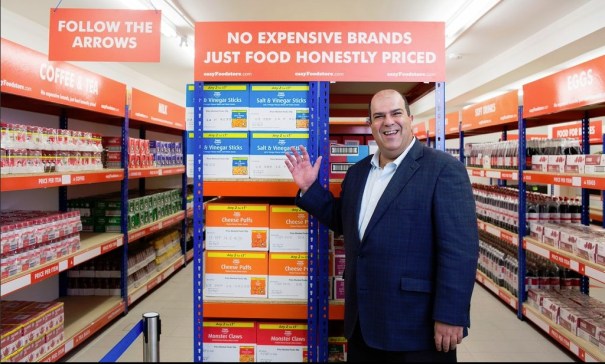
You’ve got to keep on your toes in the UK grocery retail industry – sneak a weekend away in Berlin on the back of your trip to Fruit Logistica and, on your return, another hard discounter has popped out of the undergrowth to nibble the nether regions of mainline supermarkets. Tesco’s Dave Lewis must be muttering “enough already” as he lowers himself gently on to his bed of nails! This time, it’s Sir Stelios Haji-Ioannou, the easyJet entrepreneur launching a trial easyFoodstore on a God-forsaken industrial estate just off the North Circular in West London.

Has Stelios spotted a gap in the market? His frank communications team say that easyFoodstore targets food consumers who are poor, likely on benefits and have, as the economists say, a very low opportunity cost of their time. Opening just 3 weeks ago, the trial store got huge publicity from the media. The shopping experience was described as “Soviet era” – stark “easy-orange” shelving, with 76 ambient products all priced at 25p ($0.35) for the opening month of February. When we visited, there was a queue with an hour’s wait to get into the store – later, the queue snaked around the corner and wait time extended to 5 hours! The store was sold out by lunchtime and closed for re-stocking in 2 of the first 5 days of opening. There are no fmcg “A” brands, just Euroshopper and Best-in private label brands available via Cash & Carry merchants.

Dr Food Easyfood Store.jpg

Does this über-hard discount concept have longer-term commercial legs? Many in the grocery trade think that it’s a characteristically-clever PR stunt from Stelios, which will expand to maybe a dozen stores and, then, wither away. But the very low income, benefit-assisted, time rich income poor end of the market isn’t Scotch mist – it’s grown substantially through 8 years of economic hard times and we’d be astonished if easyFoodstore shops weren’t spotted very soon in the big cities of Northern England and over the border in West Scotland.


Stelios Hajioannou Croydon Store.jpg

Stelios Haji-Iannou wants to offer food honestly priced to British people.

The challenge in retailing is to fill in gaps in the mental maps of shoppers’ needs. Stelios believes there is a gap between food banks (free or, at least, subsidized food for households on benefits) and hard discounters. Aldi and Lidl have earned their low price credentials and, now, are expanding premium own label to attract a higher income shopper and reward  existing shoppers wanting a treat. Look, Miguel bought his haunch of jamón Ibérico from Lidl at Christmas for an attractive price of £99.99! The austere easy-orange shops may well appeal to beleaguered shoppers who view Aldi, Lidl and even Poundland as beyond their means. We wouldn’t be surprised if Stelios capitalized on this Robin Hood-esque “friend of the poor” market position and to use end production runs, safe but slightly damaged, close to use-by-date products, etc. as exclusive offers to those who can prove their on-benefit status. In an era of savvy shoppers and bashing plutocratic bankers, there is more likely to be a “Badge of Honour” than a “Badge of Shame” associated with being a family reliant on state benefits and, as a result, shoppers can enter the orange portals of easyFoodstore with their heads held high!

Market growth in grocery is exceedingly challenging and who’d have thought that the likes of Asda/Walmart would be celebrating that its current dark days of sales downturns are close to over. The company is still losing market share – that’s a reason to celebrate?! In mature grocery markets where big supermarkets have the majority share, any new company entering, however small it may be, will nibble away at their toes and ensure that grocery retail Price Wars will remain pervasive. When Stelios launched easyJet in 1995, the established airlines (not least British Airways) dismissed it as a minor irritant. Now, easyJet has a higher Market Cap. than any of them! We don’t believe easyFoodstore is going to rock the retail boat significantly, but it will contribute in some small way to the likes of Tesco’s Dave Lewis sharpening his retail price pencil through the remainder of the decade.

Tagged with:
Posted in Discount

McDonald’s: from Extra Value Meal to The Signature Collection (Do You Want Gluten-Free, King Edward Fries With That?!)

Our blog is largely about what’s happening in the world of supermarkets, but we are curious about anything to do with the business of food and drink! So, we’re interested in food service: in the USA, so-called “away-from-home’ expenditure on food and drink has just overtaken “at-home” and we’re edging in the same direction in the UK. Supermarkets and food service outlets both compete for the indelicately termed “share of stomach/throat” and, increasingly, food retail and food service are converging. Initially, it was supermarkets (led by Marks & Spencer) that ripped into traditional café and restaurant territory by offering sandwiches and snacks for lunch and ready meals for dinner – e.g. the “Dine in for 2 for £10” and, reflecting demographic trends (one person households are 56% of total in London), the “sad sack meal for 1”! But, now, it’s more than Indian and pizza restaurants that will deliver – in the USA, the likes of Amazon Prime Now, grubHub and Uber EATS are providing lightening fast home delivery links with your favourite restaurants.

Just as we have seen monolithic Walmart and fumbling Tesco struggle through turbulent economic times, so has the world’s largest fast food chain McDonald’s. Mainstream supermarkets have been squeezed between the hard discounters at the “value” end of the market and premium retailers at the other. It’s been pretty much the same in the fast food business: particularly in the USA, McDonald’s got caught in the middle between uncomplicated value-priced “homestyle” burger competitors like In-N-Out Burger and premium-priced fast casual outlets, such as Chipotle, smashburger, Shake Shack, and Five Guys much-loved by the millennial generation.

Like the grocers, McDonald’s has had to convince customers that it is very affordable (the McD’s Saver cheese burger is £0.99 and its American equivalent $0.99 [£0.65]); then, there’s the regular ¼ pounder with cheese (£2.69) but, for a more special occasion, mouth-wateringly premium items are available (e.g. the brioche bun Signature Collection burger at £4.69 [$6.80]). Note the similarity with UK retail’s “Good, Better, Best” tiering. Now, while Tesco and Sainsbury’s with their finest* and Taste the Difference premium ranges have seen success even through difficult financial times, it is moot whether McDonald’s can do so. UK retailers have had 15+ years to establish their premium product credentials and, arguably, finest* and TTD are the UK’s Number 1 and 2 largest premium food brands. For McDonald’s, the move to match smaller, swift-footed, premium burger chains in the UK – such as new entrant Honest Burgers, Byron, Meat Liquor, and more established Gourmet Burger Kitchen – is more challenging, as indeed is the case back home in the USA.

McD 620x350_theBBQ.png

The Signature Collection, the Premium range at McDonalds UK

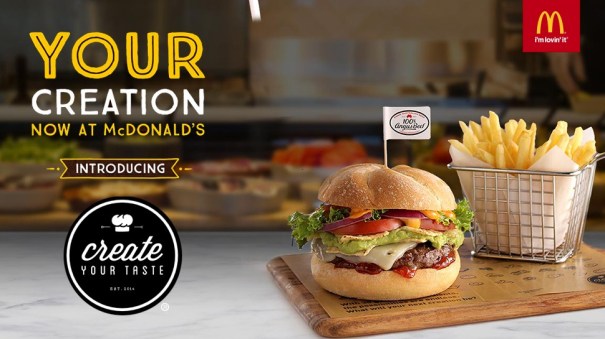
Within the McDonald’s empire, Australia is often the market where the company tries out new concepts, not least at the premium end where it has dabbled for 10 years or more – Macca’s (Australians can and do shorten every word) Mighty Angus comes to mind and, most recently, the “Create Your Taste’ offer whereby customers can design their own burger online, download their order to the phone and place the order at the nearest Macca’s outlet.  McCafé has worked well in many markets and, in the UK, sells more cups of coffee than Costa Coffee the largest coffee chain. Table service is coming to a McDonald’s near you in 2016. All this should help legitimize McDonald’s presence in more premium snacks and meals.  But, it certainly accelerates the evolution and increases the complexity of the fast food model established by Ray Kroc 60+ years ago –  quick delivery of burgers, fries and milkshakes the new model ain’t! That’s one reason why in the UK, McDonald’s are hoping that the “All Day Breakfast’ initiative which has been launched in the USA, and has been credited with improving dismal sales’ performance there, will not have to be rolled out in Blighty! Store operators are desperate to simplify the offer not further complicate it!
MCDONALDS-CYT-970x545_lwgosi

McDonald’s allowed customers in Australia to tailor their food.

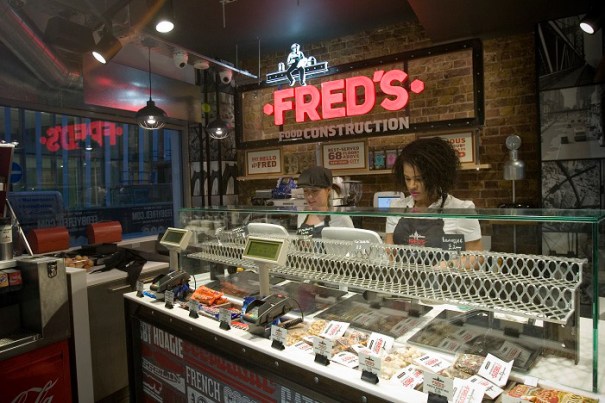
Back to the comparison with UK retail, Tesco has been busily experimenting with and, then, ditching food service concepts such as “In Food We Trust”, hot classic British meals with provenance, a Tesco Express burrito bar, and an USA-inspired sandwich shop (Fred’s Food Construction). Its Harris + Hoole coffee shop may have more legs, although the family restaurant Giraffe looks shaky. Waitrose, Marks & Spencer and Whole Foods have made a decent fist of cafés and in-store eateries, perhaps not surprisingly given their superior performance to mainline grocery chains on customer service. But, in general, grocery retailers struggle with servicing seated customers – their hot food smacks of school meals and the dining ambience redolent of the school canteen!
Freds 091401002.jpg

Fred’s Food Construction. Tesco’s attempt to lure City workers at lunch time.

Other similarities between Big Grocery and Big Fast Food? Both are closing stores in mature markets (e.g. Walmart and McDonald’s in the USA). Both are being more selective in their expansion in emerging markets – slowing economic growth in China not only constrains expansion in China itself but, also, in neighboring Asian economies. Both are finding that local Asian companies are difficult to beat on their home turf (e.g. the Philippino fast food company Jollibee and Korean firm Lotteria ably compete with McD’s in Asia). But the lure of Asia is compelling for McDonald’s: there’s one McD’s outlet per 22,000 people in the USA (54,000 in the UK); but only 1 per 1.5 million consumers in Indonesia!

McDonald’s and Tesco are both struggling in an extraordinarily competitive world to remain relevant to their customers and to maintain and build trust in their respective brands. Arguably, McDonald’s has done a much better job on trust. It was lily white during the Horsegate debâcle which damaged Tesco badly. Constantly under the microscope on its procurement practices and supply chain integrity, it has scored particularly well on transparency brilliantly using youtube to explain how chicken nuggets are made and where the eggs for McMuffins are produced. On sustainable seafood procurement, it’s been years ahead of the major retailers with MSC accredited filet-o-fish. McDonald’s has been leaking customers for 3 years but its most recent sales results are more encouraging – perhaps surprisingly, its share price is close to a 5 year high. Tesco’s declining sales may have bottomed out – however, its share price is close to a 5 year low! Go long on one and short the other? But which way around?!
Tagged with: , ,
Posted in Foodservice, Private Label

Fresh Victims of the Price War: Why Commodity Fruit and Vegetables are Going Bananas!

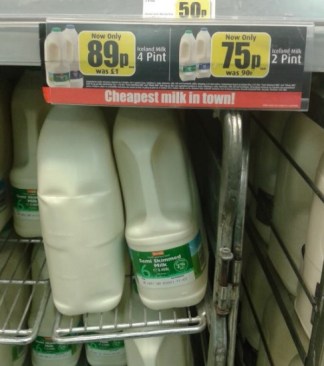
It’s tough out there in the grocery retail trenches and commodity fruit and veg. is slap-bang in the firing line like so much cannon fodder. We blame bananas and milk ably aided and abetted by the hard discounters! We’re training shoppers to believe that KVIs (known value items) are “free goods” like air and water!

Aldi Super 6

Aldi Super 6: promotions on fresh products to attract shoppers.


Iceland

89p per four pints of milk! Cheaper than water!

So what’s the story? Fresh produce positively shrieks goodness – all-natural, no nasties, chock-full of nutrients, fibre, and antioxidants that Jamie Oliver and governments exhort us to eat more of and we give it away! Kantar Worldpanel calculates that ferocious retail competition ripped £570 million (810 million USD) out of the UK fruit and vegetable retail market in 2015.Were we compensated with higher volumes of sales at these low low prices? Well, not by much and, in fact, in most categories it was the higher-priced value-added items (e.g. trimmed, snack pots, ready-to-eat) that saw sales tick up. Households are eating less commodity produce and the nation does not race to the supermarket for more white cabbage when prices halve. Savvy shoppers know that great deals on fresh foods can result in over-purchasing, lettuce lingering in the fridge and guilt-laden waste.

But not only is fresh produce vital for our health, it’s also vital for retailers in establishing their credentials on fresh food quality overall. – after all, it’s the first department shoppers see when they enter the store (not chocolates or sparkling wine). So why is it so tough for produce?:

  • products such as bananas, apples, onions, broccoli are routine, frequently purchased items that shoppers have some idea about their price. Thus, retailers’ notion of the KVI and their sharp focus on price of these items explaining why bog standard bananas are 68p a kg. (1 USD) and iceberg lettuce 50p a head across the High Street (and milk cheaper than bottled water);
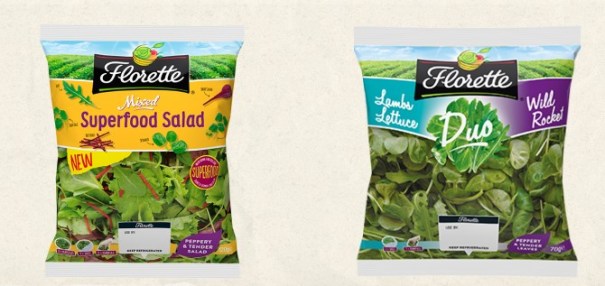
  • produce is generally not branded (and when it is, often, there’s no discernible visible difference between branded and own label). In a static market environment, retailers can and do squeeze suppliers. Yet, the few outstanding branded produce items – e.g. Pink Lady, Florette, Tenderstem – have shown excellent resilience in the face of harsh market pressure;

 TenderSteem Benefits

The Perfect Pink Lady

Tenderstem and Pink Lady: making sure shoppers know where the differences are.

Florette Salads

Florette: they keep their position because they launch continuously relevant new products to the markets.

  • produce categories are often poorly category-managed – e.g. a wall of seemingly identical citrus varieties, a bewildering range of onions with confusing price points – where product differences are not explained so, to save time, shoppers simply select the cheapest on offer;
  • frequently, the produce item being purchased is creating a meal problem for the shopper and not a meal solution. Think of poor mum – “I must buy fruit and veg. or I’m not a good mum. But, I’m short of time and how can I sneak it into the children’s food? Give me convenient, stealth vegetables”!;
  • fresh fruit and vegetables may have a substantial health and well-being halo, but market experience shows that convenience (to prepare/consume, etc.) trumps health every time.

How can you escape the margin pain of being a KVI?:

  • if persevering with the commodity (e.g. iceberg lettuce), dominate the category and, through scale, good management and technology ensure that you are the lowest cost and most efficient producer (Shropshire’s et al come to mind);
  • go better than bog standard and seek varieties with interesting features/attributes for consumers (e.g. on premium taste, colour, shape). Look how the tomato category has evolved – no longer just the perfectly round, perfectly red, perfectly tasteless Dutch wasserbombe. Now, you have to go to Night School to make some sense of what’s on offer!;
  • seek exclusivity of ownership of a variety with unique attributes, e.g. note the success of Driscoll’s Maravilla raspberry, but accept that competitive offers will soon emerge as breeders seek to copy success;
  • tell stories and add provenance – offer fruit and vegetables with adjectives! Remember, an apple is a noun and that smacks of commodity price pressure. The margin is in the adjective -e.g. an exclusive adjective such as Pink Lady or Wilberforce Farms, and/or new season, chemical-free (we like our fresh produce free!);
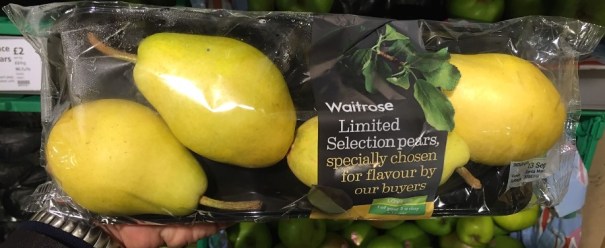
  • work exclusively with Waitrose or M&S with specialty products such as white plums from Eastern Europe or sweeter than sweet French pears under the “Buyer’s Selection” banner (although, do advise the Buyer not to add the strap line “selected for flavour” (what else would you select for, shelf life!);
  • add value through convenience to your product – consumers aren’t lazy just short of time to prepare and consume. Can you produce a snack version?;
  • plug into the health and well-being trend and ALWAYS remind consumers that it’s “One of Your 5-a-Day”. It’s still only January, so are you keeping up with your New Year’s resolution to eat more healthily?;
  • does my product fit into an emerging consumer trend? Can you spiralize it (e.g. carrots, courgettes)? Can you juice it? “Daddy, why would you have ever eaten greens when you could have juiced them?!”. For fresh pulses (beans, peas, etc.), shout about their protein content – plant protein is seriously on-trend.

We know the 2016 grocery retailing environment is going to be every bit as tough as in 2015.We don’t see a “Morrison’s Carrots for Farmers” movement coming to save the day! Commodity fruit and veg was, is and will remain very hard work. Your reward is more likely to be in the next life! Do have a successful 2016 and Happy New Year from David and Miguel.

Waitrose Pears 01


Tagged with: , , , ,
Posted in Discount, Promotions

Christmas is for Giving and for …….. Copying!

Well, customers have breezed through Halloween, Thanksgiving, Black Friday and Cyber Monday and are careering towards the festive season with retailers worldwide cheering them on. The year is being filled to the brim with special days wooing shoppers to open their wallets. We blame The Three Wise Men – gift-giving at Christmas has got serious history, whereas Singles’ Day in China (coming to a market near you!) emerged in China in the early-1990’s and Cyber Monday is a mere stripling of ten years old.  Christmas is the Number 1 family food occasion in the UK (it’s pipped into second place by Thanksgiving in the USA) and, indeed, other religious festivals across the world have their own food particularities –  Diwali for Hindus, like our Xmas, tends towards food excess whereas Ramadan for Muslims at least tempers feasting with fasting!

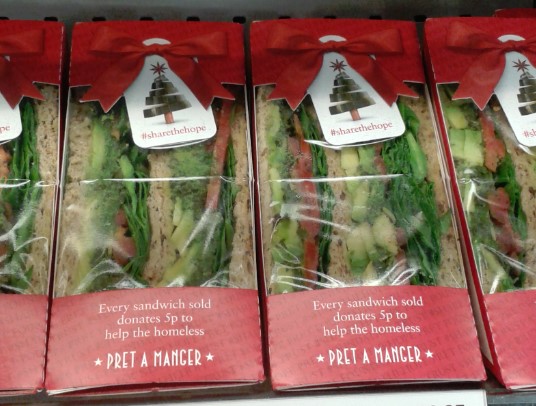
Christmas is a time for giving, not least to those who need help. In the days when Christmas greetings were sent by post, the season of goodwill was an excellent opportunity for charities to sell cards with their imprimatur to support their cause. Retailers were quick to copy with, for example, Tesco Xmas cards supporting “charity partners”. The increasing popularity of electronic cards has dealt something of a blow to charity finances but all is not lost – now, the game is raised and you can support a charity at Christmas by buying sandwiches!

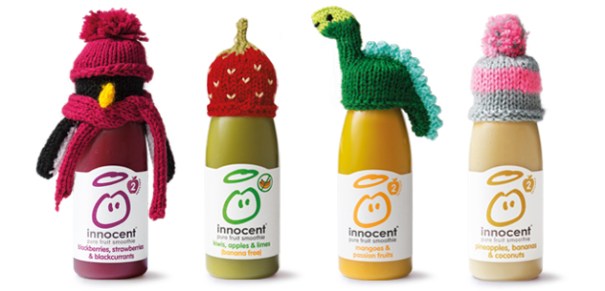
Prêt à Manger (purveyors of fast, healthy food in the UK, France, USA, Hong Kong, China) has linked its festive sandwich, soup and salad offers to a charity for the homeless through the Prêt Foundation Trust. Not only is it a good thing to do, but it complements their wholesome image. The “good-for-you” drinks company Innocent has been on a similar track for years with its very effective “The Big Knit” project – where customers and others are encouraged to knit little bobble hats which fit on Innocent drink caps. The cute result carries a price premium and a 25p ($0.40) donation to Age UK to support vulnerable oldies.

Pret a Manger ShareTheHope.jpg

BigKnit-AgeUk-promoImg.jpg

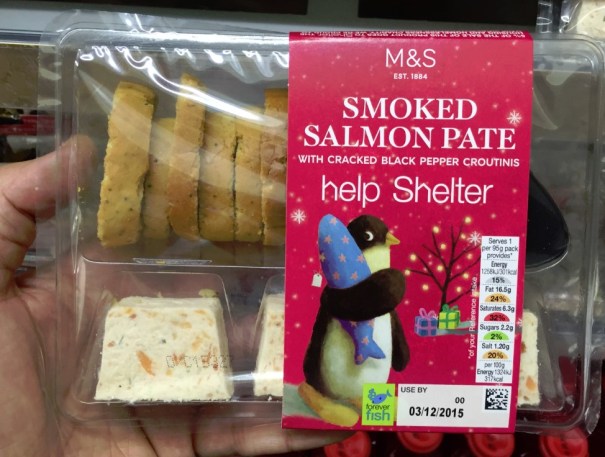
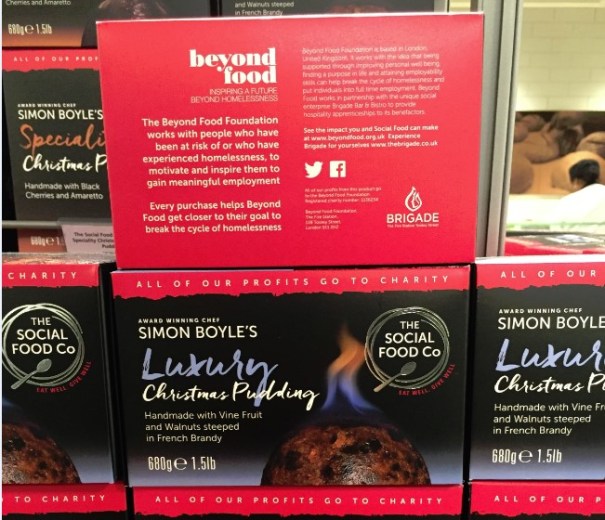
Pardon the pun, but now supporting charities through the sale of food and drink products, particularly at Christmas, is old hat. It’s gone mainstream and most of the grocers are into it! Want a Christmas Pud? Pop into premium retailer Waitrose and buy celebrity chef Heston Blumenthal’s one with its hidden oranges and clementines. Or to alleviate guilt, opt for the creation of another well-known chef, Simon Boyle, with his yummy pudding branded under The Social Food Company and is linked to the charity “Beyond Food” which trains disadvantaged people wanting to work in the food industry. And posh Fortnum & Mason has a Panettone from San Patrignano this Christmas which provides a donation to a charity for drug addiction rehabilitation in Italy.

M&S HelpShelter.jpg

Waitrose SocialFoodCo.jpg

Luxury but charitable Chistmas Puddings on sale at Waitrose.

We think it’s brilliant to link the sale of seasonal delicacies with good works for those in need. Does it have a commercial pay off for grocery companies? It doesn’t have to but, likely, it contributes in some small way to presenting a more caring and less grasping image for those participating. We are reminded, however, of one of the core competences of successful grocery retailers around the world – viz. copying! Wherever we are in the world when travelling with retailers, one of the first things they will say and do after checking into a hotel is say “let’s go and look at some stores”. Out come their phones and click, click … “that’ll work well in our market”. In Canada, we were visiting the head of private label for a leading grocer and noted the one-liner scrawled on the white board above his desk: “Copy the Best Ruthlessly”! FMCG may stand for fast-moving consumer goods, but FCCG works well, too – fast copied consumer goods. Branded manufacturers are allowed to smile wryly at this point!

Happy Christmas,  A Prosperous New Year and Our Very Best Regards to You from David and Miguel.

Tagged with: , ,
Posted in Credentials

Eat Up Your Meat …. Well, At Your Own Risk!

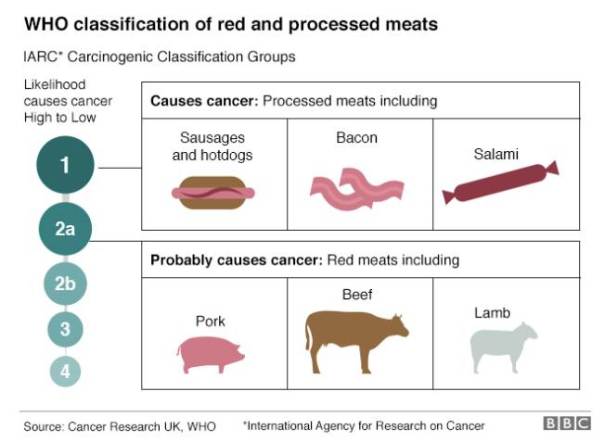
Red and processed meats had a bad month in October. Mind you, they’ve been taking a bashing  for a while and it’s not just on health. Beef and lamb are portrayed as being anti-social for environmental reasons (cattle and sheep are famous for their flatulence) and, for hogging scarce arable land – grain-fed beef cattle consume 8 kgs. of cereals to produce a measly1 kg. of meat. Then, of course, there are burgeoning consumer concerns about animal welfare issues. Bye bye global meat industry? Far from it, as world meat demand increased by 20% between 2000 and 2010 and is expected to increase by close to the same amount again by 2020. However, the world of meat is dichotomous: in most rich countries, per capita meat consumption is static at best or declining; whereas, in lower income emerging countries, meat consumption is sharply on the rise.

It’s never going to be positive for your industry when bodies with names like the World Health Organization release statements calling for consumers to reduce processed meat (often, pork-based) consumption sharply and to moderate red meat intake overall because of perceived risks associated with colorectal cancer.

Picture1

What’s more, the World Cancer Research Foundation recommends we cut back our red and processed meat intake to 500 grms. per week – this wouldn’t simply amount to trimming consumption for most Europeans/North Americans/Australasians. It would require them to slash it by at least one half!

But folk in rich countries already seem to be on a meat reduction course driven by factors such as: an ageing population reducing overall food consumption, but particularly meat, as they come to terms with their mortality and seek to correct the food abuses of a lifetime by upping their intake of fresh fruit and vegetables, fish, whole grains and other self-righteous victuals; non-meat proteins are firmly on-trend with whey and pulse demand rocketing; and niggling guilt about the environmental and social impact of beef and lamb production. Be assured, the green lobby has its tail up and articles on the detrimental impact of meat production flood the snootier newspapers; whereas the tabloids, such as UK’s The Daily Mail prefer their time-tested “shock, horror” approach – e.g. “Bacon and Sausages: Killers in the Kitchen” (October 26th, 2015).

The meat industry has always struggled with its public image, all the way back to Upton Sinclair’s exposé of meat packing in Chicago 110 years ago. “Horsegate” didn’t help and, most recently (November 5th), the European consumer watchdog agency (BEUC) published its report outlining the many and various deceptive meat labeling excesses of the industry. Worldwide, the meat industry tends to be reactive rather than proactive, defensive rather than offensive. Organizations representing livestock farmers are, often, riddled with internal politics  and incapable of working in a concerted fashion with “competitor” meats. The meat processors are obdurate and loathe to invest any of their thin margins on positive public relations. Retailers simply put meat on their shelves and prefer to duck down below the parapet hoping that what it says on the meat package is what is actually in the package!

So, what’s the future of meat in higher income developed countries?

Did we come to the store on Meatless Monday?

Did we come to the store on Meatless Monday?

Per capita consumption is very likely to continue to drift down; as it will for lots of other food products such as high butter fat dairy – it is no bad thing for most of us to eat less of almost everything in our diet, with the exception of angelic fresh fruit and vegetables (and, even then, go steady on the high sugar fruit!). But, here’s the really good news. We’ll eat less meat but, when we do, we shall want to eat better meat. As a starter, it should be REALLY tasty. Secondly, it should be in a form that meets our lifestyle requirements – the “half shoulder of lamb knuckle on” that looks like the aftermath of a nasty car accident and requires an advanced degree in mechanical engineering to carve will rightly become an ancient food museum artifact; but  pre-prepared slow-cooked (pulled even) lamb with Greek oregano is a winner. Thirdly, it should be wrapped up in a delicious, convincing story that pulls heart strings and stimulates saliva!

Importantly, if consumers are to pay a premium for less meat but more stories about its provenance, method of production, breed, etc., then, the extra attributes in the products must be guaranteed. The litany of food safety and integrity disasters in the global meat industry have eroded trust. Traceability and transparency in the chain from farm through to consumer sale must be paramount. Finally, is the world going vegetarian? No, we’re omnivores and irrespective of the advice of international health organizations, we shall continue to enjoy bacon sandwiches. Mind you, bacon is so addictive it could be easily slipped into the Schedule 1 list of Drug/Substances!

Posted in Fresh Products, Health

Convenience with a Twist.

Tesco has more than 1,700 Express stores throughout United Kingdom

Tesco has more than 1,700 Express stores throughout United Kingdom

Grocery market forecasts for the UK indicate a grueling time to 2020: overall grocery expenditure edging up a tick over 2% per year but a redistribution of spend with big box store sales declining, small supermarkets static, convenience stores sales positive but not a patch on the strong growth anticipated for online and hard discounters (IGD). So, what’s all the hype about convenience stores and shrieks of derision aimed at Morrisons when it sold its M Local convenience stores to retail entrepreneur Mike Green? Remember, in early-2015, Morrisons reported an annual loss of £792 million of which £36 million was attributed to M Local and, in the cold light of day, a proportion of the small stores proved to be, well, inconvenient for shoppers! Sainsbury’s will be hoping that the 2 “Local” stores scheduled for opening each week for the next 12 months will be convenient – close to work or home and offering meal and snack solutions for their customers.

js egg spinach js milk cat

In history, C-stores were independently-owned or franchises and catered principally for morning purchases of milk, cigarettes, newspapers and maybe a snack to eat on the bus and, at the end of the day, booze, more ciggies and panic food purchases for the evening meal. Milk was central – thus the generic term of a dairy for a convenience store in New Zealand and Mac’s Milk as the iconic Canadian corner store. Then, in the UK, the supermarket chains muscled in offering a wider range of products that they tried to shoe horn into 100 square metres of space. Retail artisans have grasped opportunities, too, servicing live-to-eat “foodies” with specialist fare rather than the more desperate eat-to-live “fuellies”!

Now, retail science pervades the convenience store scene as vendors talk of mission management and present a range of offers that meet the requirements of shoppers throughout the day. 7-Eleven have been masters of this particularly in Japan. Tesco is experimenting flipping the offers of breakfast/lunch/dinner/snack solutions during the day in their Express format across London; and be impressed by the wall of commuters clambering over each other to grab & go dinner at major railway stations!

The word convenience is defined as “to do something without difficulty”. For a convenience store, this mandates convenience of location and of product selection and payment within the store. But it should do so much more – it should inspire the shopper and supermarket businesses have generally lacked inspiration! UK retailers already change promotions from week-to-week, and offer something special for the weekend (mind you, men’s barbers  were doing exactly that decades ago!). Let’s go a step further and change the assortment – focusing on different products and themes throughout the week:

  • a health and well-being weekly journey – celebrate Meat Free Monday, detox Tuesday, classic comfort foods for caught-in-the-middle Wednesday, pop in a well-earned indulgent offer for Thursday, and don’t forget Fishy Friday;
  • maybe a Downton Abbey on your lap meal (in the USA, the food and drink industry presented “Monday Night Football” offers for NFL aficionados, mind you they were never a pretty sight!);
  • perhaps, try a geography and culinary lesson week – hopping from Vietnamese pho to Spanish paella and, on a whim, avoiding anything “pulled”! When did we start pulling meat?!
E17, one of the Spar stores in North London.

E17, one of the Spar stores in North London.

Adding excitement and theatre to the convenience shopping mission will bring complexity to supply chain and store management. However, it will be a step forward in combatting the increasing competitive pressure felt from restaurants with a speedy home delivery offer. Smaller and more frequent purchases will become more important in the overall grocery spend scene. Where these purchases are made – in a convenience store, petrol forecourt, metro or supermarket – will depend on what is most convenient and fulfilling for the shopper and not on the label that a retailer elects to call a particular shop.

Posted in Uncategorized

Let’s Talk Fish!

John West, Britain's number 1 brand for tuna, showing consumers in their advertising how the real fishermen are.

John West, Britain’s number 1 brand for tuna, Fisherman.

Fishermen are the last remaining hunter gatherers in our food system and, increasingly, even they are turning to fish farming (farmed fish and seafood accounts for close to half our world’s seafood consumption). The popular image is of a fiercely-independent, gnarled, bearded guy, often short of a digit or two, in oilskins and a sou’wester bending into a gale. This may still be true but he better be competent in fishing law and regulations as sea fishing has been wrapped in politics and legislation for decades (do you remember the UK and Iceland cod wars?). The principal driver of regulation has been concern about over-fishing and allocating dwindling supplies between nations and fishing businesses. As ever, imposing quotas on fish catch has had unwanted consequences, such as the wasting of secondary or under-sized fish – the so-called “bycatch” problem. As a result of all this, special interest groups and concerned consumers have ensured that sustainable fishing and sustainable seafood consumption has long had a high public profile. Surveys reflect the success of this pressure and consumer concerns about “the world running out of fish” are pervasive.

Marks and Spencer was the first of the UK food retailers to take fish sustainability seriously. The famous M&S “Plan A” was launched 8 years ago and has evolved as a business plan recognizing that the world is increasingly resource constrained and that M&S customers want their favourite retailer to act responsibly on their behalf. In 2015, all of the M&S fish and seafood offer is from sustainable sources. Does every customer understand what Plan A is all about? Likely not but it isn’t vital – it places M&S in the top league of socially-conscious global businesses and it pleases its customers and influential special interest groups.

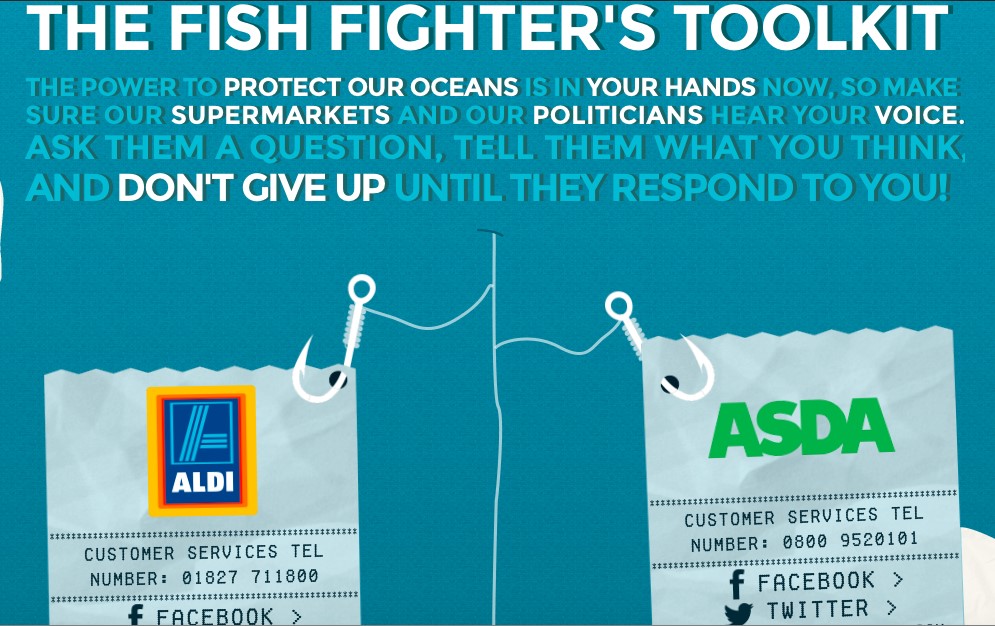
Hugh Fearnley-Whittingstall provides shoppers with The Fish fight toolkit, for them to know what they are buying.

Hugh Fearnley-Whittingstall provides shoppers with The Fish fight toolkit, for them to know what they are buying.

Waving the sustainable fish banner is far from just the prerogative of the premium retailers. Hard discounter Lidl may be the cheapest source of fish but it also has sustainable credentials testament to the effectiveness of media active chefs such as Hugh Fearnley-Whittingstall and the ubiquitous Jamie Oliver:

  • the redoubtable Hugh launched his “Fish Fight” campaign in 2010 to change EU policy and regulations on fish discards – he was successful and hundreds of thousands of consumers supported him;
  • Jamie Oliver backed Sainsbury’s “Switch the Fish” campaign which set out to expand the UK’s fish consumer’s repertoire of fish purchases – 80+% of UK seafood sales comprise 5 species (viz. cod, haddock, salmon, tuna and prawns) and Sainsbury’s offered shoppers a free portion of an alternative “under-used” fish such as coley and hake to those willing to try such exotica!

Greenpeace ranks the major grocery retailers on how they are doing on fish sustainability issues. In Canada, for example, Safeway gains the plaudits while Costco is the recipient of brickbats! In an era where value (aka being low-priced) is vital, walking the talk on more esoteric values is increasingly influential when earning the trust and loyalty of shoppers.

Greenpeace - Supermarket Report 2014 II

Source Greenpeace Ranking Supermarkets on Seafood Sustainability, 2014

Source Greenpeace Ranking Supermarkets on Seafood Sustainability, 2014

Sustainable sourcing for fish and seafood by grocers has gone mainstream. So, problem solved and the oceans are set to produce ample stocks for a fish protein hungry expanding world? Not just yet! Sustainability claims do not provide  a marketing advantage, rather they are a requirement to be in the fish business. A proliferation of sustainability schemes which are understood by few muddy the oceans and  obfuscate the purchase decision for shoppers who, in the UK in particular, have little knowledge about buying and preparing fish and a more likely to eat it out than in so that the selection and preparation decisions are in the hands of the chef. It is in food service that the biggest problems on fish sustainability lie. Fish  fraud is pervasive across the globe –   wrap the product in breadcrumbs and cover with a sauce and who knows where the raw material came from and whether it was what is promised on the menu!

Britain’s number 1 tuna brand, John West, is currently under attack by activists for “secretly ditching a promise to save dolphins, sharks and turtles from the (tuna) fishing nets”. Founded over a century ago (and, now, owned by Thai Union Group), John West had promised that by 2017 it would source 100% of its tuna sustainably. It’s a reminder that, generally, under-promising and over-delivering is a better policy! Lily white Marks and Spencer do not sell John West tuna because “it does not fit our ethical sourcing standards”. Or in the USA, there’s a Presidential Task Force on Fish Fraud and for good reason – a restaurant in New York City was fined for selling garlic-dusted pig anus rings instead of the calamari it promised!  These days, increasing transparency and traceability in the food supply chain is so essential to building trust in our industry. It takes decades to build trust and seconds to destroy it – just ask the most recent past-Chairman of Volkswagen!

Posted in Fish, Sustainability

Is The End of the “Big Box” Hypermarket Era Nigh!

Certainly, in the UK shopping habits have evolved through recent economic tough times – we are savvier (demand and seek out low and transparent prices); do a “big shop” less frequently and buy fewer items when we do; increasingly buy groceries on-line; shop more often for “dinner tonight”; and, when we shop, we look for meal components rather than the meal ingredients. But don’t expect an “ATM Moment” with “Big Box” retail stores – remember when ATM’s were being introduced pundits advised us that they wouldn’t catch on because consumers would miss their interaction with bank tellers. What?! Most ATM machines have more personality than tellers! Within months, we all switched to cash points. But IGD forecasts that big store grocery market share will fall by 5 percentage points over the next 5 years (from 40% to 35%), as discount and on-line together add 8 points.

So, the imminent death of the “Big Box” format is greatly exaggerated – they won’t disappear in a puff of smoke like the bank counter staff did! However, retailers like Tesco and Asda must to come to terms with the fact that, through the remainder of this decade, on-line, discount, smaller supermarket, and convenience store sales will outpace hypermarket sales as we move comprehensively towards a more shopper-friendly and dynamic multichannel grocery environment.

Tesco - Euphorium Bakery

Tesco is including some upmarket food to go sections in their big box stores, with premium products and good story telling.

Tesco - Euphorium Bakery 02

Is managing decline the only outcome for “Big Boxes”? Or can they be reinvented? Here’s some observations on what the major retailers are doing now and some ideas for the future:

  • go back to retail basics – nibble away at the price advantage of the discounters, reducing complexity of offer (fewer skus) but increasing relevancy, with simpler promotions that are personalized, backed up with friendly, attentive service and more retail theatre;
  • capture the high ground on food and drink retail expertise – a “foodie” specialist in-store with hand-held technological back-up!. The Euphorium bakery initiative in Tesco is a good start. In-store cooking lessons and/or chef demonstrations work well for Whole Foods Market in the USA and is under trial by M&S in some of its big stores. More realistically, use shopper data to target specific consumers with very specific YouTube meal preparation tips – e.g. those buying Japanese food ingredients with “how to cook” yakitori or sukiyaki (the promise?: we’ll make you look like a smart cook!);
  • food retail and food service are fast converging but, as Tesco is trying to do with Harris + Hoole and Giraffe, go for “Meals/Snacks for Now”. M&S and Waitrose score well here where you can try some tapas with a glass of wine in the store’s tasting area/café;
  • bring in shops within shops – acknowledging that big grocers are not experts in everything (Tesco thought it could be back in the Leahy era) and rent space to the likes of Argos (Sainsbury’s), and Decathlon which has the sports goods reputation and Asda has the locations;
  • integrate with the on-line offer – enable the collection of products purchased on-line (click & collect), and purchase products seen in-store (real or on-screen) for home delivery at a convenient time;
  • expand the use of shopper-friendly technology in-store – communicating via smart phones with shoppers about personalized deals for them and them alone whilst in the store, magic mirrors for fashion shoppers who can see how they’ll look in the outfit when they get home and what accessories would go best, big screens in-store that show the full range available on-line (as is the case in Tesco’s Watford toy “infinite” aisle);
  • auto-scanning to save time at the checkout, with an option that the customer can take some products home personally (e.g. food for tonight, fragile fresh products, etc.) and the rest can be delivered later;
  • visit Asian supermarket stores and see how staff expertise and theatre can excite customers buying fresh meat and produce. Mind you, live turtle sales are probably not an option for us in the UK! In-store food preparation can draw a crowd, particularly if it involves expertise that is admired (e.g. sushi-makers), and gives the retailer fresh food credentials;
  • attach services that make the investment in time to the “out-of-town” store more appealing – such as health, optical, etc.

What of “Big Box” grocery retail by 2025? Maybe they become mini-theme parks with the celebration of food and drink at their core. Somewhere for all the family to want to go to for a day out – a bit of everything to do with food such as a pop-up farm with animals, cooking classes for kids culminating with the family eating a “kids made” lunch, wine tasting, local food hero days, insights into exotic cuisines. Mind you, it might be useful to have a water slide, movie theatre and cool kids stuff, too. Of course, cool stuff isn’t just for kids – be sexist and add a spa and laser clay pigeon shooting. ! A JV with the guys from BOXPARK (Shoreditch, London) might attract much sought after millennial shoppers – fashion and food are a compelling combination!

Boxpark offers entertainment, retail and foodservice under the same roof Source Boxpark

Boxpark offers entertainment, retail and foodservice under the same roof Source Boxpark

Tagged with: , ,
Posted in Hypermarkets
Dr. Food Weekly Food Business Insights
Please, visit our new project, a platform about food trends and their implications for businesses: Dr. Food Weekly Food Business Insights/

Enter your email address to follow this blog and authorise us to send you notifications of new posts by email.
If you want to register for Dr Food Weekly Food Business Insights check the top menu please.

Join 433 other subscribers
About the authors
Prof David Hughes: Around the world, David speaks to senior agribusiness and food industry managers about global food industry developments that are and will affect their businesses and industry. Energetic, engaging, humorous and insightful, David gains the very highest evaluations at seminars, conferences and Board level discussions in every continent he visits. Miguel Flavián: works for several Spanish organisations and companies to help them to learn from the developments of the British grocery market and improve their business back home.