Sugar is No Sweet Topic!

The redoubtable Director General of WHO, Dr. Margaret Chan, two years ago accused “Big Food, Big Soda and Big Alcohol” of being as evil as “Big Tobacco”. Why so? Well, for “Big Soda” her criticism focused on high sugar content and its major contribution to the global obesity epidemic. The irony is that sugar, honey, sweetheart are familiar terms of affection in English and in other languages. Yet, for many nutritionists sugar and, particularly, added sugar, has become the spawn of the devil!

The noise level about sugar content in food and drink has risen inexorably over the past ten years with, arguably, 2015 being the annus horribilis for the likes of Coca-Cola, PepsiCo and, latterly, Suntory (Ribena). Sales of “regular” (i.e. not diet) carbonated beverages and fruit drinks have plummeted. But, even “healthy” 100% juice and smoothie sales have suffered as we find out, to our surprise, that there is as much sugar in the good stuff as the naughty stuff – there we were thinking we were sneaking stealth fruit into our children when we were contributing to them becoming as round as puddings!

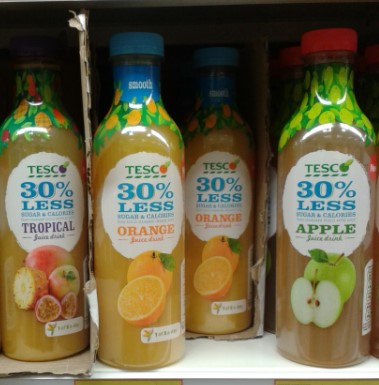
Tesco: reformulation might be the answer to keep consumer's choice without pouring sugar on them.

Tesco: reformulation might be the answer to keep consumer’s choice without pouring sugar on them.

Over time, more and more food products have been introduced with “naturally occurring sugars”, or “reduced sugar”, non-nutritive sweeteners (e.g. sucralose), natural, non-sugar sweeteners (e.g. stevia), and the really naughty High Fructose Corn syrup being removed. It’s a nightmare for consumers – we have to go to night school to work out which Coke to buy (regular, diet, zero or life, with or without cherry?). Confused or not, there’s a clear consensus that most of us take in too much sugar and it would be an excellent idea for families’ health and the financial health of our NHS if we cut back not just a little bit but radically.

Enter the arena, Tesco – bruised and battered but bound and determined to make a statement about its view on healthy products for kids. Inter alia, it bans kids drinks with added sugar such as Ribena and Capri-Sun prior to an anticipated comprehensive review of its entire kids drinks range. Tesco has the aim of reducing by 5% in a year the sugar content in their soft drink sales and offering only “healthy” drinks at the checkout. Roars of approval from the stands? Not a bit of it – shrieks of rage that Tesco is  curtailing consumer choice and accusations of hypocrisy because tobacco products, booze, Coke and Mars bars are OK but Ribena is taboo! A muted approval from the nutritional special interest groups tempered further by “you should have done this earlier and more widespread across all sugary products”!

So, what’s our view? Starting with consumer health and recognizing that this is complex, it’s unequivocal that our diets have been too sugary and salty for years. With some notable exceptions (e.g. Heinz and reducing salt in its baked beans), the food and drink industry have been dragged kicking and screaming in to reformulation of their products and, in turn, major retailers have largely taken the view that, in a consumer-driven world, the retailer responsibility is to offer choice and let the shopper decide. On Type 2 diabetic matters, we’re long past this point – we have to take radical action. We simply cannot afford to continue on our present self-destructive nutritional path. Action is required by all stakeholders: viz. by individuals, families, the public sector, government, special interest groups, and the food and drink industry. On some issues, like a nation’s health in crisis, the State should be a nanny and so should all others who have a significant influence on the health outcome.

Widening our perspective, it’s clear that increasingly society is asking more of its members, and particularly those who are influential, to behave and take actions that are in the best interests of us all in the longer term. So, big business must go about its business, first, in a way that furthers society’s greater good and then, secondly, work out how it can make money doing so. If you wanted a role model for this, then, take a look at Unilever’s Paul Polman. He walks the talk on sustainable development. Worrisomely, however, in a decade or so, Unilever may, like Procter & Gamble, have exited the food and drink industry and totally embraced the world of non-food products as an avenue for more sustainable financial profitability!

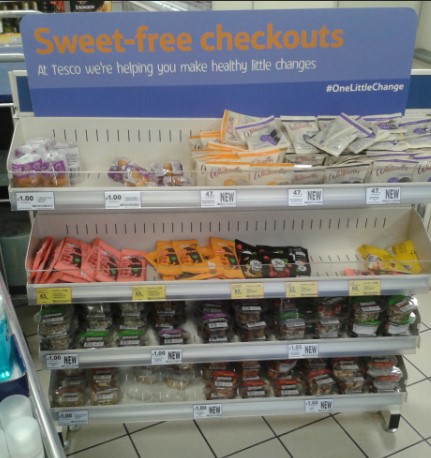
Tesco (and done by others too): removing confectionery products from impulse areas counts towards being a responsible retailer.

Tesco (and done by others too): removing confectionery products from impulse areas counts towards being a responsible retailer.

Tagged with:
Posted in Consumer, Health

Beware, Excitement Ahead: Private Label Evolving!

UK supermarket chains continue to knock seven bells out of each other as they struggle to come to terms with hard discounter level prices. Even upmarket Waitrose is not immune and its “Pick Your Own Offers” gives loyal shoppers 20% off their 10 favourite items from a list of 950 eligible products. Expensive (maybe costing the retailer and suppliers $400 million p.a.) but smart as it plays directly to the trend of sculpting an overall offer to customers that is personal to them. Fair play to Tesco, its early use of ClubCard data was a move in this direction, too. Combine price-matching promises with personalized offers and a private label range unique to a particular retailer, then, the business has a base from which it can differentiate its offer from the competition.

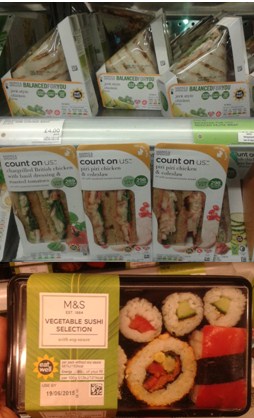
Marks & Spencer. Fine tunning private label ranges to the changing consumer needs.

Marks & Spencer. Fine tuning private label ranges to the changing consumer needs.

Private label developments are dynamic in the UK (and elsewhere):

  • the cheap and cheerful “price fighter” role of private label, still current in many countries, is long gone in the UK. British supermarkets were early adopters of 3 tiered “Good, Better, Best” ranges, with Tesco finest* and Sainsbury’s Taste the Difference leading examples of premium PL. In France, Carrefour has scored well with Reflets de France  emphasizing traditional products with provenance. Now, the PL hierarchy is more complex;
  • ranges for kids, organic and natural foods, Free From, weight reduction and for health maintenance have been introduced. Marks & Spencer’s count on us has led the way in calorie-controlled PL and Fuller for Longer products for those struggling with weight management. Loblaw’s President Choice Blue Menu products for good health have been very successful. As has Kroger’s simple truth umbrella PL brand for organic, natural and free from foods generating over $1 billion sales in its launch year and narrowing the perceived quality distance between its fascias and Whole Foods Market;
  • in countries with significant ethnic populations, supermarkets have sought to take share from independent retailers with a strong immigrant clientele – e.g. Carrefour Halal, and Loblaw’s T&T Asia range;
  • not all initiatives have been successful and Tesco tripped up at both ends of the market – with “faux brands” (exclusive to Tesco but unknown to anyone!) to take on hard discounters Aldi and Lidl; and venture brands designed to take on blue chip fmcg products (e.g. Tesco’s Chokablok in confectionery and Parioli in Italian gourmet foods).

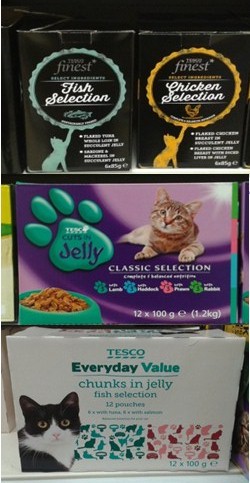
Tesco's Three Tier Structure applied on many products: Essential Value for the first price, and *finest is the Premium product.

Tesco’s Three Tier Structure applied on many products: Essential Value for the first price, and *finest is the Premium product.

Our view is that these are very exciting times in private label development:

  • a blaze of PL products across categories can make a big statement and create much needed theatre to announce the arrival of Christmas or Spring and reinforce across the store the superior values of one retailer over another; e.g. M&S removing hydrogenated fats from all its food products 10 years ago and staked a claim to be the leader in healthy foods, and the Coop took an early ethical stand on Fairtrade issues. Look, too, at Iceland launching a range of American foods prior to the July 4th Independence Day celebrations;
  • through innovation and great shelf presence, a branded manufacturer can influence shopper interest in one category but the retailer has the entire store as its palette! Lifestyle brands can cross not only categories but departments. Morrisons NU ME covers foods whether they be fresh, chilled, frozen, or ambient and promises “all your favourite foods, only healthier”;
  • sometimes retailers simply accept that they do not have the credentials in key areas – artisanal baking is a case in point and Tesco purchased The Bakery Project from Hackney and Euphonium Bakery from North London to place them in key stores. This is hardly private label but they are brands which are exclusive to Tesco;
  • in fresh produce, a department which is essentially unbranded (we don’t think many shoppers hang their hats on buying an Asda cucumber, they just buy a cucumber that is sold in Asda!), retailers can use “Especially Selected by Our Buyers” or “Limited Edition” to indicate that this retailer has particularly strong credentials in fresh fruits and vegetables and strong links to the best producers;
  • it’s a safe bet that there will be further segmentation and development of sub- and sub-sub ranges in PL which will bring supply chain management complications but, hopefully, better shopping experiences for consumers.

Don’t forget, grocery chain owners can and do adapt the offer in each store to meet the particular needs of the store’s clientele. Wow! Add this to super-segmentation in private label and multi-channel routes to the consumer – the world of grocery retailing is just going to get more complex, challenging and, certainly, more exciting. Yippee!

Tesco brands the whole bread section to create theatre.

Tesco brands the whole bread section to create theatre.

Tagged with: , , , , , , , ,
Posted in Private Label

Drink Up Your Vegetables or There’ll Be No Dessert!

The health & well-being trend in food is well-documented but, as we’ve noted previously, eating 5 portions of fruit and vegetables per day seems unattainable for most families across Europe. In the UK, consumption statistics are based on actual fresh produce purchases not on disappearance data (i.e. volume of production + imports – exports divided by population) which they are for most other countries and explains, in part, why Brits appear to score so pathetically on eating fruit and veg. But, increasing amounts of fresh produce are now being purchased in a fresh prepared/processed form and are not included in UK fresh produce consumption statistics.

In UK supermarkets, chilled food rules the roost. Many newer convenience stores have 50% of their shelves refrigerated to maintain the safety and condition of ready meals, sandwiches and, yes, smoothies, pressed juices, fruit and vegetable salads. Ah hah, a clear example of laziness and declining moral turpitude in modern consumers. Bring back the lash you say?! Of course, it’s responding to what they demand, viz. tasty, convenient, healthy meals, mini-meals and snacks.

Much more than price level, the major factor constraining consumption of most fresh produce items is their intrinsic inconvenience – to prepare, eat and consume on the run. So, the industry provides a solution – drink your fruit and veggies. They can even link to the current fashion of using ugly/misshaped produce and give the consumer an additional benefit of saving waste and the planet!

Brands like Naked boast credentials and consumer friendly messages: no added sugar, made by sustainability leaders, looks weird tastes amazing, plus all the natural topics you can think of.

Brands like Naked boast credentials and consumer friendly messages: no added sugar, made by sustainability leaders, looks weird tastes amazing, plus all the natural topics you can think of.

Branded companies are substantially better at communicating the consumer benefits of their products than commodity suppliers. Innocent comes to mind and its ability to relate to a younger consumer base and link its products with worthy campaigns (e.g. putting little wooly hats on smoothie bottles in the Winter and charging 25p extra which goes to supporting an old age charity). Fresh fruit juices and smoothies led the pack in earlier years but were whacked heavily by revelations of their high sugar content and reduced health benefits because of fibre removal in processing. Now, vegetable-based smoothies/juices are all the rage (tipping our caps to the venerable V8 juice which is 67 years old) and the product offering is becoming increasingly sophisticated with cold-pressed juices (stealing some of extra virgin olive oils’ thunder), and “banana-free” and “celery-free” products showing that it’s just not gluten and lactose that have the mark of the devil!

What’s the impact of this fresh processed trend for the regular fruit and vegetable market? Likely not much in terms of volume loss, although the indicators of consumer preference for easy-to-eat produce have been well-signaled – e.g. the fastest growing fresh fruit categories over the past 10 years in the UK have been fresh berries and grapes (so easy to snack) and the slowest has been traditional citrus (isn’t life too short to peel an orange?!). The loss for the traditional produce players is in high value customers; those that are younger, higher income, less price sensitive and, importantly, higher margin for the business. Retail shelf space will expand for higher value products at the expense of the traditional. The humble traditional fruits and vegetables will be left for those that have to chew their way to 5-a-Day one carrot and one turnip at a time. There’s a serious social problem here: those consumers that are furthest away from eating recommended levels of fresh produce are those that can least afford the convenience offer. For society’s and the traditional produce sector’s best interests, we need to be creative in crafting an offer for them that meets their pocket book and purchase preferences.

Big business also have entered in this market buying innovative companies, like Coca-Cola / Innocent and Campbells / Bolthouse Farms 1915

Big business also have entered in this market buying innovative companies, like Coca-Cola / Innocent and Campbells / Bolthouse Farms 1915

Foodservice Operators are also targeting the market, thanks to the freshness and on the go benefits they offer to consumers.

Foodservice Operators – like the pictured Pod in London – are also targeting the market, thanks to the freshness and on the go benefits they offer to consumers.

Tagged with: ,
Posted in Convenience, Fresh Products

So, what’s Your Story?

What’s the mindset of shoppers when they are in the store? Of course, it will depend on the shopping mission – the big stock-up shop; topping up; dinner for tonight; dire emergency; special occasion, etc.? For routine purchases, shoppers may be in automatic mode, navigating a familiar store with a few seconds apportioned to each item and, occasionally, internally fulminating if the retailer has rearranged the products and the eggs are no longer in aisle 7.

For most occasions, the shopper is not intimately engaged in the grocery gathering process and that presents a challenge both for the retailer and the supplier. So, what can we do to raise the selection of a regularly purchased product from the mundane to something a little more exciting (look, be realistic, the carrot purchase will never be sublime!). For fresh produce, we know that locally-grown, how they’re grown, who grew them, variety and seasonality are hot buttons, so, that gives us a start and puts us a long way in front of a Mars bar!:

  • visiting Whole Foods Market is always inspirational – you can see how the seasons change and which product complements another
Whole Foods Market excels in engage consumers and inspire them to try something new

Whole Foods Market excels in engage consumers and inspire them to try something new

  • one of our friends sent us this story from Japan – talking vegetables! (see Japan Trends post). It’s a bit scary but a brilliant way to link the buyer with the producer;
  • The Norwegian Skrei Cod story is an excellent way to differentiate an unique product from a dull commodity – a delicate fish available for a few short months and caught by artisanal Norwegian fishermen;
  • Travel the world through a short tour of Marks & Spencer’s wine department – less than 100 references but from countries ranging from the expected (France, Australia) to the surprising (India, Lebanon, Japan and Macedonia).

The global financial crisis honed consumers to become increasingly savvy shoppers. Of course, customers love to save money but they also feel good about saving local economies and the environment! It’s important to play to shoppers’ emotions without being patronizing. Buying produce which is grown close to home just makes commonsense. Also, once shoppers get a feel for the melody of the seasons – and that freshly-picked may very well be tastier and the best deal – then, being savvy has an emotional feel good element to it, too. British supermarkets have responded to this by spraying the produce department with Union Jacks, and charming pictures of the British countryside, and the amiable trustworthy custodians of the land and producers of the produce!

Marks & Spencer shows continuously their commitment to sourcing locally.

Marks & Spencer shows continuously their commitment to sourcing locally.

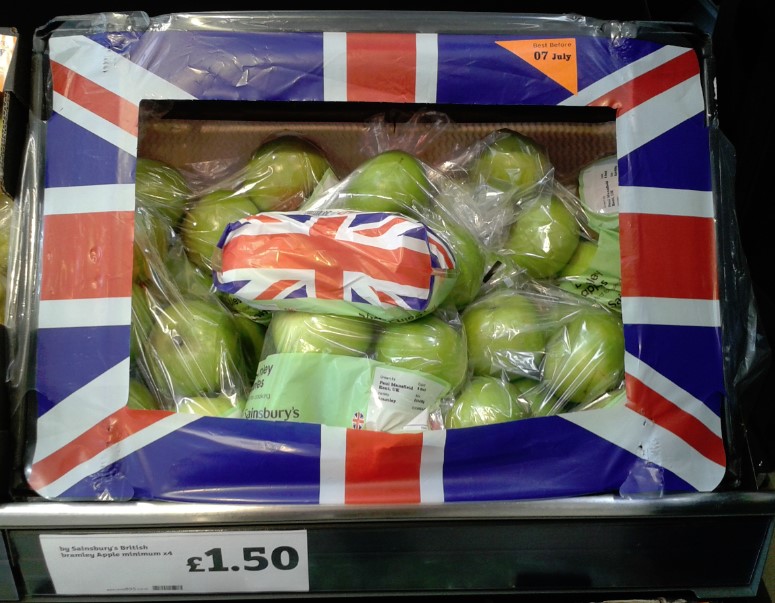
Sainsbury's British Apples. Not yet the season, but it is important to be local!

Sainsbury’s British Apples. Not yet the season, however it is important to be local!

But, it’s not just about home-grown and local. When families are preparing a special meal – when they want the food to be the hero and heroine and to be the centre of the table talk – shoppers seek information on the products they buy and want the story associated with them. Are the ingredients organic, fair trade, a forgotten variety from a very special orchard on the slopes of Mt. Fujiyama? Make sure the stories are authentic, though! Sometimes we want to show ourselves and our friends that we are knowledgeable, concerned foodies. It makes consumers feel good and assuages the guilt about our weekday food eating behaviour which is more about fuelling the body than feeding the soul!

Tagged with: , ,
Posted in Credentials, Fresh Products

The Race to Be “Best in Fresh”!

Do you eat your “5-a-Day”? If you do, you’re in a small minority – the shocking truth is that less than 10% of UK pre-teens and 35% of adults do so! Most of us crave guiltily for salty chips yet potatoes are not even an eligible vegetable in the UK 5-a-Day lexicon. We’re not alone – only 6 of the 28 EU countries meet the WHO target and we are shamed by consumers in Asia who have double the per capita consumption of fruit and vegetables than we do (mind you, North Americans are even worse than us which is cold comfort!).

Morrisons is the British retailer trying harder to excel in fresh products.

Morrisons is a British retailer trying harder to excel in fresh products.

Enough of the negative, the fact of the matter is that:

  • we all know we should eat more fresh produce (and do more exercise, too);
  • in Europe, fresh fruit is our favourite and most consumed snack and fresh vegetables are our fifth (with chocolate, cheese and yoghurt taking the intervening positions) and snacking is seriously “on-trend”;
  • trending strongly, too, is fresh food with few and “clear & clean” ingredients – when you buy a punnet of fresh berries that’s exactly what you get and not a list of unpronounceable chemical additives;
  • in the UK produce consumption would surge if we could accelerate presentation of it in a form that meets consumers’ lifestyle needs, i.e. as meal/snack solutions rather than compound their meal/snack problems;
  • we are exhorted by worthy agencies to increase our fresh produce consumption and inundated in the media by fresh fruit and vegetable images from companies unrelated to the produce industry who wish to benefit from the halo effect of “fresh”;
  • retailers see fresh food in general and fresh produce in particular as one of the increasingly few ways that they can differentiate their offer from competitors and show off their food expertise – it’s not by accident that fruit, vegetables and flowers are the first products seen by shoppers as they enter most stores;
  • and the intrinsic seasonality of produce can add retail theatre if managed well as nature requires us to change our product offerings; although 52 week availability and lack of basic food education has done its damndest to destroy even the most simplistic consumer understanding of eating what’s in season.

The renaissance of both consumer and retail interest in seasonality of produce is good for our health and good for supply chain members’ businesses. “First of the Season” fruits and vegetables are often the heroes of retail displays which can add much needed sparkle to the weekly drudgery of supermarket shopping …….. as long as those first long-awaited fruits actually deliver on juiciness and taste. Succulent fruits are a particular case in point where, too often, hope triumphs over experience (insipid peaches and nectarines, and perfectly round, perfectly red perfectly tasteless wasserbombe tomatoes come to mind). Forcing produce seems as unhelpful as forcing people – the result in both cases being a reluctance to deliver what was promised, although rhubarb may be an exception!

Waitrose was the first retailer to offer British grown raspberries this year.

Waitrose was the first retailer to offer British grown raspberries this year.

With shopper surveys around the world showing burgeoning interest in fresh food and, particularly, home-grown produce, shoppers can be too easily confused with an excessive SKU range. In his landmark book, “The Paradox of Choice”, Barry Schwartz warned of increasing shopper anxiety with too much choice – shopping for bagged salads, tomatoes, potatoes, and apples in some UK supermarkets induces neurosis when facing a wall of indistinguishable produce! But an additional confusing element for fresh produce shoppers is that one variety does not necessarily deliver the same benefits (taste, texture, etc.) week in week out – which is why putting a brand on a product grown in the ground which is open to the elements is so challenging. The Pink Lady apple brand has managed this well but it’s moot whether, say, Waitrose’s Leckford Estate-grown heritage varieties can do so, too. Romantic these old varieties may be but, like Summer holiday love, their allure may not be long-lasting!

Pink Lady Apples. Great thanks to be constant in good flavour!

Pink Lady Apples. Great thanks to be constant in good flavour!

Tagged with: , ,
Posted in Credentials, Fresh Products

Fresh Food: The Battleground for Grocery Retail Differentiation Through This Decade

As consumers emerge shell-shocked from their bunkers and household incomes tick up, grocery purchasing behaviour is still in recessionary defensive mode – savvy shoppers rule and price-matching programmes and promotions reduce the effectiveness of differentiation solely on price. Aldi and Lidl have done such a good job on establishing the credentials of their private label products that this ground, too, has become increasingly difficult for the mainstream supermarkets to claim superiority. As a result, fresh food value, quality, range, provenance, innovation, presentation and customer product knowledge and service are emerging as powerful differentiators in an otherwise cut-throat grocery retail environment (M&S’s +3.4% year-on-year sales increase for food shows the power of getting the fresh food offer right, particularly so given that its offer is unequivocally premium).

Aldi - We Love British Poster

Aldi "shouts" in their store how much produce they source from UK

Aldi “shouts” in their store how much produce they source from UK

Through the Summer, we’ll post some short blogs relating to the retailing of fresh foods. The fruit & vegetable and meat departments in retail stores are getting ever more complex – more skus, good/better/best and more private label ranges, pre-prepared meal components (in addition to old-fashioned ingredients!), celebrations of seasonality, homage to the producer, promises relating to “credence attributes” (product benefits the shopper takes on trust, such as free-range, antibiotic-free), etc.  The result can be a transformed, uplifting shopping experience or …… chaos, frustration and a disappointed shopper!

It’s not just in the UK but a global phenomenon that consumers are showing increasing interest in where their food comes from and for multi-faceted reasons, such as:

  • visceral concerns about food safety and food integrity. “Horsegate” and other food scandals/tragedies have cast long shadows across the world and consumers seek reassurance from those that sell them food;
  • preference for “local” foods which may be seen as safer, more environmentally/animal welfare-friendly, contributing to the local economy and to national food security;
  • and reflecting that sometimes we are “fuelies” (“no, I don’t know where the food was produced, Brenda, just eat it up you’ve got ballet in 15 minutes”!) and sometimes we are “foodies” (the meal is special bringing family and friends together and the food is the hero/heroine and we want the full story).

Foodies and Fuelies coexist in one and the same person – the former being more prevalent during the working week and the latter at the weekend – and are not indicative of a schizophrenic personality but rather reflect the reality of busy family lives. Note the extraordinary interest we have in watching cookery programmes and promises to ourselves that we are about to embrace scratch meal preparation juxtaposed with the inexorable growth in sales of ready-prepared, convenience foods and eating out! The definition of scratch cooking has broadened to include bolting together components to make a meal. And should we eat up our fruit and veg. or save time by just drinking it?

So, pay attention at the back and, as our Summer progresses, do join us for our occasional thoughts and flights of fancy on fresh food retailing developments in the UK and other international markets we shall be visiting.

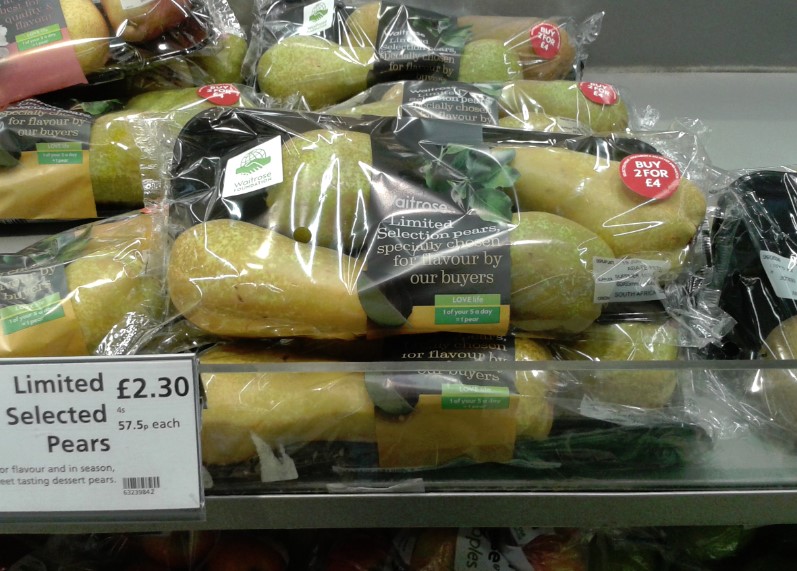
Limited editions of selected or even exclusive products allow grocers like Waitrose to stand out from competitors.

Limited editions of selected or even exclusive products allow grocers like Waitrose to stand out from competitors.

Tagged with: , , ,
Posted in Fresh Products

Excuse Me, but What’s Immigration Got to Do with the State of the Food Industry?

Quite a lot, really! But, first, we’ll front up – we’re both immigrants (British-born Hughes managed to slip into Canada back in the 1970’s and Spaniard Flavian legged it to London in 2012). As we all know from reading the Daily Mail, Britain’s shores are popular: net immigration  was 340,000 in 2014, giving the UK a population growth rate of around +0.5%. That’s most unusual for a mature developed European country where the norm is for population to be static at best but more likely to be in decline (e.g. Germany, Russia, Spain, Italy); or, say, Japan where population is in free fall. For us, a combination of a mini-baby boom and increased immigration is putting us on a track where we might overhaul Germany to become the most populous EU country.

Asda features in some of their stores Polish Delicatessen.

Asda features in some of their stores Polish Delicatessen.

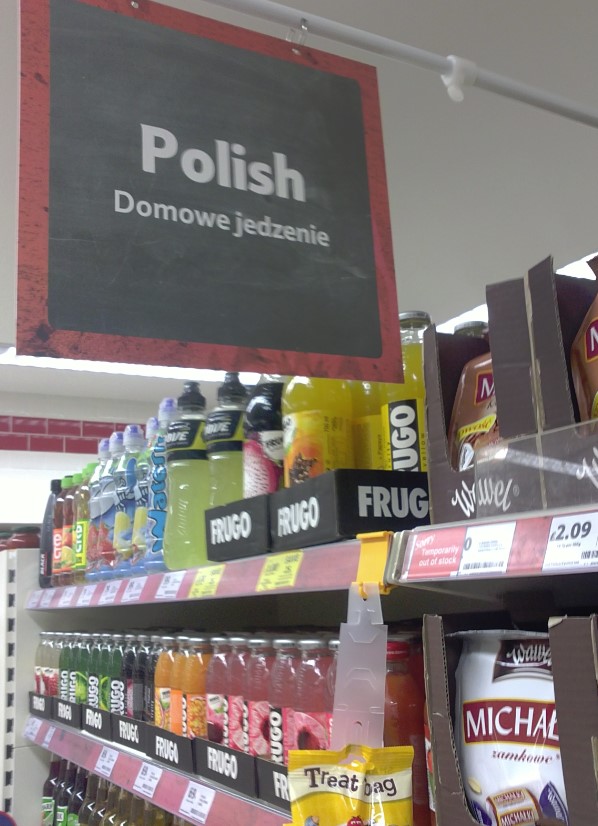
Tesco. World Foods section with products for Irish, Americans, Eastern Europeans, Asians, etc.  You can even find promotions written in Polish.

Tesco. World Foods section with products for Irish, Americans, Eastern Europeans, Asians, etc.

We don’t dismiss the impact that heavy inflows of people into concentrated areas can have on demand for housing, schools, hospitals, etc. and, indeed, the social tensions that can result from cultural clashes but, all-in-all, the UK has been pretty good at  assimilating waves of immigrants from various parts of the world. But what’s this contentious topic got to do with the health and well-being of the food industry? Lots!:

  • it’s much easier to grow a business in an expanding market than in one that is contracting – from 2020 and on Japan’s population will decrease by 1 million per year which explains why Japanese food manufacturers and retailers are very active in acquiring complementary companies in expanding emerging markets;
  • relatively high immigration rates tend to lower the average age of the population – that’s good news for the food industry as young families spend more on food than older families and ageing populations come with their own problems (e.g. GDP slowing, high health care costs, eating less, etc.)!;
  • local, regional, seasonal foods are on-trend and our domestic market is our most loyal and it’s expanding – good news for our food producers and retailers;
  • as an aside, Aldi and Lidl have been the most likely retailers to benefit from the surge in lower income arrivals in recent times. Although, Asda and Tesco have had the available shelf space to feature Polish pierogis and cabbage rolls, and iconic Irish comfort food brands and increasingly authentic Asian fare is available on our retail shelves – good news for UK consumers to add interest and excitement to meal times;
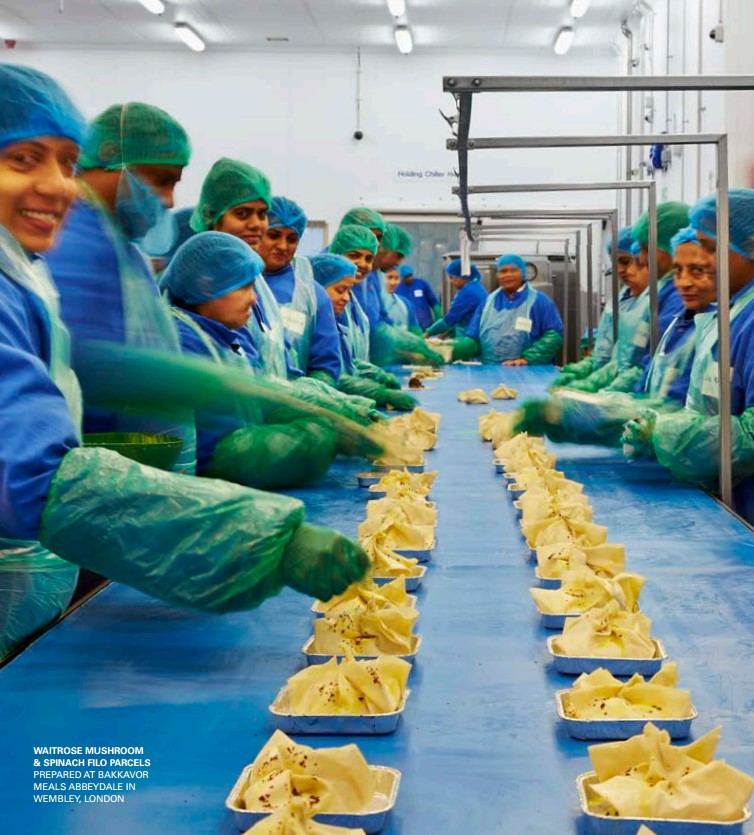
  • of profound importance, in the absence of new arrivals to the UK who would pick the produce, process and pack it, and work long hours in conditions that some might consider cold/damp and challenging? If you’re positive on the food industry, then, sheer commercial pragmatism requires you to be positive on immigration.

We recognize the challenging issues surrounding current high levels of immigration but there’s a stark humanitarian element that should concern us all: desperate, starving people will do anything to make a better life for their families (wouldn’t you?). They are unstoppable – no barrier will keep them out. We should help them at home to improve their lot and welcome those who through striving for a better life will contribute to growth in our economy and progression in our civil society.

Source: Bakkavor Annual Report 2014

Source: Bakkavor Annual Report 2014

Tagged with: , , ,
Posted in Consumer, Supply Chain

What Did You Do in the Supermarket Wars, Daddy?

We keep banging on about the havoc caused by the hard discounters in the UK grocery market. Well, that’s because they are very disruptive and will continue to be so and so will others!

Back in 2011, Sainsbury’s launched its “Brand Match” initiative which countered quite successfully the perception that it was pricey relative to its mainstream competitors Asda and Tesco. The response was a flurry of counter price matching moves by Asda and Tesco and all driven by fancy “data-scraping” technology that could deliver, at the till (for Sainsbury’s and Tesco, at least) coupons that provided a refund for the price difference if there was one between the retailer and its nearest competitors.

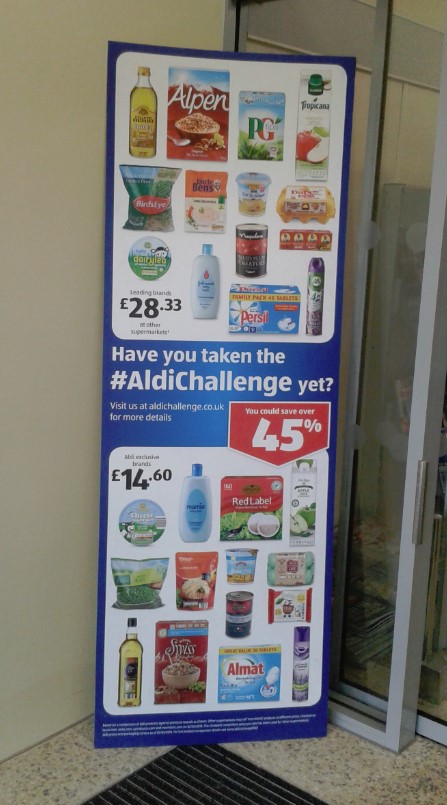
The Aldi response to this was characteristically simple with its low technology “Swap & Save” challenge – swap your shopping to Aldi and, over an 8 week period, you (not some  fancy computer algorithm!) work out how much you’ve saved. Aldi claim that the results showing a 20-40% saving over the Big Four retailers! There’s been legal tussles about the accuracy and comparability of this but Aldi is sticking to its guns! The Daily Mail (yes, we know, not the bastion of journalistic credibility)  screamed “Aldi’s still the cheapest  … even after the price war: Budget chain remains up to 30% cheaper than “big five” supermarkets” (March, 2015).

Kantar Data Total and Aldi

Source Kantar Worldpanel 2014-2015

So, after huge investments in lower prices by the big guys, Aldi/Lidl are still significantly cheaper. Tesco et al have made some inroads: the rate of year-on-year sales losses for the top 4 have reduced; and the rate of sales growth for the discounters has moderated – but, wouldn’t you expect this (just as we don’t expect China to continue its frenetic growth!). Recent buoyancy in the UK economy is trickling down albeit slowly to provide increased spending money for ordinary households and the sharp reduction in energy prices has been helpful, too. But, savvy shoppers have been well-tutored by the discounters and a shift back to halcyon days of profligate spending is unlikely.

In grocery retailing we don’t expect disruptive innovation but incremental innovation and evolutionary change does seem to be accelerating – the wheel of retailing continues to turn. So, expect a star burst of activities to disrupt continually the retail scene:

  • With hard discounters taking more market share;
  • a rationalizing pound store sector expanding grocery offers,  like mice nibbling the cheese;
  • non-grocery retailers, such as BHS edging into convenience grocery;
  • food retail and food service converging – with restaurants fighting back in response to retailers trampling on the traditional turf of food service;
  • artisan food businesses getting better at on-line and direct communication with consumers;
  • a discount gourmet chain like Trader Joe’s setting up in UK (watch out, Waitrose!);
  • on-line grocery continuing to erode big box shopping volumes;
  • convenience formats doing well and the Coop recovers on the back of better management and the “localness” of its store portfolio;
  • Booker emerges as a bona fide convenience retailer with its purchase of Londis and Budgens;
  • and there’ll be more!

Oh, it’s such an exciting industry to be in although the major supermarket chains may prefer a more reflective period of calm! We don’t think they are going to be able to enjoy such a luxury. Their business models are based on the principle of sales growth and not fragmentation of the shopping basket. So, buckle up seatbelts and crash hats on!

Tagged with: ,
Posted in Discount

Store Wars: Armageddon for Supermarkets but Let the Good Times Roll for Shoppers?!

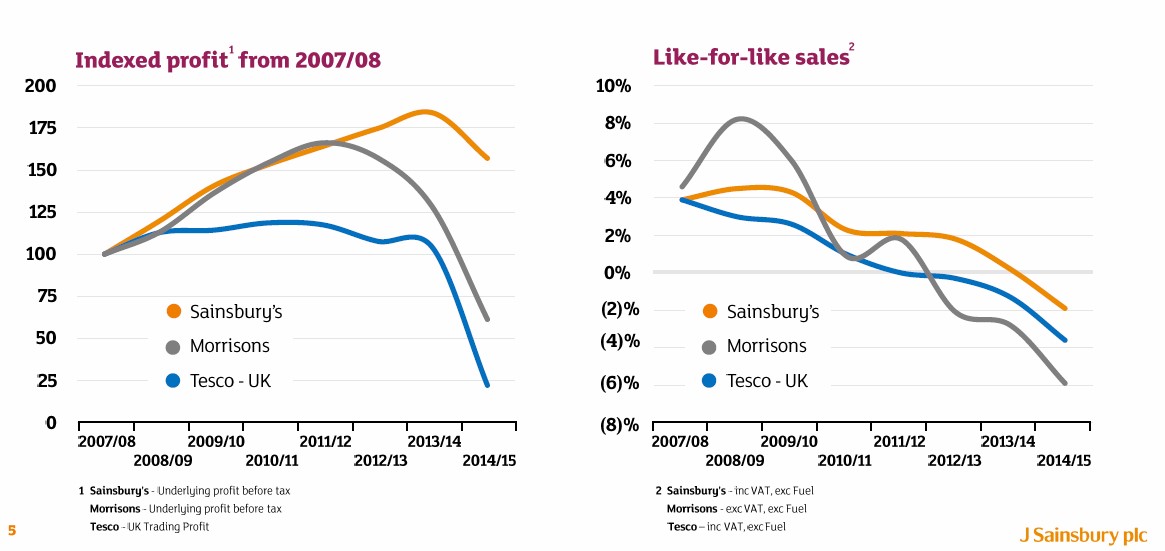
Two weeks ago (May 6th), David Tyler Chairman of Sainsbury’s making the best of a bad job opined “our profitability and sales have shown good resilience relative to our listed peers”! In short, JS had lost less ground in sales and profitability than Tesco and Morrisons but red ink covered their preliminary results for 2014/15: retail sales down 2%; retail operating profit down 17.5%. Our view is that, rather than reassure the investors, he gave a terrifying insight into the mayhem that is the British grocery retail scene!

Like-for-like sales have fallen like a stone for the 3 listed retailers over the past 6 years and, now, are firmly in negative territory. Why so?: the hard discounters Aldi and Lidl growing at the expense of mainstream supermarket retailers; a shift in shopper behavior towards on-line and convenience and going less frequently and buying less per visit from the “Big Box” stores; more canny purchasing in general and a preference for EDLP (Every Day Low Prices) rather than complex and confusing promotions; food price inflation falling from 4% at the beginning of the GFC (Global Financial Crisis) to zero or less in mid-2015; and the mainstream retailers falling over each other to “invest” in longer-term price cuts particularly for high profile KVI’s (known value items such as milk).

The business model underpinning big supermarket chain profitability requires year-on-year sales growth. If sales falter, it is analogous to coming to an abrupt stop on a bicycle – in the absence of forward momentum, you fall over which is roughly what happened to Tesco! The big supermarket giants have little latitude to cut costs in the short- to medium-term other than through reducing staff numbers (and making the Thursday after work panic shop an even more frustrating and miserable experience than it is at present) and through squeezing suppliers even harder (and the pips are already squeaking). So, retailer profitability is tumbling cataclysmically (see graph).

Now, all supermarkets are coming to terms with the consequences of over-investment in retail space over the past few years.  In announcing its eye-watering loss of £6.4 billion, Tesco has written down property values by a staggering £4.7 billion (part and parcel of CEO Lewis’s attempt to clear the financial mess at one fell swoop – “kitchen-sinking it” as it is known in the trade!). Morrisons has written down the value of its property by a paltry £1.3 billion. Sainsbury’s reckons conservatively that 6% of its floor space is supernumerary and is trialing ventures with Argos (on-line general merchandise) and Jessops (cameras, etc.) to see if excess floor space can be rented out to what were competitors for non-food products.

Free falling benefits curves for the main retailers, at the moment.

Free falling profit curves for the main retailers, at the moment.

The most recent Tesco financial posts have been guardedly optimistic, albeit stressing the long road to recovery. Rightly so! The hard discounters have a combined grocery market share of around 10% and, arguably, taking another 5% from the “Big Boys” is not out of the question. At 6% share, on-line groceries are slowing their annual rate of growth but, still, reaching 10% or so is more likely than not and each percentage point pulls more sales from the creaking big store supermarkets.

Discounters still enjoy a noticeable price gap with the main grocers.

Discounters still enjoy a noticeable price gap with the main grocers.

Aldi and Lidl continue to have a significant price advantage over their rivals. Another round of price wars may reduce this differential but it will have a concomitant negative impact on supermarket margins, too. The grocery market environment in the UK will continue to be a bloody battleground for the next couple of years and, like in any war, there will be casualties. One of the big 4 may well fall (perhaps, Morrisons, Sainsbury’s, or even the all-conquering Tesco of the pre-GFC era).

Tagged with: , , , , ,
Posted in Discount, Results

When Choosing Your Grocery Shop, Fresh Matters Most!

We note from the Spanish trade press that DIA, a discounter with 7,000 stores in Spain, Portugal, Brazil and Argentina, is yet another major grocery retailer that is embracing the fashion to excel in fresh foods. In the Spanish market, DIA has developed a new convenience format with a focus on fresh. Also, it’s refreshing  the larger format Maxi DIA stores to include new meat and fish departments with 500 professionally-trained fishmongers and butchers.

New style for Fishmongers at DIA stores. Source DIA

New style for Fishmongers at DIA stores. Source DIA

The independent fresh food retail trade is still very strong in Spain and a quick look around the High Street confirms this: eye-catching displays of fresh meat/fish managed by store owners who understand the attraction for shoppers of “food theatre”.  Excelling in fresh food is not only a challenge for discounters in Spain – mainline supermarkets have struggled to dislodge the traditional trade. Pre-recession, supermarkets barely held 50% of the fresh meat and fish market (whereas, in the UK, the multiples have 90%+ share), but over the past 6 years, the Spanish chains have taken 8% share points from the independents, largely through aggressive price promotions which have appealed to cash-strapped shoppers.

Mercadona has been another supermarket business in establishing its fresh food credentials. Senor Roig, the chain’s owner, recognized that his earlier focus on stripping costs out of his business and making processes simpler and more efficient worked well for shelf stable packaged goods but reduced quality, availability and damaged shopper perception of the store’s fresh offer.

Competitors such as Carrefour, Auchan and Eroski are paying much more attention to fresh foods, too: with better consumer communications; claims about provenance; fresh promotions; and more innovative cross-selling. When retailing fresh foods, the story is an integral part of the product mix. The challenge for large retail businesses is to have a story that is relevant to their customer base and distinctly different to the one offered by the independent fishmonger and butcher who is, often, located right outside the supermarket’s front door!

In the UK, Australia and many other countries, the scene is similar – Morrisons has tried, with some success, to differentiate itself from other supermarkets on the basis of its fresh food expertise (Morrisons butchers and fishmongers are formally trained, whereas most other UK supermarket chains have employees dressed up as bona fide meat vendors!). The UK hard discounters have much improved their fresh food offer but it is still self-serve for shoppers – good enough for Aldi and Lidl as it has enabled them to become a full basket retailer (rather than just top up). It’s tough to be different selling Coca-Cola or a Mars bar, but being creative with courgettes and lamb shanks can and does allow one to stand out in a crowd!

Market Street, displaying all the fresh expertise at Morrisons Stores.

Market Street, displaying all the fresh expertise at Morrisons Stores.

Tagged with:
Posted in Credentials, Fresh Products
Dr. Food Weekly Food Business Insights
Please, visit our new project, a platform about food trends and their implications for businesses: Dr. Food Weekly Food Business Insights/

Enter your email address to follow this blog and authorise us to send you notifications of new posts by email.
If you want to register for Dr Food Weekly Food Business Insights check the top menu please.

Join 433 other subscribers
About the authors
Prof David Hughes: Around the world, David speaks to senior agribusiness and food industry managers about global food industry developments that are and will affect their businesses and industry. Energetic, engaging, humorous and insightful, David gains the very highest evaluations at seminars, conferences and Board level discussions in every continent he visits. Miguel Flavián: works for several Spanish organisations and companies to help them to learn from the developments of the British grocery market and improve their business back home.