A Brief Look at Agricultural & Food in the USA and Some Thoughts on the Impact of an FTA with the USA

The USA is a Big Beast in geographic size, population and economic and political clout. Back in 2020, spurred by the Conservative Government’s desire to be seen as a nimble, swashbuckling free trader unencumbered by sclerotic EU bureaucracy, negotiations were started to establish an FTA (Free Trade Agreement) with the USA. Progress stalled, like many trade negotiations, but it’s mooted that the President/PM of the respective nations are determined to have something on paper before the upcoming elections. After all, the USA and UK are significant trade partners – USA exports to UK are around $77bn and UK exports to USA are $65bn. In history, food and drink trade between the two countries has been modest: the lion’s share of UK exports being Scotch whisky, then, other spirits, beer and salmon; with wine, tree nuts (e.g. almonds), and bakery goods leading the charge from the USA. Yet, the UK agricultural sector is hugely apprehensive of an FTA which includes comprehensive coverage of food items from the USA. The apprehension has been fuelled by the swift FTA trade deals that, to the fury of UK livestock farmers, were swished into place between the UK and Australia (2021) and New Zealand (2022) and the expectation that we may well complete agreement to join the CPTPP, an Asia-Pacific trade bloc, in the latter half of this year. It’s a good time to peek at the USA from a farming and food perspective just in case normally glacial trade negotiations grow some wings! Whilst the UK has “a special relationship with the USA”, it’s propitious to keep in mind that our prospective free trade dance partner is elephantine so watch your toes! Attached is a series of slides that give the detail of the following commentary.

Give or take, the USA has a zero-trade balance on agricultural trade – exporting around $200bn and importing roughly the same, whereas UK has a significant trade deficit on agricultural, food and drink – we export $31bn, with whisky and salmon from Scotland in top spots, importing $73bn, not least fruit and vegetables from Europe. American agri-food exports are dominated by 4 categories – grains and feed, oilseeds and their products, fresh produce (large exports of fruit and vegetables to Canada in the colder seasons), and meat (principally, beef largely destined to Japan/S. Korea and other Asian markets and pork). The key agri-food export destinations are China, Mexico, Canada, Japan and (lesser so) the EU. These same 4 categories dominate agri-food imports to the US, with horticultural produce the largest (e.g. fresh produce from Mexico counter-seasonally).  The US is a substantial meat importer – beef from Canada and New Zealand, sheep meat from Australia, pork from Canada.

What about the USA food production sector – are all farms Texan size?! Average farm size is 180ha (450 acres) more than double the average English farm size.  The US has 2 million farms on 364m ha. (we’ve got 200,000 or so on 17.2m ha). “Small” family farms (gross cash farm income <$350K, i.e. £275K) comprise 89% of all farms but account for only 18% of production value. The large family farms and corporate farms account for 5% of farm numbers but 63% of production value. Many of the “small guys” are essentially hobby farmers and much of their income comes from off-farm sources. Corn and soybeans dominate grains and oilseeds production with an 87% share of land. 90% of soybeans are used for livestock feed, whereas 45% of corn is used for livestock feed, 44% for ethanol production and 10% for human food (with a third of this being converted into HFCS). In stark contrast to the UK, more than half of US cropland is sown with GM seed: essentially, all the area for corn, soybeans, cotton, canola, and sugar beet.

As an aside, the US crop seed sector has undergone significant structural change, spurred by the expansion of intellectual property (IP) rights and heavy-duty investment in R&D by the major seed companies. Bayer and Corteva GM seed accounts for 72% of planted corn area and 66% of planted soybean area in the US, in addition Syngenta is a significant but “minor” player. The “Big Four” (the latter 3 plus BASF) invest around 10% of their seed and agrochemical sales value on R&D to deliver improved yields for farmers and secure, profitable IP for themselves! Between 1990 and 2020, prices paid by farmers for “generic” crop seed increased by around 170%, and IP-protected GM seed prices rose by 463% – compared with a 56% increase in crop commodity prices over this period.

Apropos concentration in the crop seed market, a similar picture emerges in meatpacking industry in the US: 4 firms, Tyson, Cargill, and 2 Brazilian firms JBS and Marfrig account for 85% of beef processing; WH Group (Chinese-owned), JBS and Hormel account for 67% of the hog/pork processing sector; and JBS and Tyson account for 45% of chicken processing. Concentration in these sectors is high and has been rising. The names of the major players are not unfamiliar to livestock and meat participants in the UK and elsewhere! Encouragingly, in the USA, rising meat price spreads/packer profits is attracting new entrants into the meat processing industry providing livestock producers with more selling options than simply the “Big Boys”.

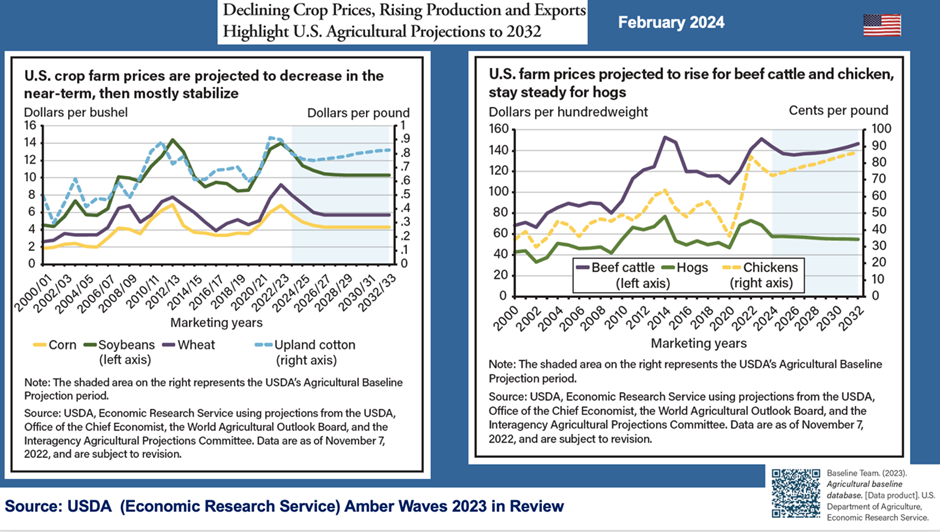
What of the USDA’s view on future production and prices for crops and livestock through the remainder of this decade? Corn and soybean production and exports are expected to show strong growth and exceed record levels, whilst crop prices are projected to decline in the next 3 years and then generally stabilise. This isn’t great news for crop farmers as margins will be under pressure. Whilst global fertiliser prices returned to 2021 levels in later months of 2023 after surging in 2022, their 2024 and expected future levels are still substantially above those of early-2021 and all other farm input prices are at historic highs. Fertiliser “security of supply” continues to be of concern with Russia and China accounting for 25% of global fertiliser trade. Production and exports of beef, chicken and pork are projected to increase over the next 10 years. Beef and chicken prices are projected to remain elevated while hog/pig prices are forecasted to fall.
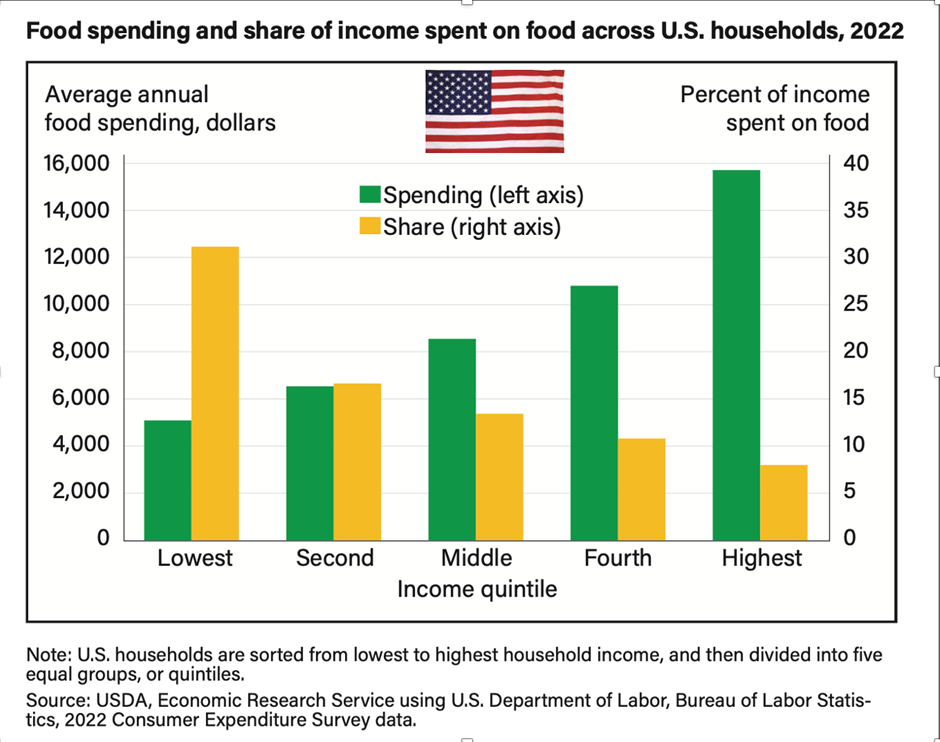
Who gets what from the “Food Dollar” in the USA? Roughly one-third (34%) goes to food services – in the US, over 50% of consumer spend on food is “away from home”, whereas this figure is around 40% in UK. Food processors take 14% of the food dollar, whilst 12% goes to the food retailer and the wholesaler takes 11%, with the beleaguered farmer, the producer of the raw ingredients, taking a lowly 8%. Just as in the UK, consumer household income has become increasingly polarised in the USA: families in the lowest income 20% spent $5,000 on food ($100/wk) in 2022 accounting for a good third of their annual income. The well-heeled in the top 20% of income spent close to $16,000 on food for the year ($300/wk) accounting for around 7% of their household income. For low income households , there is substantial income assistance for food from the state: in 2023, this was close to $150bn – most via SNAP, the Supplemental Nutrition Program, supported by Child Nutrition Programs and WIC, the Women, Infants and Children Program.
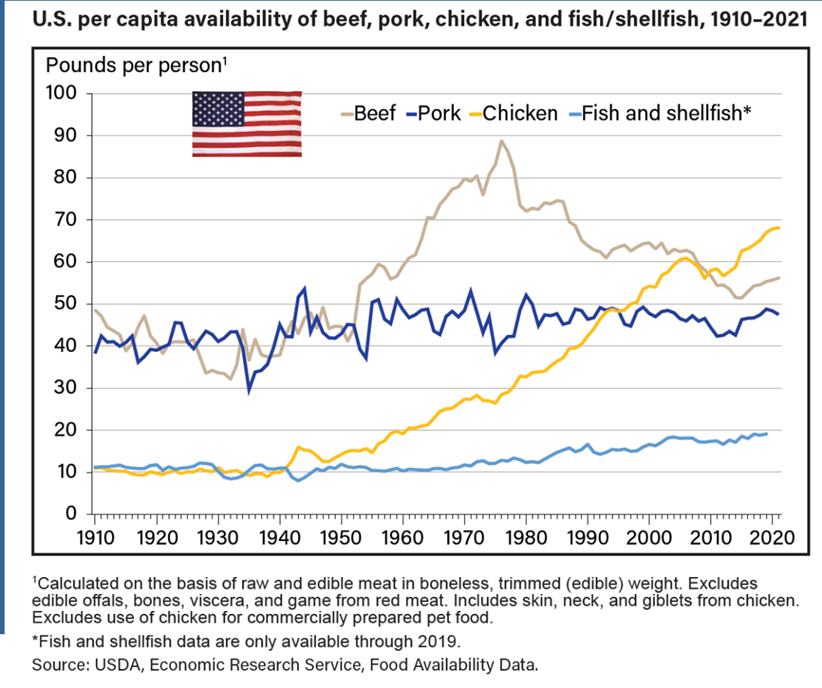
A short note on meat – Americans are notably carnivorous! The figures presented are for boneless, retail weight meat and, excuse us, are in lbs! For the past 50 years, per capita beef consumption has wended its way down from close to 90lbs to near 50lbs in the early 20teens but has recovered of late to closer to the mid-50slbs. For 75 years, pork and its products has meandered around the 50lb mark. Like in many countries, chicken has been the meat industry disruptor reaching near 70lbs of late. Over the last 50 years, fish consumption has slowly increased to its current level of 20lbs per capita. What about veg.? Through the past 20+ years overall per capita consumption has trended downwards. Starchy vegetables, particularly potatoes, are of huge importance albeit slowly declining year-on-year and processed potatoes (frozen predominately) continue to replace fresh. Fresh and processed tomatoes have maintained their prominent position, and “other red” and orange veg. (e.g. red & orange peppers, carrots) have seen consumption growth, as has pulse consumption (chickpeas, lentils, peas, beans), particularly in more recent years.
A last word on food consumption, Americans are eating too much and, often, with unhealthy diets. The adult obesity rate is 42%. It’s lower for children but increasing at an alarming rate. Very recent research identifies that average proportion of calories from protein in the American diet decreased from 14% in 1961 to 12.5% in 2000 with more calories from fats and carbohydrates making up the difference. For sure, they didn’t eat less meat. Many reached too frequently for the snack box and over-ate addictively moreish food products that, most recently, have been labelled Ultra Processed Food (UPF). Americans are not alone! The obesity crisis is global with terrifying consequences for global consumer health, pressure on medical services and global productivity and economic growth.

Enough already! The previous thoughts are provided to give the reader an overview of some aspects of food production and consumption in the USA. In this final brief section, we’ll look at what the implications might be for UK farming and its food industry if an FTA was agreed between the 2 countries. Might this happen in 2024? The PM and President of the 2 countries both need quick wins in this election year and, to use NFL parlance, could elect to use a “Hurry-Up Offense” approach to trade negotiations. Would this bring opportunities or threats for UK agri-food & drink?

First, let’s be positive! The USA is a big, rich country with plenty of high-income consumers who know and like us. They’re gaga about our Royal Family and historic buildings, and assume we largely dine on fish & chips. The Scots would be ecstatic, and exports of whisky and salmon would soar in a tariff-free market. There are considerable opportunities for our specialty cheeses, pork and lamb.

The big negatives for the UK in a US trade deal relate to concerns about “low standards” in the USA regarding animal welfare, the environment and more contentiously, food safety (e.g. the emotive American chlorinated chicken issue). From a UK farmer perspective, the rub is that being in the van on welfare and the environment brings additional production costs and it’s simply unfair if competitors can enter our market without matching our mandatory regulated standards. These concerns – being on the cutting edge on green issues but, also, on “the bleeding edge” – are shared by EU farmers.

Animal welfare regulation in the USA is complex and slow (relative to the UK). There’s no national policy relating to farm animals as it’s a state responsibility with 14 out of the 50 states already started on the welfare journey. Liberal California is way ahead with cage-free eggs and veal and a ban on sow gestation crates already in place. As of now, the UK pork sector has a “gateway” into the Californian pork market with the state’s Proposition 12 certification (via NSF). Animal welfare regulations and some agri-food businesses are moving albeit slowly in a direction we’ve long embraced in the UK: e.g. by 2026, 17% of breeding sows will be gestation crate-free; and McDonald’s has met its cage-free pledge on eggs this February, some 2 years ahead of its initial plan. Beef produced with anabolic hormones will be a trickier trade issue as 90% of beef cattle produced on USA feed lots have such implants. The biggest barrier to “hormone beef” imports into the UK is that our shoppers are vehemently antagonistic to such! Although, in the unlikely event that a trade deal gave such beef the all-clear, it could be squirreled into the lower end of the food service market where product transparency and labelling are less in evidence.

Environmental considerations relating to agricultural production will be integral elements in any future global trade agreements and should be included, albeit contentiously from a USA perspective in an FTA with UK. Take note of EU farmers demonstrating against the pace of introduction of The European Green Deal. Just imagine the UK farmer reaction if, in a trade agreement, the partner was given carte blanche to use practices and products banned on their farms – they’d be incandescent with rage! The direction of travel on environmental constraints to those importing products into the EU is clear: EU Deforestation Regulations require companies trading in cattle, cocoa, soya, oil palm, coffee and wood to prove that their production did not result in deforestation. The UK is on the same track and if, for example, some pesticides are banned on specific crops it would be hugely controversial if farmers in trade partner countries were allowed to use them on products which end up in our own country. Right now this is a huge issue. The UK is a significant food importer. Indeed, the land used “offshore” to produce the food we import is close to the same area that we produce food on at home! We can’t be holier than thou at home if we are exporting environmental problems to our trade partners supplying us with our food!

Completing an UK-USA FTA in this calendar year would be a Herculean task and one not supported by many in UK agriculture. If it came to pass, would our food market be swamped with American fare, and would it be a halcyon period for UK food exporters? No! Apart from anything else, building a market presence with new customers takes time. Most likely, the current pattern of trade between the two countries would continue but in greater volumes and values. Finally, through the past few turbulent years, concerns about national food security have been increasingly evident. Likely, our political masters, enthusiastically encouraged by UK farmers, will be more focussed on increasing food production at home than on forging international food partnerships.

For those fond of stats. related to the above, click on the following link:

USAAgriFoodStats2024.pdf

Tagged with: , , ,
Posted in General

Are We Out of the Woods Yet? Looking Back & Forwards with Some Thoughts for Farmers.

This week, I’m giving a talk to The Monmouthshire Agricultural Club in Usk – I’m “a local”, living 12 miles down the road in Monmouth. Here’s the gist of what I had to say. Do flick through these few pages and, then, if you’re of a mind, click on this link to look at the slides I used in my presentation.

Click here to download the presentation.

Henry Dimbleby’s National Food Strategy Plan has a lovely representative map of how land is used in the UK. We’re good at growing grass – 60% or so is down to pasture for cows, cattle and sheep. We’ve got a good lump of peatlands and broadleaf & conifer woods. Our fruit and vegetable area (not including potatoes) isn’t much bigger than our acreage for golf courses. The built-up area is close to the size of Wales! Intriguingly, the overseas land used to produce animal and human food for the UK is close to the size of the area we use for domestic food production in the UK.

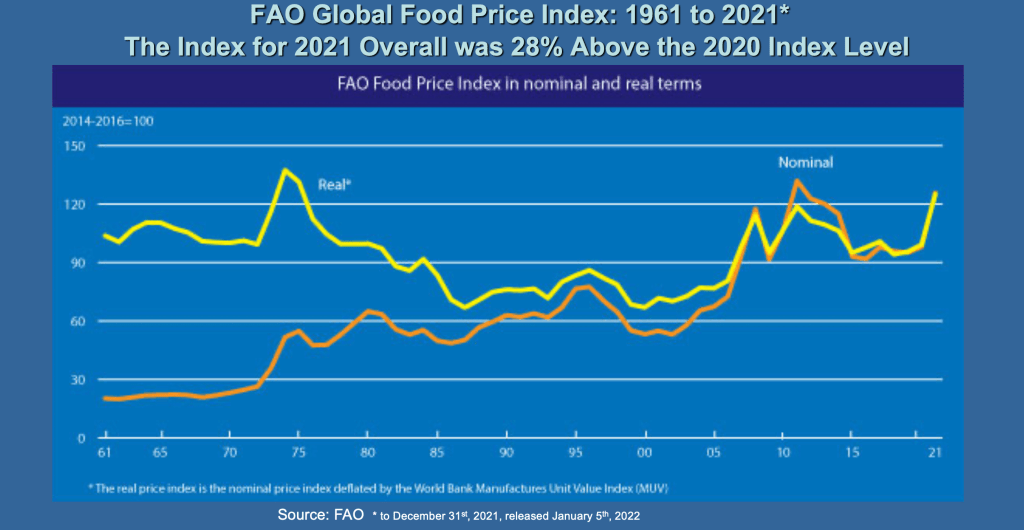
Global food commodity prices peaked in March 2022 and have declined month by month since then, although they’re still historically high and at the elevated levels we saw in 2008 and 2012. These took time to pass through the supply chain and consumer food price inflation peaked at close to 20% in April 2023, exacerbated by the Russian second invasion of Ukraine in February 2022. Come 2024 year end, food price inflation should be down to 2% or so but, remember, prices are continuing to inflate and not returning to the halcyon stable times between 2015 and 2019. The cost-of-living crisis remains with us and explains the ferocious grocery retail price wars fuelled by hard discounter continued store expansion. Are supermarkets the villains? Well, they may be for mauling fresh food suppliers but their operating margins have been under pressure, too (less than 2% in FY 2022/23).

But, hey chill out! The pandemic is over (fingers crossed). The Russia-Ukraine war (our war, too) is limping towards stalemate. Tranquil times are coming …… apart from: the tragic mess in the Middle East; international trade routes under threat in the Red Sea/Suez Canal and the Panama Canal; frightening evidence of the acceleration in planet-harming climate change; and half the world’s population are having national elections this year which is leading to a frenzy of mis/disinformation, a lurch to political extremes and added uncertainty for businesses worldwide. In the midst of this, food producers are being asked to accelerate their farming activities to meet challenging net zero targets. In the EU, farmers are revolting and have bent the ear of government. In the UK, we’re being very British about it and we’re jolly cross!

Empty supermarket shelves through the recent turbulent years have fuelled concerns both about food self-sufficiency (60% for all food and 73% for indigenous type food) and, separately, food security at the national and individual household levels. Food self-sufficiency levels in the UK (and elsewhere) are hugely influenced by government policy: close to 100% prior to 1846; with the repeal of “The Corn Laws”, a downward swing to 35% in the early 1950s reflecting the extended period when we in the UK produced the machine goods and our colonial compatriots produced most of our food; the near catastrophe of the 2nd World War years where we close to starved; a recovery of food self-sufficiency after the introduction of deficiency payments emanating from the 1948 Agricultural Act; boosted further as we joined the EEC; and, latterly, drifting down to current levels as we exited the EU in the 2020s.

As an aside, our lowest area of food self-sufficiency relates to fresh produce. Whilst partly explained by consumer preferences and climate (26% of ALL fresh fruit consumption in the UK is accounted for by bananas), we produce only 16% of fresh fruit and only just over 50% of fresh vegetables consumed in the UK. The emergence of advanced hydroponics and vertical farming could and, indeed, should, switch these percentages to our advantage over the next few years. However, what consumers value is changing. Fresh fruit is struggling in the market against “real” fruit-based processed products such as smoothies, dairy-based fruit drinks and the like. Similarly, there’s a host of “real” vegetable-based snacks with “clean” ingredient labels nudging fresh vegetable dishes off the table. Across Europe, and in North America, per capita consumption of fresh fruit and vegetables has declined through the recent turbulent years. The clothes of the fresh fruit and vegetable sectors have been stolen by fmcg snacking companies and the cosmetic and natural pharmaceutical industry. Have a peek in Boots, it’s a fruit & vegetable extract pharmacy!

Notwithstanding our exit from the EU, most of our food imports come from Europe which is where most of our food exports go to. Us Brits respect our home farmers but our commitment to purchasing home grown is much less than Italian consumers who have a much stronger food culture wrapped around local foods with strong heritage and stories. Our appetite for imported foods shouldn’t surprise us – we’ve been doing it for centuries (e.g. bacon from Denmark and lamb from New Zealand). What’s more, the vision of a swashbuckling Britain freewheeling our trade way around the world is reflected in post-Brexit trade deals with Australasian friends and more and is unlikely to drive food self-sufficiency at home!

With some trepidation, here’s some commentary on farmers’ incomes in the UK. Bonanza years apart (e.g. for some cereal and oilseed producers in 2022), for most farmers, income from agricultural activity per se is less and, for a whole slew substantially less than income earned through other sources such as basic payment schemes, environmental payments and non-farming business activities. Some agricultural input prices (e.g. fertiliser) have declined but are still well above pre-Ukrainian invasion levels. Farmer margins are not set for significant growth. Net agricultural income from lowland and LFA farms is virtually zero and farming income for many largely comes from the public purse and non-farming activities. Yet, direct income support from Government programmes has been and will very likely continue to decline. Like the cavalry, ELMS/SFI monies (payment to farmers for providing “green” public goods on-farm) are slowly arriving, if one has the intestinal fortitude to navigate the 200+ page rule book that is a precursor for accessing “green” grants. One distressing outcome of this squeeze on farm income has been a sharp jump in emotional problems on the farm. FCN report worrisome escalations in financial and mental wellbeing calls for help.

A word or two on diversification on the farm. English data shows that close to 70% of farms undertake non-agricultural diversification, up from 50% 15 years ago. Most of such diversifications are “other than letting buildings” (e.g. to customers seeking to rent storage space) This is no surprise to me. Thirty plus years ago, I started teaching on the annual Worshipful Company of Farmers Advanced Farm Management course. In 1990, each participant would introduce themselves and it took a minute or less: “Elwyn Hughes, dairy farmer from Carmarthenshire” – job done. Now, it’s a veritable lecture verging on homily: “John/Jill Lomax, broad acre farmer from Lincolnshire, equestrian events, weddings, yurt glamping, gin distillery, rare breed zoo, pumpkin sculpting, drone displays & training, etc.!”.

For many farmers, the non-farming diversification element of family income is only going to grow – for farm businesses operating at smaller to large-scale. The topic is vast and not to be waved through in a paragraph squirreled within a blog. For some, diversification will be gaining leverage from the farm’s intrinsic advantages with investment that reflects the reality of sparse family finances. For others, with greater access to capital, grander and riskier “value-adding” schemes may be on the cards. Two on-farm gin examples come to mind: the first, Tipplemill London Dry Gin from a family farm in South Lincolnshire and the second, intriguingly, Wa-Gyn from a Yorkshire Wagyu beef business where the gin is washed for 48 hours with molten Wagyu fat (see pics. In the slide presentation)!

In the UK, we have the advantage (albeit sometimes a disadvantage for those who’ve had machinery stolen/animals harmed/crops flattened, etc.) that we farm in countryside which is close to the urban population. What’s more city folk relish visiting rural areas. They like many of the products and experiential services we can offer them. They’re on our doorstep whereas, in North America, farms are somewhere “Out West”! Mind you, it requires a substantially different set of skills to deal directly with customers, not least from the general public, arriving with a rural idyllic view of the countryside, than the many and varied skills required to run a farm growing produce for less personal commodity markets. For the agricultural producer tentative about non-farming diversifications, perhaps leave such enterprises for the generation beneath or the one by your side. Only partly with tongue in cheek, I know that there’s many a dyed in the wool farmer who should never meet a food consumer or tourist face-to-face lest they put the fear of God in them!

If you’ve got this far, thanks for your attention and take a peek at the slides. It has been and continues to be turbulent times for many UK farmers and, indeed, for millions of UK consumers. But, I’m reminded that, tough although it may be, there are so many others in our world that have current challenges at monumentally more difficult levels – such as the 800 million people in our world who wake up hungry and go to bed hungry, the civilian population in Gaza, those facing famine in Tigray, Ethiopia, and at a much higher income level but nonetheless cataclysmic, families living in Grindavik, Iceland, who have just seen their homes engulfed and devastated by volcanic eruptions and lava flow.

David Hughes

Monmouth

February 8th, 2024

Posted in Uncategorized

Consumer Concerns and Trends in 2024: What’s It Mean for Agri-Food Businesses?

Global food commodity prices declined by 10% in December 2023 versus a year earlier (FAO) and, in the UK, December’s food price inflation rate fell for the 9th consecutive month to a modest 8%! Phew, consumers can relax … but, hang on, in December 2023 UK food prices were 26% higher than one year earlier and 21% of those with dependent children and renting their house said that they had run out of food in the past 2 weeks and had been unable to afford more (UK ONS). That’s in Great Britain, not in South Sudan. This distressing picture is common throughout much of the world. The turbulence of the past few years is far from over and provides the backcloth for how consumers will cope with feeding their families and entertaining themselves with food during this year. They’ve got a lot on their plates:

  • historically very high food prices, then, there’s the mortgage/rent, energy and transport costs ticking along at way above pre-pandemic levels and, surely, we’re done & dusted on the pandemic, aren’t we?!;
  • with half of our world having national elections in 2024 and disconcerting polarisation of voter opinion (e.g. in Poland, Hungary, Germany, USA), it seems unlikely that there will be an outbreak of political tranquillity through the year;
  • wars in Ukraine and the Middle East (and, heaven forbid, bellicose paroxysms in The East China Sea) all have tragic implications and significant impacts on the global food supply system which raises national and individual household concerns about food security which is all we need given the monthly evidence of the impact of climate change on global food supplies;
  • but relax, AI may be coming to the rescue (we mean Artificial Intelligence not artificial insemination) or is that another threat to consumer privacy and us falling under the hegemony of the data superpowers?!

These maelstroms of concerns will have a profound impact on food purchasing behaviour and will be most demonstrated in the differential contents of the shopping carts of the more comfortable “income haves” and the hard up “income have nots”. But, across all household income groups, purchase compromises will be consistently made – for example, important “citizen concerns”, say on the environment, will be pushed to the back of the mind as the apprehensive shopper comes to terms with the size of the weekly food bill. There’s some academic research here showing that consumers have “a finite pool of worry”, i.e. worrying about one vital personal issue (can I afford to buy food?), can relegate worries about other hugely important issues (climate change).

It’s the first month of the year and this brings a shower of consumer mega-trends from international consumer insight companies. Here’s the potted version of the trends that were most frequently identified and attracted our attention:

  • shoppers will continue to hunt for the very best deals and social media will be awash with “savvy shopping tips”. As per 2023, supermarket private label will see even further growth and not just at the “value” level with premium PL performing exceptionally well in traditional supermarkets and in hard discounters. Expect to see meals purchased out-of-home under pressure and more families replicating their favourite restaurant meal at home. Air fryer ownership will continue to grow and have a profound impact on fmcg “cook-at-home” products. In “the centre of the dinner plate”, affordable, versatile, convenient chicken dishes will dominate;
Lidl meal solution! Enjoy restaurant quality at food that you prepare at home at a fraction of the cost!
Air fryers in UK: 1000% increase of sales 2022 vs 2023! Here is Iceland Supermarkets Air Fryer ready meals aisle.
  • whilst taste, price and convenience continue to be the principal attributes of food products for most consumers, the physical and mental health of me and the family is on the rise. On health and food, they want simple, pragmatic assistance/solutions. International surveys identify the following as the most front-of-mind – boosting immunity, improving gut/digestive health, heart-healthy, improving sleep, “detox”, helping mental focus/concentration, boosting energy, improving “looks” (beauty), and building up muscles;
Simple but powerful solution by Marks & Spencer to improve your health: supercharge your gut health! Backed with science, introduced in January the healthy month, it should be a great success!
  • in a bruising world, we seek indulgent and comfort foods that can assuage anxieties. 2024 will be a bonanza year for consuming favourite, affordable distractions. There are strong positive signs of growth in savoury and sweet snacks and hot drinks (particularly coffee) purchased out-of-home. Note the success of value-driven food service companies – in the UK, Greggs the working family’s baker, is opening 150+ new stores per year (they’re at 2,500 now) and, globally, McDonald’s is in barn-storming mode (with a stock/share price well above pre-pandemic levels);
Snacks will be again an affordable distraction for consumers.
  • concern about the health of the planet is established in the minds of young people across the globe (as it should be as they’re going to have to improve it!). Globally, the proportion of those that identify themselves as “Eco-Actives” is highest in Europe and “Eco-Dismissers” are disappointingly in the majority in the USA. Practicing what they preach (on key areas such as reducing carbon impact/food waste/plastic recycling/water usage) is constrained by their pocketbooks and not knowing what they can actually do to make a difference. Worrisomely, there is a growing proportion of consumers who mistrust grand environmental claims made particularly by larger fmcg companies eroding trust in the overall food system. Younger consumers are most likely to consider corporate values when making purchases. Increasingly, farmers have a higher profile in the mind’s eye of consumers who are concerned about them being treated fairly by “Big Food”;
  • the beneficial impact of AI is highlighted by all major trend spotters, although it’s moot whether most consumers have grasped what the impact of this emerging “super technology” will be. Let’s hope it’s better shopping and product experiences. PepsiCo was first across the line with Doritos Silent – “the world’s first AI-augmented snack powered by Crunch Cancellation” (if you’re in the dark, the product is for gamers who don’t want the crunch of their snacks interfering with their game!). Hmm, it has its place but a step below altruistic AI breakthroughs in health diagnostics, albeit for us well above the monument to UPF excesses noted in the American Football Snack Helmet we spotted “in the Middle of Lidl” recently!

Are the annual outpourings of consumer trends for the New Year just so much froth largely relevant for big league food players, or are they directly relevant to businesses of all sizes through input, farm, ingredient, processing, packaging, distribution, food retail and service? For our mind, it’s the whole caboodle and increasingly so! The distance between the food consumer and the primary food producer is simply getting shorter as consumers ask more searching questions about where, how and by whom and using what practices their food is produced. This presents a substantial opportunity, particularly for those food producers most buffeted by cost increases, competitive pressures and climate excesses (not least, horticultural, livestock and dairy farmers) to showcase the intrinsic attributes of their natural, healthy, eco-friendly products which are in tune with what many consumers want from their food – to be tasty and good for their health and the health of the planet.

Ametller Origen, the Spanish Wholefood Market, connecting consumers to the farmers one artichoke at a time.
Posted in Consumer, Trends

The World Economic Forum Top Global Risks for Business: Implications for the Agri-Food Industry?

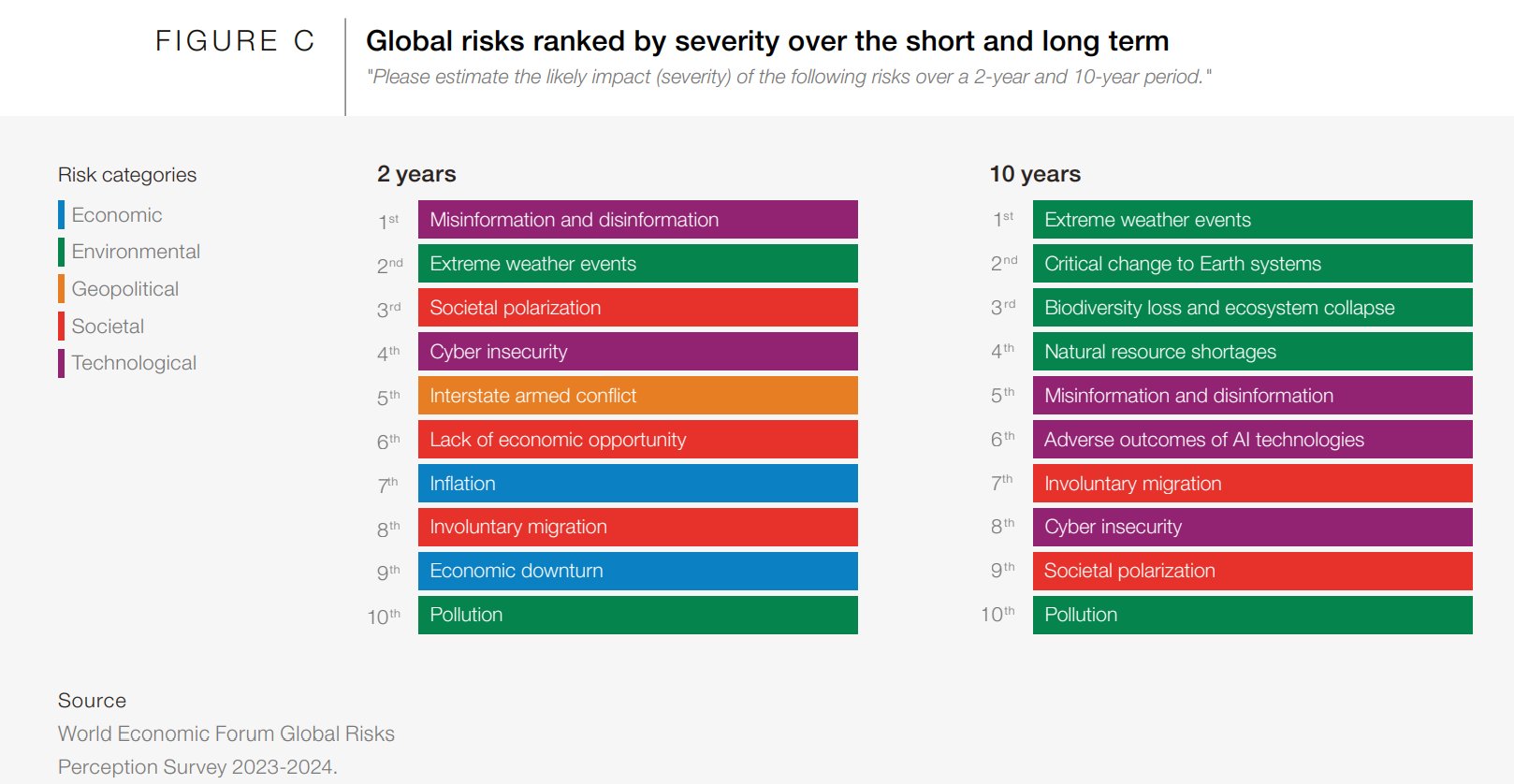
The World Economic Forum (WEF) has just released its 2024 Global Risks Report for business. They canvass the views of businesses and relevant institutions around the world to come up with their shorter- and longer-term business risk league tables. Not that we need a nudge, but it’s a salutary reminder that the past turbulent 4 years (remember, kick-started by an unknown virus popping up in Wuhan) are not now morphing into a period of peace and tranquillity. “It ain’t over till it’s over”, to quote Yogi Berra, the baseball legend and moral philosopher!

WEF’s No. 1 global risk for the next 2 years is “Misinformation and Disinformation”. Who’ll be telling the fibs and skewing the stories? At least 64 countries representing half the population of the world (including the EU, UK, USA, Taiwan) will be holding national elections and the telling of porkies will be widespread. F’rinstance, come November in the USA, the Oval Office most likely will NOT have an incumbent that is associated with pouring oil on troubled global waters – mind you, that’s an inappropriate figurative expression as we shouldn’t pour or pump oil on anything given the WEF’s No. 2 and No. 5 big 2 year business risks, viz. “Extreme Weather Events” and “Interstate Armed Conflict”. Last year has been confirmed as the hottest on record. Right now the threat of Houthi missiles are blocking the Suez Canal and drought is severely limiting the number of container ships through the Panama Canal with the result that freight rates have spiked and journey times lengthened which is dispiriting news for food traders and food consumers. “Societal Polarisation” and “Cyber Insecurity” are the 3rd and 4th shorter term business risks with the former responsible for defining food products for the well-heeled “Income Haves” and the disgruntled “Income Have Nots”.

Our attention has quickly moved on to WEF’s biggest business risks over the next 10 years. The top 4 relate to global warming: “Extreme Weather Events”; “Critical Change to Earth Systems”; “Biodiversity Loss and Ecosystem Collapse”; and “Natural Resource Shortages”. Not before time, at the UN COP28 climate talks in Dubai, 130 countries signed up to a pledge that our world should shift to “a more sustainable production and consumption of food”. I should coco! Food contributes one-third of the warming gases increasing global temperatures. Globally, consumers have worked out that what they put in their tummies has an impact on their health and on the health of the planet. Fine and dandy, but like government and the agri-food industry, they’re struggling to convert acknowledgement into action. But, action must come and come quickly. For sure, within the global food industry, businesses from farm to food consumer must “Go Green or Go Broke”! Now, there’s a happy few words to finish on a New Year missive from the 2 of us! There are scary winds ahead, but keep in mind the wise words of the American motivational speaker William Arthur Ward: “the pessimist complains about the wind; the optimist expects it to change; the realist adjusts the sails (of his/her business and career).

David Hughes and Miguel Flavian

January 10th, 2024

p.s. David gave a brief talk at the Oxford Farming Conference (Jan 5th). If interested in a copy, drop him a line on profdavidhughes@aol.com 

Posted in General

It’s ”Trends 2023 Time” in the World of Food & Grocery Market Research!

Come November, come an outpouring of consumer trends for the upcoming year from the influential market research firms of our world (see end for sources). They’re very welcome but overwhelming and, so, here’s some words which you can read with a cup of coffee where we hope we catch their essence.

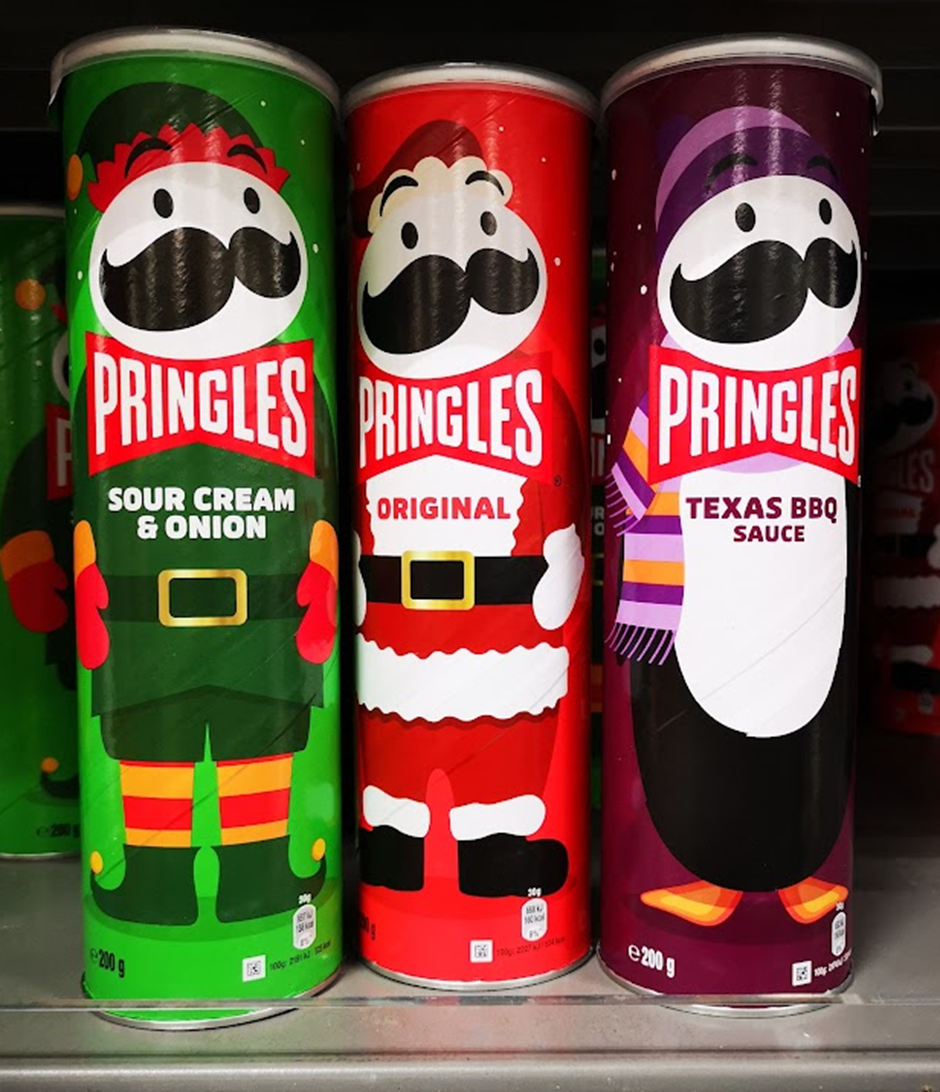
Trends come and go in all shapes and sizes but Christmas is more predictable!

Across the globe, it looks like tough trucking for many families throughout 2023 and 2024. Early resolution of the war in Ukraine would be welcome (albeit unlikely), together with an acceleration in reduction of other inflationary pressures but expected mortgage rates of 6+% in many countries will be devastating for millions of families. The cruel prospect of should we “heat or eat” will be the grim reality for many this Winter. As a result, the principal focus for many families will be searching for the best value, i.e. low prices. In so-called advanced economy UK, The Money & Pensions Office identified that 25% of those surveyed had less than £100 ($120) in savings – it looks like a bleak Christmas!

Consumers are saying “I want to buy food products that reflect my values and the social issues I’m concerned about but I want them at prices I can afford”. They’re concerned about both their physical and mental/emotional health (e.g. help me sleep better and reduce my anxieties) so seek products which offer affordable nutrition but make sure the health benefit claims are simple and direct. Consumers have “eagle eyes” when selecting food products and want few, natural, authentic ingredients. They may compromise on requirements for “Grab & Go” “Fuel Food” but want to know where/when/how and by whom was it produced for “Story Food” when the meal components are the hero/heroines.

Mars-owned KIND:  in touch with trends on health, clean labels and care for the community.

All the trend setters identify sustainability concerns as being central to many consumers with carbon reduction, global warming, plastic pollution, food waste and deforestation in the top 5 positions. Some consumers want to be more involved with the companies that produce the food they eat as in – tell me more about the ingredients, farming methods, packaging, company stand on big issues such as slave labour, and supporting local communities. They want to know that businesses have plans to improve performance on these social issues but want them to be honest about their progress, acknowledging that Rome wasn’t built in a day. The harsh fact is that, in the face of a cost-of-living crisis, consumers reluctantly compromise on their principles and search for the lowest prices – in the UK, animal welfare-friendly meat, organic, fairly-traded and even local food sales are all down significantly on the previous year. We’ve said it before and we’ll say it again, the “green bar” continues to rise for producers of food and drink products but, particularly for the coming year, it’s challenging to gain a price premium for getting over the bar and more likely that one will be price discounted for being under!

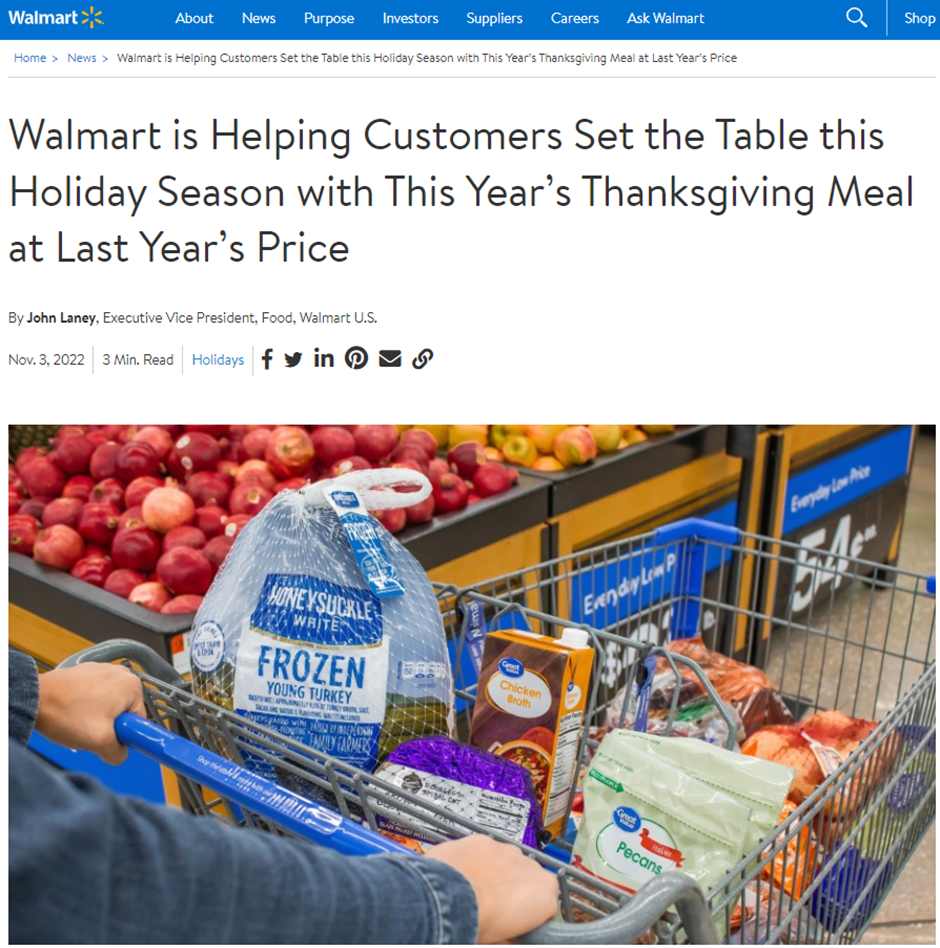
Walmart freezes prices for income-strapped customers in the USA.
“Big Food” is often in the cross hairs of consumer activist groups. Here’s Mars, showing that in tough times beleaguered four-legged family members may need a helping hand!

The evolution of the plant-based market is expected to continue. The “mega-brands” such as Beyond Meat and Oatly have failed to light up the market and financially have performed disastrously. Bye-bye “fake” meat? No, bye-bye expensive, poor quality substitutes with ingredient lists as long as short books! Not withstanding the expected success of  Veganuary (only 6 weeks away), veganism isn’t growing significantly but flexitarianism certainly is. It’s driven by younger, better educated, higher income consumers who are pleased to dip into “no meat meals” and, as they age, they’ll take this habit with them. Watch out for “Regenuary” (Google it!) riding on the coat tails of the increasingly fashionable “Regen Ag movement”.

Waitrose Food and Drink Trends 2022/23

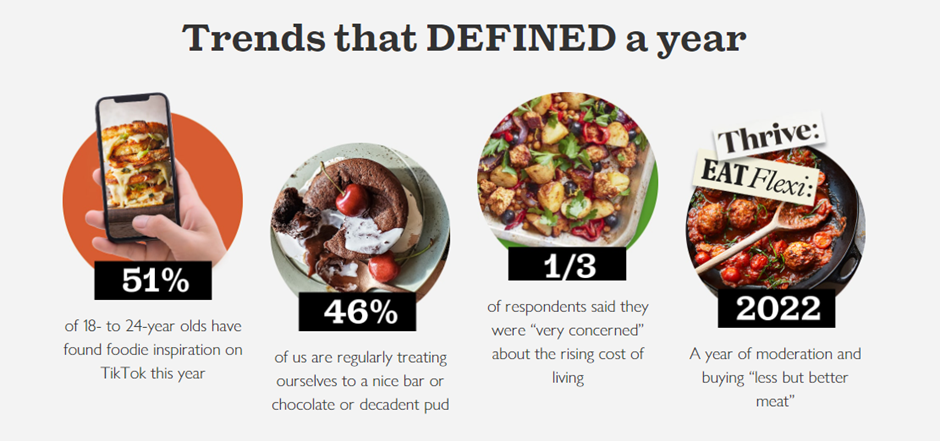
Economic crisis – cut out indulgent treats? Far from it. “Revenge Spending” is an expected trend, with consumers seeking affordable treats to brighten up their day. You’ll notice those treats are becoming smaller in size such that manufacturers can meet margin targets. Generation Z and younger Millennials are expected to lead the charge driving demand for new flavours and formats both in old favourites and exciting novelties. Digital interaction via the likes of TikTok rules the affordable communication waves. Watch, too, for strong demand for premium protein purchases at the food retail shelf as consumers with culinary skills elect to dine out at home, instead of the restaurant. There’ll be more eating at home because of the continued popularity of WFH (working from home). Tight although household budgets may be, demand for “quick quality” meal and snack solutions will continue to be strong whether purchased from the store, local food service outlet and/or delivered by a man on a motorcycle/bike! With high heating costs in some countries and solitary working from home, opportunities have emerged for WFP/WFC businesses – pubs and cafés (with excellent Wi-Fi) offering mini-packages (e.g. access to a table, coffee, pastry, warmth and company) during “light” hours in the regular day of the pub or café. Then, there’s UK supermarket chain Asda with a cute “Fakeaway” offer – meal and snack ideas that are characteristic of the takeaway trade that are good value for money for that “Big Night In”!


Waitrose Food and Drink Trends 2022/23
Marks & Spencer products for “working from home” couples who want to eat healthily and quickly.
Bord Bia promoting “quick quality” of Irish grass-fed beef.

That’ll do on mega-trends, but just to finish off, let’s take a quick look at what the pricier food retailers think are product areas for accelerated growth in 2023. In the USA, Whole Foods Market identify: yaupon caffeinated tea, the leaves of a sort of holly bush native to the northern states (don’t rush!); products made from the leftovers of other products, such as squished oat and nut remains from plant-based milks; plant-based pasta; date syrup; and “better” (slower-growing, etc.) chicken and eggs. In the UK, Waitrose are backing: “less but better” foods, i.e. smaller portions of premium cuts of meat and fish; “forgotten” meat/fish cuts such as fish heads/beef short ribs transformed into delicious dishes through use of the slow cooker; whole cocoa fruit chocolate; grilled lettuce; the rise of “nextovers” – not leftovers, but conjuring up tasty meals  from whatever ingredients are left in the fridge; and food & drink products with relevant and explicit health benefits – such as, no surprise, Waitrose branded ginger shot drinks and oat drinks.

We trust there’s some food for thought in the above and with Christmas and the New Year beckoning, we wish you a happy festive season and fingers crossed that 2023 turns out rather better than that forecasted by the economic and political pundits.

Sources: Mintel, Innova Market Insights, FMCG Gurus, Forrester Research, ADM, Whole Foods Market, Waitrose and Partners, our own views and research.

Posted in Trends

Coping with the Economic Crisis: What Will Consumers Do?

It’s torrid times around the world for many consumers and businesses and, likely, it’ll get worse before it gets better. But, hey, it WILL get better! What’s up? Pundits are quick to advise us that a succession of unprecedented events have brought us to where we are now. Harold Macmillan, Prime Minister in the UK 60+ years ago, when asked what was the biggest challenge for a statesperson or an economy, famously replied “Events, my dear boy, events”! The past 3 years, we’ve sure had events to disturb us but none were unprecedented as all had happened before!: Covid  – what about the 1918 Spanish flu pandemic; rocketing food price inflation this year – at similar levels to the August 1973 food price peaks when, wait for it, the Russian and Ukrainian harvests failed and oil prices surged because of OPEC action; Russia invades the Ukraine – yes, just like they did in 2014; extreme weather events – hmm we’ve just become much more aware of what’s been happening for years, i.e. climate change. They’ve all happened before and they’ll happen again!

On the plus side, some positives come out of the wreckage caused by these events coinciding:

  • food security appears on the political agenda as we learn that, irrespective of national income, we can’t simply assume that food for our citizens will always be available when we want it. Sensible food policies may emerge (fingers crossed!);
  • similarly, energy security is top of mind – European dependency on Russian oil and gas at a time when Russia is at war with a neighbouring European country and Europe is placing heavy economic sanctions on the warmonger beggars belief. Surely, this will lead Europe towards a more secure set of energy policies with the prospect of renewable energy being sharply accelerated? Further, at the household level, certainly in the UK, we’re much more conscious of “saving energy” because it translates directly into saving money in income-stressed homes;
  • and what about key manufacturing input security? It’s worrying to note the reliance that the world has on chips from Taiwan at a time when China is sabre-rattling and President Chi has just been anointed as de facto President for Life!;
  • the extraordinary global shortage of labour brought about by, inter alia, the pandemic, governments restricting immigration, better-heeled older workers reassessing their life preferences, has accelerated the commercialisation of automation, not least in food production;
  • and the globalisation of news coverage has made us increasingly aware of the impact of climate change on peoples’ lives and, for our own self-interest, the impact that weather has on food supplies.

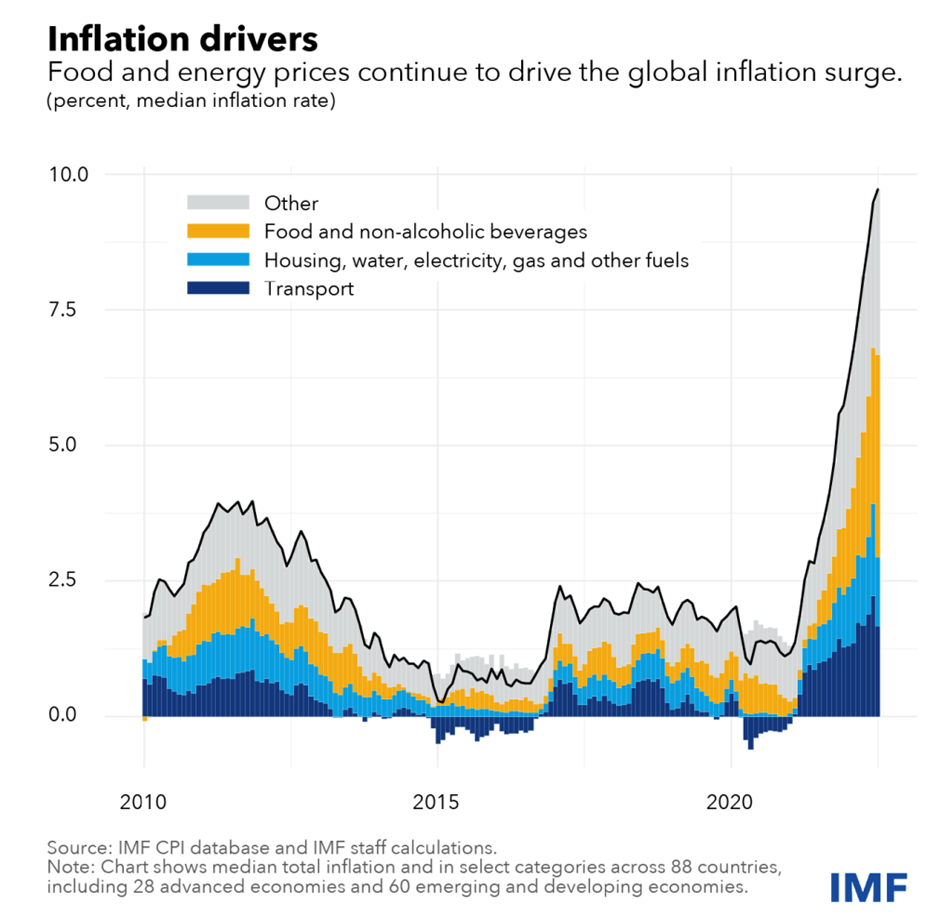
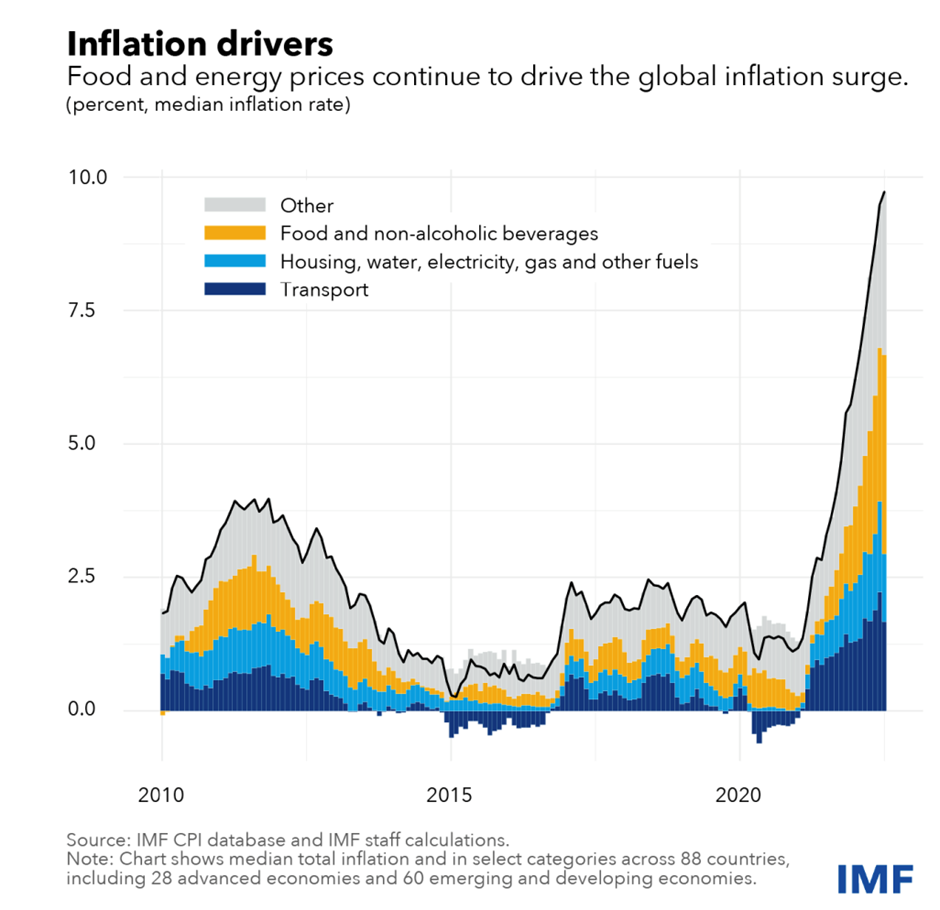
The IMF notes that food and energy prices continue to drive the global inflation surge. In the UK, consumer price inflation is at around 10%, highest as it has been for decades, with food price inflation a hefty 14%. The UK Office for National Statistics has shown that a basket of the lowest priced grocery items from supermarkets “value lines” are 17% higher now than 1 year ago. It’s the same story in many countries with particularly damaging consequences for those on low incomes (in many emerging nations – e.g. much of Africa – half the household income is spent on food and double digit food price inflation is devastating). In so-called higher income “developed” countries, household incomes in general have increased over time, but polarisation is more evident – there are comfortable “haves” and a much larger grumpy group of “have nots”. The story is the same in the UK, much of Europe, North America, or Australia.

Interest rates are rising quickly in many countries with huge consequences for those with home mortgages to pay. For 10 years or more, we’ve had historically low costs of money – a boon for spenders and a bane for savers! Energy prices have come off recent astronomical highs but are way above recent memory bringing huge additional costs to families for heating, light, cooking and transport (notwithstanding government support which will need to be paid off by our grandchildren). Family budgets are under extreme pressure and are causing significant changes in purchasing behaviour for food, and the postponing of larger purchases (e.g. for furniture, clothing, electricals, and entertainment).

We’re most interested in the impact on food purchasing and consumers are:

  • switching to discounters (e.g. Aldi, Lidl);
  • buying less items such as trimming back on “indulgent” snacks;
  • “stretching” meals by using smaller meat portions and lower cost protein foods;
  • buying less alcohol to save money, or drinking at home rather than in the pub;
  • buying more “Value” private label products, more frozen and tinned foods to save on food waste;
  • seeking advice on using up leftovers and reducing waste;
  • even thinking about energy efficiency in cooking – air fryers became fashionable during the “lockdown” and, now, are seen as being the sensible way to cook to save energy costs;
  • less eating out and this can translate into trading up for quality foods to eat at home;
  • “parking” concerns about the environment, animal welfare and other social issues whilst coping with the squeeze on the family budget.

What of the future? Analysts suggest that things will get worse before they get better! A short recession is likely in Europe (and we are in one already in UK) although the USA economy may squeak through unless burgeoning interest rates causes the housing market to collapse. Haven’t we seen all this before – what about the 2008 recession? Then, there were differences to now: there was low inflation; no Covid/energy/war in Europe issues; falling interest rates; much higher unemployment; and the online retail sector was growing rapidly taking many traditional players by surprise.

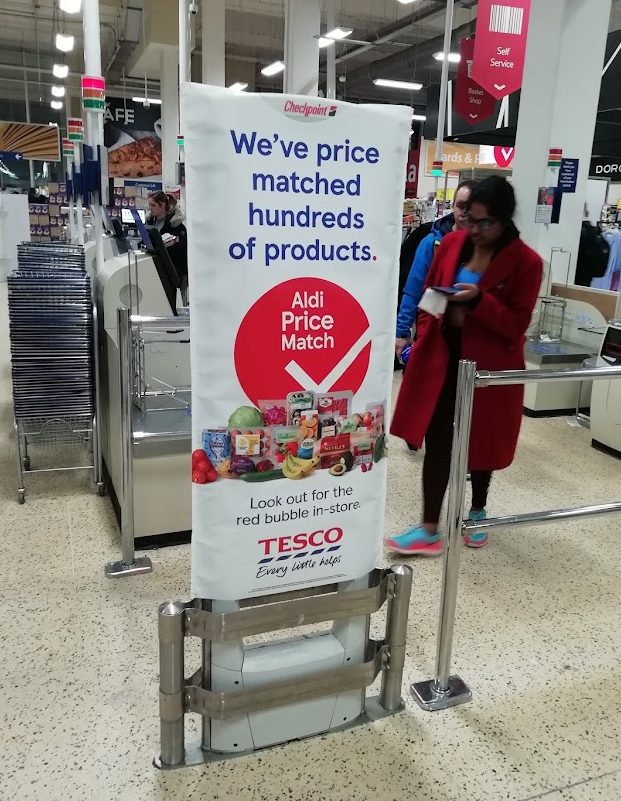
At the consumer level, the “heavy carrying” will be by lower income households. In the current economic crisis, 40% or so of households are and will continue to struggle until inflation abates and economic stability returns. Household saving rates have fallen sharply (after rising during the “Lockdown” period of the pandemic) and, so, the big holiday or the house extension will have to wait a couple of years or more. Those serving consumers will need to focus on showing them that their offer is helping them save money. But, remember, value means different things to different consumers and their economic groups. The “should we heat or eat” households need much more help than an Aldi price match basket of basic foods from Tesco. But, all households grumble about rising food prices, including those comfortably off who are outraged that their seeded, olive organic sour dough loaf has gone up by £1 a loaf. Food businesses should be attuned to and deliver on what consumers value and this can be much more than just low prices. However, grocery retailers, not least the big traditional supermarket chains, need to compete with “the barbarians” close to their forecourts (i.e. the discounters!) whilst responding to the needs of local communities and the producers of the food products that are on their shelves. There’s much talk of “partnerships in the food supply chain”. Retailers must walk the talk to ensure that those who actually produce our food, and have been operating throughout this harrowing period, are set fair for the longer term.

Tagged with: , , ,
Posted in Inflation, Uncategorized

Up Your Marketing Game to Make the Best of Challenging Times in Fresh Produce: The Case of Cucumbers

October has been a meat, vegetable and “non-dairy “dairy month for me and Miguel. Mid-month, I was the closing speaker at the UK Cucumber Conference. It’s been a torrid time for fresh produce growers: input costs through the roof; excruciatingly high and volatile energy prices; pervasive labour shortages on-farm and in the supply chain; escalating retail food prices (14+% in UK in October) but the reverse for most fruit and vegetables as retail prices  have been lower than last year (notwithstanding 20+% increases in key production costs) as traditional supermarkets wage price wars with buoyant hard discounters such as Aldi and Lidl; and, for cucumbers and other salad crops in the UK, the unwanted additional pressure of import competition from similarly beleaguered horticultural producers in the EU and elsewhere. The crowd attending the cuke conference showed remarkable “best foot forward” resilience. Wishful thinking or last man standing doggedness?!

Protected crop growers, i.e. those using “greenhouses” requiring heating during cooler parts of the year, know exactly what they have to do in terms of reducing costs through use of renewable energy (solar panels, harnessing waste heat, etc.), automation to reduce labour,  applying technological solutions to reduce pesticide use. In history, they’ve shown an ability to produce more quality product using less inputs. The benefactor has been the consumer – paying lower and lower prices for higher quality produce! Improving production efficiency has been the forte of the horticultural industry. Improving marketing performance has lagged woefully behind!

The good news for salad crops, including cucumbers, is that they are in the Top 10 of vegetables regularly purchased by food shoppers in the UK and USA. Worrisomely, in both countries, the higher purchasing households tend be those who are older, richer, and without children. I don’t think, as you tip over 50 years old, that you wake up one morning and think “I fancy a cucumber”. Rather, we need to introduce (aka train) our children to eat such items sooner rather than later in their lives. Also, learn from other countries, how to use salad crops as breakfast and snack items – they’re on breakfast buffet tables in many British hotels, so put them out at home, with a healthy & tasty dip would be helpful.

The health attributes of fresh produce are an issue and the issue is that the produce industry keeps the manifold nutritional advantages of fruit and vegetables a secret. Cucumbers are a case in point. This is not highfalutin research, but in preparing for my talk I asked dozens of people I met en passant  do you eat cukes, why and what was in them? Usually, the response was: “yes, they’re refreshing and full of water”. Nutrients, special benefits? Silence! Click on Tesco.com and put in “Cucumbers”. Up comes 3 fresh cucumber skus and half a dozen cucumber beauty products (e.g. brand named “Yes to Cucumbers” skin toners and eye treatments).

Mark our words, if a consumer goods product has ANY health/beauty features, it’ll shriek it from the rooftops. Why wouldn’t we tell consumers, in particular those younger ones who under-purchase cucumbers, that, apart from being refreshing and a guilt-free stick for dipping, they’re: chock-a-block full of vitamins C and K, magnesium, manganese, and potassium; help as a satiating afternoon snack for those wishing to manage their weight; and are embraced by the beauty industry in a host of skin toning and eye health products?

If you tell customers that your product is tasty, healthy, good for the skin and eyes, and convenient will they buy more? Yes! Will they pay more? No – not if there is a seemingly endless supply of identical product available every time they go shopping. That’s a huge problem for cucumbers and many fresh produce items. The dreaded commodity trap awaits which is so well exemplified by the case of bananas in the UK. Bananas retail at 78p (<$1) per kg. across  the UK high street – the Cavendish variety is pervasive. Bananas are our favourite fruit and account for one-quarter of all fruit consumed in the UK. Why? They’re tasty, convenient, children like them and they’re virtually a free good! The retail price of bananas has declined by 15% over the past 15 years. Did production costs decline?! NO and the story sounds familiar to that for cucumbers and many other produce items.

How can you exit the commodity trap? With difficulty! Grow something that is identifiably different with attributes consumers value and are willing to pay more for. For a grower, this could involve aligning with a seed supplier and produce marketer that has access to exactly that. Fruit and vegetable product examples include: Tenderstem broccoli in Europe and its Aussie equivalent Broccolini. In fruit, take a look at the price premium earned and marketing programme of the Pink Lady apple. Grower-owned Zespri from New Zealand has  done a remarkable job earning a small premium on the commoditised green kiwifruit and a substantial premium on the SunGold version gaining great traction in markets, particularly in Asia, for its immune health benefits.

For UK fresh produce growers, here and now, what can be done to make a very difficult position a little better? Collaborate as a domestic industry and start to communicate with home consumers on provenance (home grown to high standards), your importance to the local community, freshness, health benefits, and tell them how to use it on “new” occasions – breakfast, snacking, etc. for cucumbers. Where’s the budget coming from? Canny use of social media can produce brilliant results with minimal spend – have a peek at how Little Moons mochi ice cream balls made a huge impact on TikTok. Cucumbers aren’t ice cream but you’ve got more to work with than, say, iceberg lettuce or swede! There’s clearly a role for the Cucumber Growers’ Association here. The Veg Power Campaign staff focussing on promoting overall veg consumption would be useful allies in crafting a social media campaign specifically for cucumbers.

In the UK, households spend less than £10 per week on fruit and vegetable bought from grocery stores that’s way less than many commuters spend on buying a coffee per day! It’s scandalous and we in the fresh produce industry need a good kick up the bum for being so coy about the manifold consumer benefits of our produce. Our produce isn’t caffeine-rich but, for cucumbers, it’s rich in nutrients that extend life and improve our looks. What isn’t there to shout about!

Posted in Fresh Products, Health

New Routes to the Food and Drink Consumer. Do They Matter to My Business?

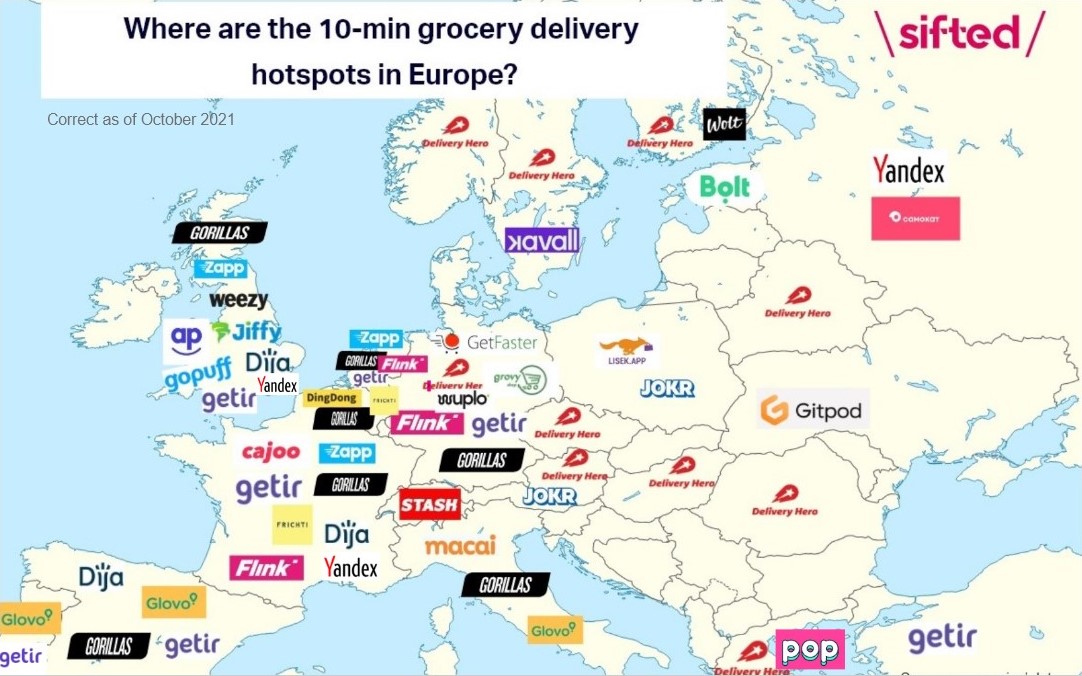
The pandemic may have slowed us all down – incarcerated in our homes for months – but it certainly didn’t slow developments in food and drink delivery to consumers. In fact, the reverse, Covid has served to sharply accelerate trends. Over the past 2 years, $15 billion has been ploughed into rapid delivery electronic platform start ups in Europe and North America such as getir, Delivery Hero, GoPuff, Zapp, and Bolt . Within as little as 10 minutes, food and drink items can be delivered to our homes and offices from “dark” mini warehouses (micro-fulfilment centres in the vernacular) at skinny tariffs. Right now, we’re seeing rationalisation in this new sector with the likes of USA venture capital rich GoPuff acquiring Fancy and Dija to give it accelerated entry into the European fast delivery market. How big is this market? Well, it’s moot but the overall European grocery market is measured in trillions not billions and, so, a very small percentage of that total market would be an eye-watering number!

Source Shifted. Oct 2021.

That’s why big supermarkets are peering at these fast delivery small fry, with some apprehension, and are bemused by their current valuations – Berlin-based rapid delivery start up Flink has a current market value of close to $3bn and it was only founded in 2020! How can “traditional” supermarket companies hedge their bets and take a piece of the fast delivery action? Tesco’s approach in the UK is to form a partnership with start up unicorn Gorillas. In the pilot, it’s using spare space in a big Tesco Extra superstore to establish a 2,000 product micro-warehouse from which Gorillas can use as its ”with you in 10 minutes” delivery base.

Stuck gloomily at home, we wanted to eat out but couldn’t but we could “eat out in” using restaurant meal delivery platforms such as Just Eat and Deliveroo in the UK and the major player in the USA DoorDash to deliver our favourite restaurant meals. Again, this development has been threatening for traditional supermarkets, particularly in the USA where grocers have been a tad slow in developing delicious ready meals for their supermarket customers. Now, Instacart, the American company that makes it easy for you to order groceries from your favourite store has launched “Ready Meals Hub” to deliver meals ready to eat/heat from your store of choice within 30 minutes. This is an effort to claw back supermarket sales lost to the restaurant meal delivery platforms. Restaurant delivery app DoorDash senses the competitive threat and its response has been, amongst other things, to increase its investment in German fast delivery Flink, while in the same month investing close to $8 billion on a Finish grocery delivery company to extend its European presence. It beggars’ belief where all the money is coming from!

Flink's Valuation Hits $2.85B In New Financing Round Led By Doordash. Flink  Competes With Gorillas, Picnic, Getir, And Others In Hyper-Competitive  European Grocery Delivery Market - CB Insights Research

Are you keeping up?! Like waiting for a bus, nothing turns up and, then, accelerated by the pandemic, a whole bunch of new routes to the consumer appear. So what? Is it all froth that will disappear when we return “to normal” or, at least, the “new normal”? Well, there’s certainly more choice for consumers on where and how they can buy food and drink. What about investors in unicorn meal kit, restaurant meal delivery, and rapid grocery delivery companies? How sanguine one is depends on the timing of your entry and exit from the investment: the share price of meal kit platform HelloFresh has halved over the past 12 months; and the share price of restaurant delivery app Just Eat has halved in the last 2 months! Mind you, even after a collapse in stock value, both of these companies have market valuations of around $11bn which is close to double that of, say, Sainsbury’s which has been in business for 250 years. From an investment perspective, are you a lion or a mouse?

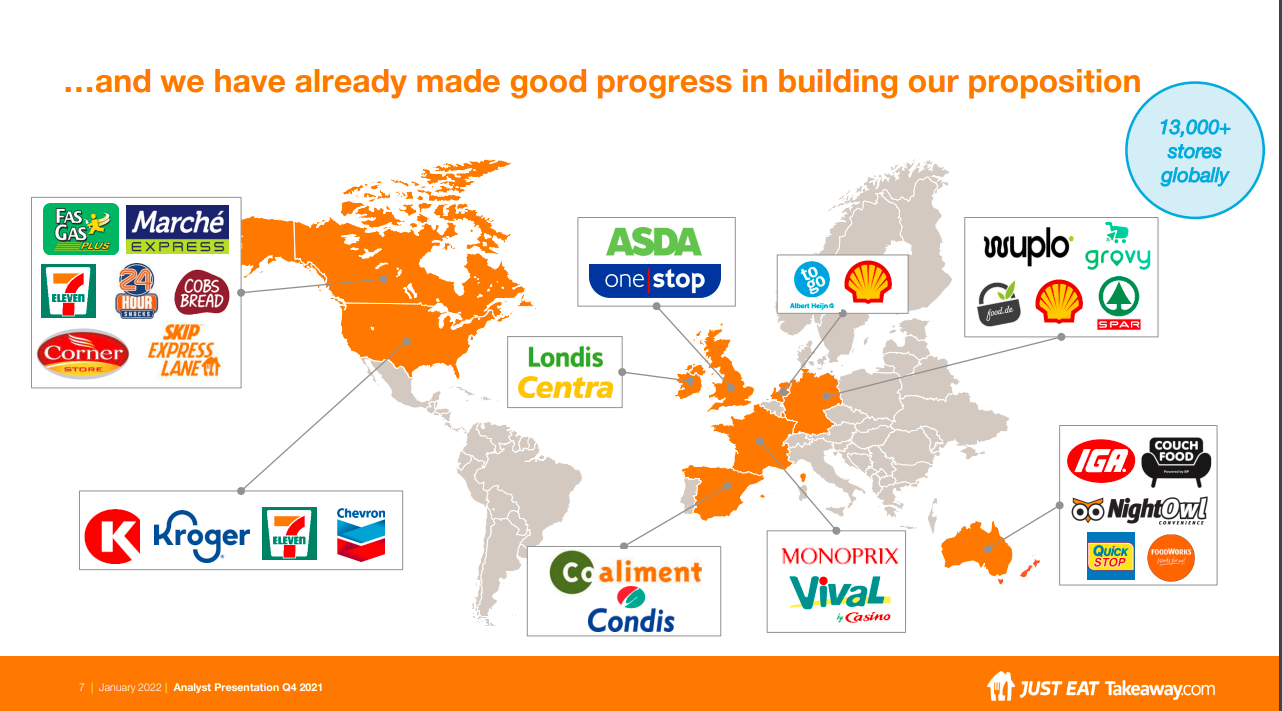
Just Eat is expanding their business into the grocery deliveries.

If you’re a farmer or food manufacturer does the emergence of these new routes to the food and drink consumer market matter? Unequivocally, yes! Think back a few years, the pervasive concern was about the dominance of a few, powerful supermarkets calling the shots. Now, you’ve got more options, more customers. For some suppliers, you can even go direct to the consumer as they’ve slowly accepted that buying fresh foods online isn’t too frightening! What’s more, the pandemic has made many consumers more enthusiastic about purchasing food with a compelling authentic story, particularly if it’s local.

Artisan producers can sell now in the whole country!

If you’re concerned about the health of our planet are you happy with more purchasing options? If the white delivery vans are electric, it helps peace of mind and one can be close to self-righteously euphoric if a cyclist delivers!

For all food and drink businesses, these developments bring some combinations of challenges and opportunities. Is our modus operandi relevant given the pandemic-accelerated transformation of our commercial and physical environment? Did we have a strategy? Should we change it? We know 2022 is going to be, by any measure difficult – ingredient and food price inflation, crabby shoppers seeking “value”, retail price wars, unexpected climate and political (Ukraine?) events – do we have the resilience? What’s that? The resources, willingness and drive to adapt successfully to the challenges that threaten the function, survival and future success of our business. Spend some time thinking about how your business is placed to cope with what’s coming our way in 2022. It’s better to be in the box seat than the back seat in troubled times!

David and Miguel January 25th, 2022

Posted in Convenience, Online

Heads Up! Some Food Industry Issues to Keep an Eye on this Month.

Every January, two hardy perennials burst into full flower. Here’s a brief botanical review of them both.

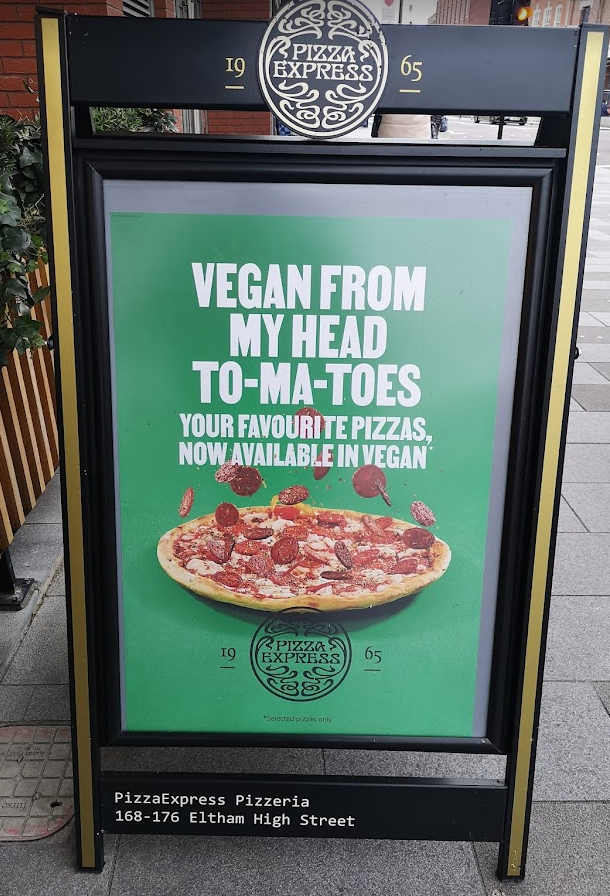
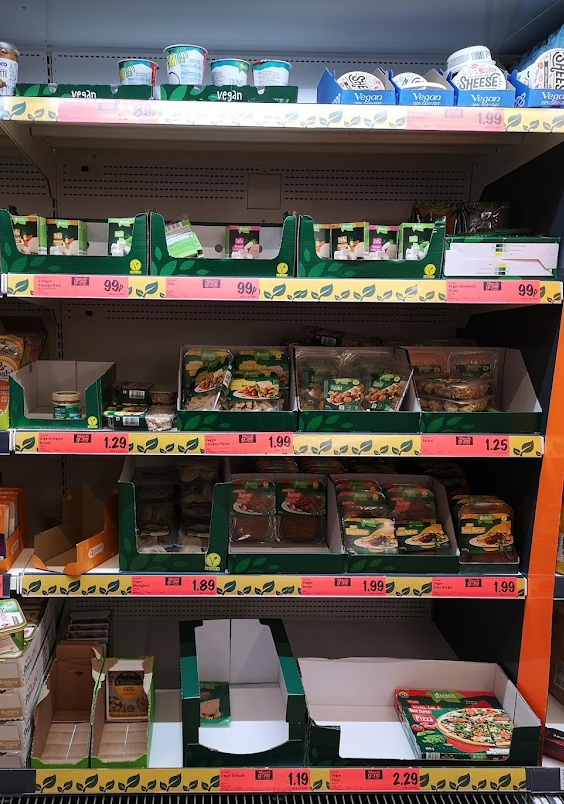
Established in 2014, Veganuary is native to the UK but, wind-borne, its seeds have germinated in dozens of countries and has a mission to inspire people to “try vegan”. As “A Movement”, Veganuary carries an implicit health warning for carnivores and livestock producers. Smart marketing is at its core: in January, we’re predisposed to try a healthier diet; plant-based foods are firmly on-trend; trying vegan food for a month gives us a guilt-free opt out after only 4 weeks (“tick, done vegan!”); the promotional material doesn’t focus on killing distressed animals, rather on “saving” cute, cuddly ones; certainly, in the UK, the food media and food retailers of all stripes are supportive – e.g. hard discounter Lidl (not the immediate grocer of choice for the urban élite chattering classes) has “Going Meat-Free in January?” as the strapline of its New Year adverts; and, particularly, post-COP26, it’s consonant with the notion that family food purchase choices can contribute to saving the planet.

Veganuary everywhere!

Vegan and vegetarian diets have market traction in many higher income countries (they’ve never lost it in emerging countries where meat is still a relative luxury food) and the proportion of the population claiming that they follow vegan or vegetarian diets is edging up, albeit slowly. Much of the media hype revolves around consumers eschewing real meat and embracing “fake” meat yet, in the market place, this isn’t the case. In the USA, plant-based meat sales have declined 7 months in a row. Plant-based heavyweight Beyond Meat’s Q3 sales were down 16% year-on-year and its share price as of January 3rd 2022 was one-third of its top value in January 2021. Meat substitute products festoon supermarket shelves but sales of many are floundering. What’s the problem? Shock horror! Many fail to deliver on taste and texture, are increasingly perceived to be “over-processed”, are criticised for being unhealthy, not least because of high salt content, and are expensive relative to “the real thing”. European sales of plant-based meats have been rosier. Beyond Meat has provided the patty for the successful launch in the UK of McDonald’s McPlant burger. The USA could be a harbinger of future demand, although, perish the thought, it may be that our continued strong demand for meat substitutes indicates that European taste buds are less refined than our trans-Atlantic cousins.

Tentative although future demand for fake meat may be, venture capitalists haven’t been shy at throwing money in the direction of prospective plant-based unicorn companies – Impossible Foods is purportedly valued at $7bn, although it’s yet to make a profit. It has raised $2bn of development finance over 2 years, and 10 other plant- and cell-based food companies each raised $100+m in 2021. There may be tears before bed time!

Thumbs down for plant-based foods? Far from it, they have excellent market prospects. Tasty, healthy, convenient, affordable plant-based meal and snack solutions are and always have been on the up. The best of Big Food (e.g. Nestlé, Unilever) are investing heavily in the sector through their own NPD and via acquisition, gobbling up nimble start-up companies. Their major competition will come from private label manufacturers for major grocery retailers – Tesco’s Wicked Kitchen and Marks & Spencer’s Plant Kitchen are in the van. Implications for the meat industry? In higher income countries with current high levels of per capita meat consumption, we’ll slowly eat less meat, particularly beef. Those more comfortably off, however, will eat “better” meat and the definition of “better” will be a topic hotly disputed!

Lidl’s “veganuary” aisle in UK
One of the new Wicked brand products that Tesco presents for the Veganuary 2022

Bolting is a term applied to vegetables when they prematurely run to seed.  Humans have a tendency to do so, too and are chastised for such every New Year …. and, particularly this year as waist lines expanded after months of working from home accompanied by surreptitious snacking! Our Lock Down promises to eat healthier came to nought in the UK where average weight gain through the pandemic has been 3+kg – 2 out of 3 adults and 1 out of 3 children are overweight or obese and the NHS and tax payer stump up £6bn/year treating weight associated ill health.

The Centre for Food Policy report for the UK Government’s obesity research unit warns that “easy access to and availability of unhealthy food 24 hours a day across the UK makes losing weight difficult for millions who are trying to reduce weight – we eat more because food is easily available and its proximity triggers us to want food more often”. It’s a particular problem for those on low incomes as cheap, unhealthy food is more likely to be promoted in shops and supermarkets. It’s the dark, other side of the coin problem associated with the hyper-competitive UK food retail sector which in most respects deserves applause from consumers for delivering low food prices for food overall, whether it be healthy or unhealthy. Should Tesco be scolded for offering an Aldi Price Match “Hearty Food thin pepperoni pizza for 67p ($0.90)?!

The UK Government has an obesity reduction plan which many view will fail in the face of a perceived junk food culture and where consumers are “bombarded by unhealthy food options”2. Food high in saturated fat, sugar and/or salt and deficient in fibre, protein and other good stuff is broadly defined as junk! Later this year, junk food advertisements will be banned on TV and the cinema (and online) prior to 9pm and promotions such as BOGOFs and aisle end placements of HFSS products will be illegal. Health activists call for fresh fruit & vegetables to be discounted but aren’t they already? Basic fresh produce prices are astonishingly low, just ask any fruit & vegetable producer.

Obesity is as much a pandemic as Covid-19 and removing the problem is as complex. A multitude of factors are key contributors, including: genetics and biology; household income; financial insecurity; deprivation; weight stigma; access to opportunities to be physically active; cultural norms; food prices; portion sizes; food and cooking education; food availability (e.g. food deserts); life experiences; food advertising and promotions; mental health; access to treatment and support.

Global problem although obesity is, its incidence varies hugely – across the OECD countries, 40% of USA adults are obese versus 4% of Japanese adults. In the so-called developed world, food industries should steel themselves for a plethora of government-imposed measures to combat the problem ranging from soft touch bans on food promotions and placement, through mandatory health warning labels on food at retail and in restaurants, to hard-edged taxes on foods high in fat, sugar and salt.

Veganuary will come and go and our promises to reduce our waistlines will evaporate like snow off a dyke. In this first quarter, supply chain disruptions caused by Covid-related labour shortages will cause food industry challenges and irritate pampered consumers. But the global food issue that will dominate the headlines throughout the year will relate to escalating food prices. The FAO Global Food Commodity Price Index for 2021 was 28% above that for 2020 and these food price inflationary pressures have by no means passed through to global retail food prices.

Higher basic food commodity prices are very welcome for farmers but rocketing farm input prices are not! “UK farmers braced for spring fertiliser crunch after prices triple” shrieked The Financial Times, but it’s a global problem and particularly for poor small-scale farmers in the emerging world who produce the majority of the food for their burgeoning population. Fertiliser use will be down causing yields to decline and continued upward pressure on food prices at retail. Container freight rates will remain stickily high for much of the year – we import 40% of our food in the UK! General inflationary pressures abound around the globe – in the UK, household incomes will be under stress as energy prices remain at high levels and tax rates (i.e. National Insurance) increase. Consumers will look to trim their budgets on items on which they have flexibility like food items. Watch out for: full on food retail price wars in many countries; and political turmoil particularly in lower income countries – when staple food prices spike, the huddled masses take to the streets (and even the seeded sour dough and matcha tea brigade get peevish).

We’re set for a rough and tumble, challenging year for those in the food industry and for food consumers. It will require companies and households to be resilient with resilience defined as “the capacity of dynamic systems to adapt successfully to challenges that threaten their function, survival, or future development”. Looking at how largely adeptly the global food system has handled the unwelcome Covid pandemic, we believe the global food industry can cope in spades with what’s coming our way in 2022. Happy New Year!

David and Miguel

January 6th, 2022        

Posted in Uncategorized

Headline News About Food Security and Environmental Impact Present Challenges and Opportunities for the Food Industry

Dr. Food is an inveterate reader of the weekly influential current affairs periodical The Economist. In history, it was always a Saturday morning treat to sit down with the magazine and a coffee and be immersed in the brilliantly written ways of our world. Now, of course, saving the planet and the pocketbook, it’s read online anywhere anytime! Items on food proliferated on the issue for Oct. 2nd. A decade ago, items of news on agriculture and food were exceedingly sparse. It’s a measure of the burgeoning importance of and widespread interest in issues such as food security and the impact of food production on climate change that this journal is increasingly peppered with food-related articles. Here’s a flavour from that week:
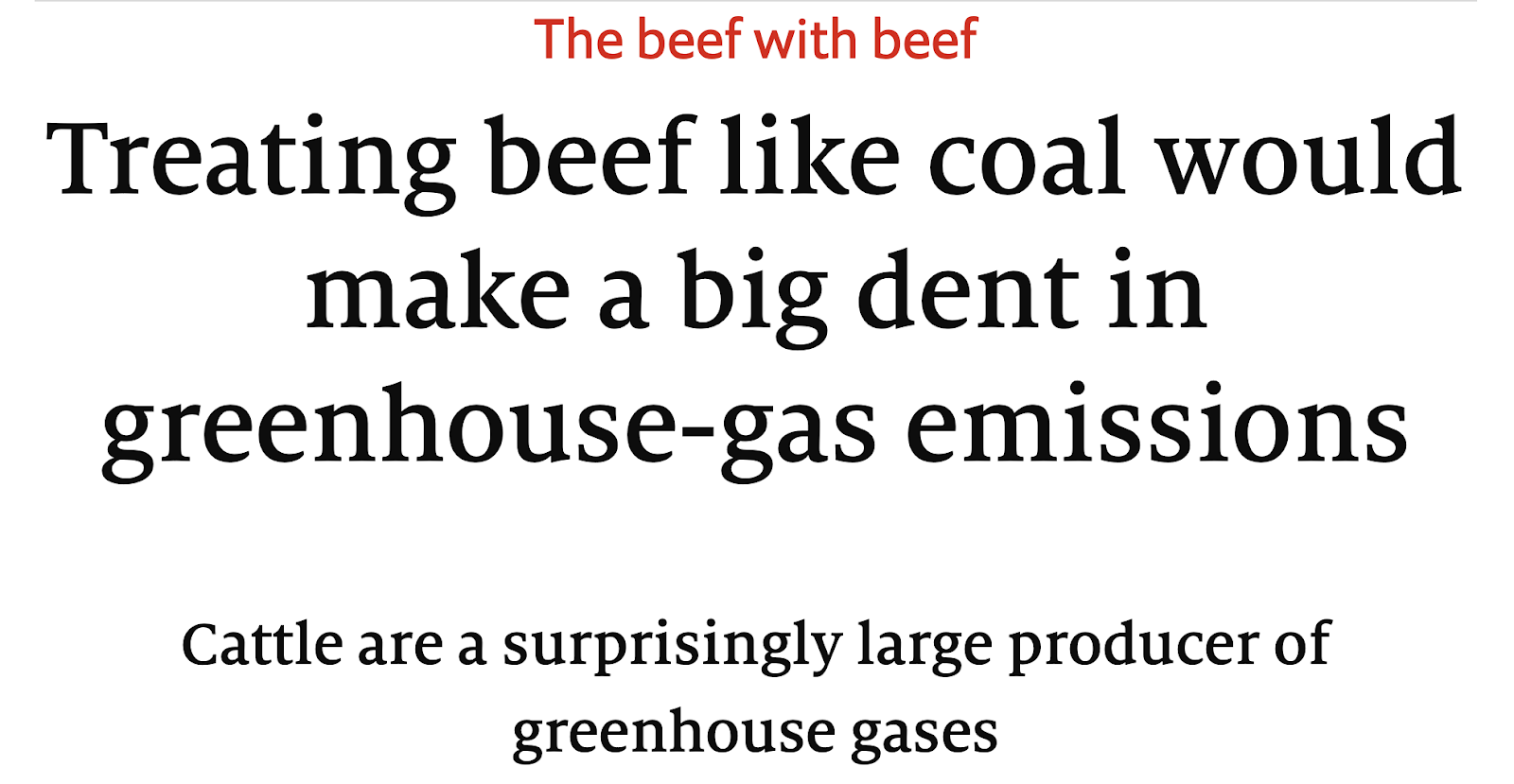
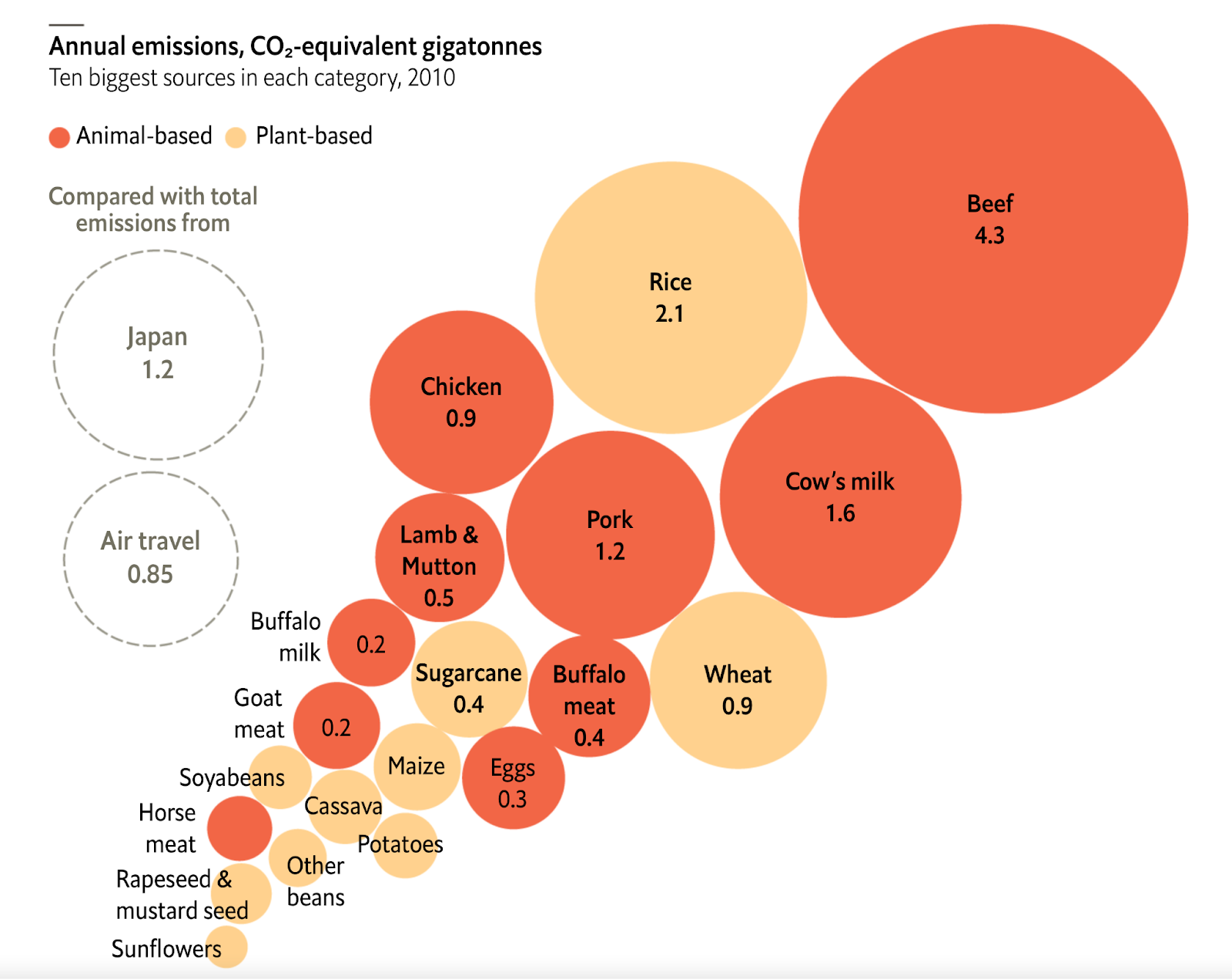
  • “Treating beef like coal would make a big dent in greenhouse-gas emissions”! The article has an eye-catching graphic on CO2 emissions (see below) which shows beef far exceeding arable crops, albeit with rice higher than cow’s milk, pork and chicken and, bizarrely, higher than Japan and air travel prompting the whimsical thought that, if “seeking to save the world”, one could keep on flying but give up beef!
  • The finger is pointed at cattle for emitting methane and accounting for two-thirds of beef’s total GGE. More controversially, 27% of emissions are attributed to land-use changes, such as clearing land for grazing and growing feed. Of course, this provokes an incendiary reaction from those producing grass-fed beef, particularly on land that is perfect for pasture and, through improving the quality of the soil, actually increases the capacity for the land to sequester carbon! 

Source: The Economist.
The same edition of The Economist included: a “Leader” on the roles of new technology and government regulation in “New Foods”, sitting alongside other leaders on high profile issues such as political clampdowns on technological behemoths in China (e.g. Alibaba and Ant Group), and an aquacultural review of “seaweed at scale” and its food and carbon sequestration uses. 

The 2021 UN Climate Change Conference (aka COP 26) is on now in Glasgow, Scotland. You can hardly miss it as it’s dominating the media.  COP is the decision-making body responsible for monitoring and reviewing the implementation of the UN Framework Convention on Climate Change whose objective is to “stabilize greenhouse gas concentrations in the atmosphere at a level that will prevent dangerous … global warming”. It’s a big deal and many of the big political and business names are attending. In the previous weeks leading up to the meeting, countries and companies released statements relating to their promises and programmes to reach carbon net zero by 2050 or before. Mars, the privately-held food company, is one example:

  • Mars has pledged fresh climate action to achieve net zero emissions across its full value chain. This isn’t just a Mars commitment. The company has 20,000+ suppliers and together they are promising to eliminate deforestation, transition to 100% renewable energy and much more! The clear implication is that Mars is and will continue to rationalise its supplier base to deliver its promises. Palm oil is a case in point – Mars is sourcing all from those certified by the Roundtable on Sustainable Palm Oil (RSPO) – the number of palm oil mills that it deals with has been slashed from 1,500 to fewer than 100 and their names are in the public record and all are RSPO-certified. In Asia-Pacific, 1 mill has replaced 780 smaller ones reminding us that reaching net zero may not be small business-friendly! Mars is using a combination of satellite mapping to monitor land use and 3rd party validation by the not-for-profit AidEnvironment.
  • Mars is joining the Science-Based Targets Initiative’s (SBTI) “Business Ambition  for 1.5C Pledge” and  the Race to Zero. Its managers should take good note – executive pay will be linked to Mars achieving environmental targets! The corporate focus will be on:
  • Absolute emissions’ reductions across its entire GHG footprint including ALL scope 3 emissions such as business travel, customer emissions, use of sold products and product end-of-life (i.e. disposal and recycling of final product & packaging), and setting 5 year milestones to drive action and track progress;
  • Elimination of deforestation in its supply chain;
  • Challenging its 20,000+ albeit diminishing suppliers to deliver GHG value chain emission reductions;
  • Publishing a full net zero roadmap by 2022 to align with the anticipated SBTI rules on net zero commitments by the end of 2021.

Linking executive pay to achieving environmental targets shows how ingrained these objectives are within the company. The cost of some other companies’ borrowings are linked also to their environmental performance. British grocer Tesco attracted loans of £5bn at the beginning of the year. The interest paid will drop if the company achieves its targets related to Scope 1 and 2 emissions. They aim to be a Net Zero Carbon business in the UK by 2035 (15 years ahead of the UK as a country) and by 2050 for their entire international business.

Another recurrent line on the environmental news is the GGE impact of global meat and dairy production on climate change.  The global meat and dairy industries are a soft target – pardon the pun but it’s “Easy Meat” for the “Green” lobby. Who isn’t going to defend the future of our planet and the wellbeing of cute farm animals when we’re told that the livestock and meat industry is causing problems? Particularly when anti-cattle activists are so zealous, passionate and increasingly professional about getting their side of the story across; whereas the pro-meat and dairy protagonists are, often, grumpy and focus on scientific arguments to support their case when most consumers are swayed by their emotions and side with those who seem to understand and share consumer citizen values. Most people prefer simple “facts”, too and, unfortunately, there’s no one global livestock production system and explaining life cycle assessment for meat products from the growing of livestock feed through to the disposal of leftover meat products and packaging, whilst not rocket science, is far from being simple!

Most pro-meat and -dairy groups do need to up their game on convincing consumers about the relevance of their products in the third decade of this century. It’s a VERY tough job and regularly made tougher by news coverage revealing the stark reality of producing farm animals that we then slaughter for our own consumption! You can see why, particularly younger people, might be swayed by vegetarian/vegan arguments and embrace plant-based products which mimic meat and dairy products.

Meat and dairy “bashing” may be fashionable but there’s plenty of initiatives abroad to redress these controversial issues, and find new processes that improve the sustainability of their operations and reduce their environmental impact:

  • Norwegian agri-tech company N2 Applied has been working on an EU-funded trial with Danish international dairy company Arla on its UK “Innovation Farm” using a scientific technique that applies air and electricity to slurry that “traps” methane and ammonia and, via a N2 plasma unit, converts cow manure into “sustainable fertiliser”. The N2 unit can eliminate harmful ammonia emissions (which reduce air quality), eliminate greenhouse gas emissions from methane, and enriches the nutrient content of livestock manure.
  • Earlier this year, Arla shared the output from the 1st year of its landmark Climate Check programme. Manure management was highlighted as one of the 5 main levers that will have a positive effect in supporting farmer cooperative Arla’s commitment to a 30% reduction of on-farm carbon emissions by 2030 and reaching carbon net zero farming by 2050. The challenge is to take these findings and find ways of making them work on a practical and affordable level on-farm.
  • The plasma-treated fertiliser converted from slurry using the N2 unit was independently tested when applied to winter wheat and found to reduce ammonia emissions by 90% compared with untreated slurry. Treated slurry produced on-farm has the potential to reduce the need for chemical fertiliser thereby reducing GGEs. IF N2 units were adopted across the UK dairy herd, they could deliver 17-21% of the UK’s National Farmers Union emission reduction targets for livestock. N2 Applied views that 1 N2 unit, working on a farm with 200 dairy cows, can reduce and remove a total of 183 tonnes of CO2 per year.

Back in 2016, the Brades family farm in Lancashire, UK, launched “The Original Barista Milk” for cafés and coffee chains to differentiate itself from commodity milk and to establish that premium “real milk” was better than the up and coming plant-based milks which were becoming fashionable with coffee drinkers (plant-based milks have a 10% milk market share in the UK).

As the “anti-dairy/milk” lobby switched their arguments for ditching cows’ milk for plant-based substitutes from animal welfare and human health to climate change concerns, so did the Brades family farm focus on reducing the carbon impact of its business. The result was a partnership with biotech startup Mootral which has developed a garlic-based livestock feed pellet that reduces methane output from cows by 30% – the pellets work by disrupting methane-producing enzymes in the cow’s gut.

Mootral is not alone in its methane reducing endeavours, UC Davis in the USA has found that some seaweeds in the cows’ diets can cut methane emissions by 82%. Royal DSM has recently received regulatory approval from Brazilian and Chilean agricultural authorities for its supplement Bovaer which, it is claimed, can cut methane emissions by up to 30% for dairy cows and 90% for feedlot cattle reared for beef. And, serendipitously redolent of Covid solutions, Cargill is trialling a methane-reducing mask for cows (90% of cattle methane emissions come  from the mouth and nostrils), and an anti-methane vaccine is being researched. 

The feeding of additives may work in developed countries where dairy and beef cattle may be fed indoors or fenced in but it’s more challenging in emerging countries with thousands of small-scale livestock producers who largely graze their animals wherever they can find grass. These countries contribute 70% of emissions from ruminant animals worldwide! As their household incomes rise, so will meat and dairy consumption exacerbating emissions’ problems although, agricultural development leading to increased farm sizes and changes in production systems may help.

There’s lots of international initiatives focusing on helping the global dairy industry edge towards a substantially reduced carbon emissions future. Arla and 10 other global dairy companies (e.g. Royal FrieslandCampina, Fonterra, Nestlé, Mars), plus other businesses in the dairy sector launched “Pathways to Dairy Net Zero ” in September just prior to the UN Food Systems Summit. Its focus is on accelerating climate efforts already underway and driving further necessary actions to reduce dairy’s emissions over the next decade.

Some critics of methane reduction products take the view that they’re no more than “greenwashing” and the best solution to reducing methane from cattle is just to eat less meat and dairy!

We’re going to see accelerated change in the global agriculture and food industry over the remainder of this decade. Our industry will be substantially “greener” to the good of the planet and to our businesses as the proportion of consumers rises inexorably who recognise that, through their purchasing decisions, “the power is on their plate”. Diets will change albeit slowly. Heavy meat and dairy eating countries will seek moderation, as others increase consumption of these aspirational foods. New foods will arrive but take ages to become established on our meal tables! “Story” foods will focus on provenance, seasonality, authenticity and the artisan. Working and school week foods will be better versions of what we woof down now – tasty, convenient, affordable and more understanding of evolving 21st century consumer values. All new? No – strikingly similar to our great-grandparents – eat what’s on your plate, don’t waste, respect the food producer, eat what’s in season! With food shopping and eating, there’s heart-warming circularity. We got seriously off track over the past century or so. Or some of us did in higher income countries. But consumers and the industry that feeds them may be slow to change, but they’re not stupid and, now, we seem to be juddering in a better direction for all concerned. 

Posted in Consumer, Credentials, Sustainability
Dr. Food Weekly Food Business Insights
Please, visit our new project, a platform about food trends and their implications for businesses: Dr. Food Weekly Food Business Insights/

Enter your email address to follow this blog and authorise us to send you notifications of new posts by email.
If you want to register for Dr Food Weekly Food Business Insights check the top menu please.

Join 433 other subscribers
About the authors
Prof David Hughes: Around the world, David speaks to senior agribusiness and food industry managers about global food industry developments that are and will affect their businesses and industry. Energetic, engaging, humorous and insightful, David gains the very highest evaluations at seminars, conferences and Board level discussions in every continent he visits. Miguel Flavián: works for several Spanish organisations and companies to help them to learn from the developments of the British grocery market and improve their business back home.